





 Portuguese
  English
  Spanish
  2 min of reading
  0 comments


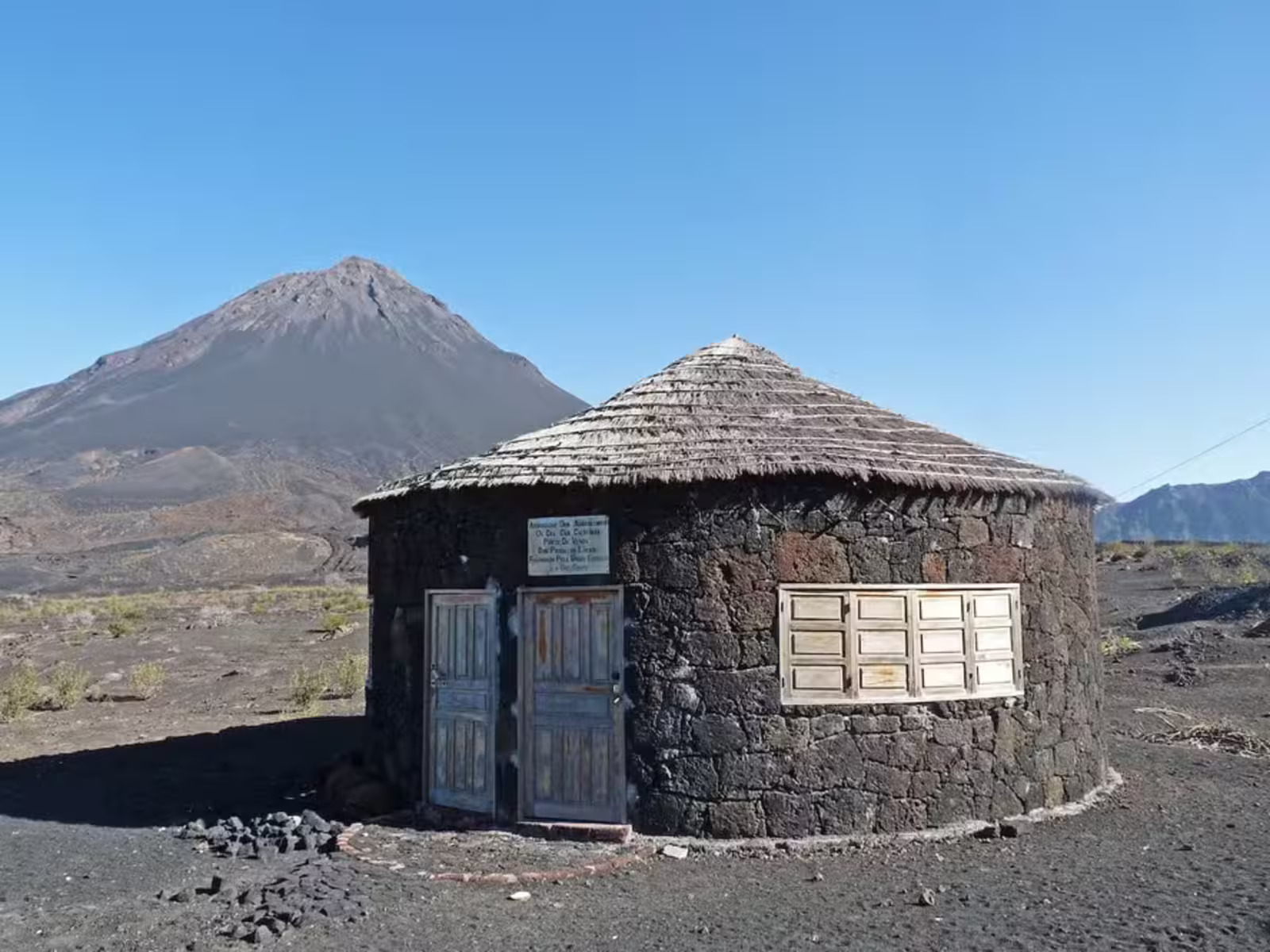
Located inside the caldera of the volcano on the island of Fogo, in Cape Verde, Chã das Caldeiras has between 700 and 800 inhabitants, reconstruction after the eruption from 2014 to 2015, and an economy based on agriculture and tourism
Chã das Caldeiras, in the interior of the island of Fogo, in Cape Verde, maintains between 700 and 800 inhabitants within an active volcano’s crater, in an area marked by the eruption that occurred between November 2014 and February 2015.
Village inside the crater
The community occupies a plain located inside the volcano’s caldera. The name of the village summarizes this configuration: “Chã” means plain, while “caldeiras” refers to the large crater formed by the collapse of the original geological structure.
This caldera is about 8 km in diameter and approximately 40 km² in area. The space is surrounded by cliffs that reach about a thousand meters in height, forming an unusual landscape in the archipelago.
-
Can buying a small farm become a trap? When the dream of weekend relaxation turns into weeds, maintenance, bad roads, and endless expenses.

-
Far from football, São Paulo idol and former national team player becomes a wine producer in Italy, transforms the nickname “Prophet” into his own brand, and now runs a winery, restaurant, and hotel in Piedmont.

-
Train of up to 111 tons leaves China for Brazil, crosses almost 20,000 km in up to 70 days by ship, and arrives in São Paulo in such a tight operation that a truck even had to deflate its tires to pass under a viaduct.
-
A small town with 800 inhabitants in the interior of the United States is giving away free land, with water, electricity, and paved streets, and even offers a cash allowance for families with children, all to attract residents and escape the depopulation threatening rural villages.



History of the volcano
Inside the caldera is Pico do Fogo, at 2,829 meters above sea level, the highest point in Cape Verde. The volcano had significant eruptions in 1951, 1995, and between 2014 and 2015.
The most recent eruption lasted almost three months. The lava advanced over the village, destroyed a large part of the houses, forced the evacuation of the inhabitants, and profoundly changed the local landscape.
Occupation and reconstruction
Permanent occupation began in the early 20th century. The village of Bangaeira was founded in 1917, and Portela in 1920.
Even after the destruction caused by the lava, part of the population returned to rebuild in the same territory.
The houses use volcanic stone taken from the region itself and techniques adapted to the uneven soil. Among the examples is the residence of Zenita Andrade, where a block of solidified lava that invaded the property was maintained in the architecture.
Economy and protected landscape
The local economy combines agriculture and tourism. The trails to the summit of the volcano and the scenery formed by fields of solidified lava help sustain tourism activity in the community.
Chã das Caldeiras is part of the Fogo Natural Park, created in 2003. The unit protects the volcanic landscape and endemic species of fauna and flora, including rare or threatened specimens.
Altitude and local production
The average altitude of about 1,700 meters results in milder temperatures than in the rest of the tropical archipelago.
This condition favors the cultivation of vineyards, coffee, and orchards, productions uncommon on other islands of Cape Verde.
With information from Casa e Jardim.





Be the first to react!