





 Portuguese
  English
  Spanish
  4 min of reading
  7 comments


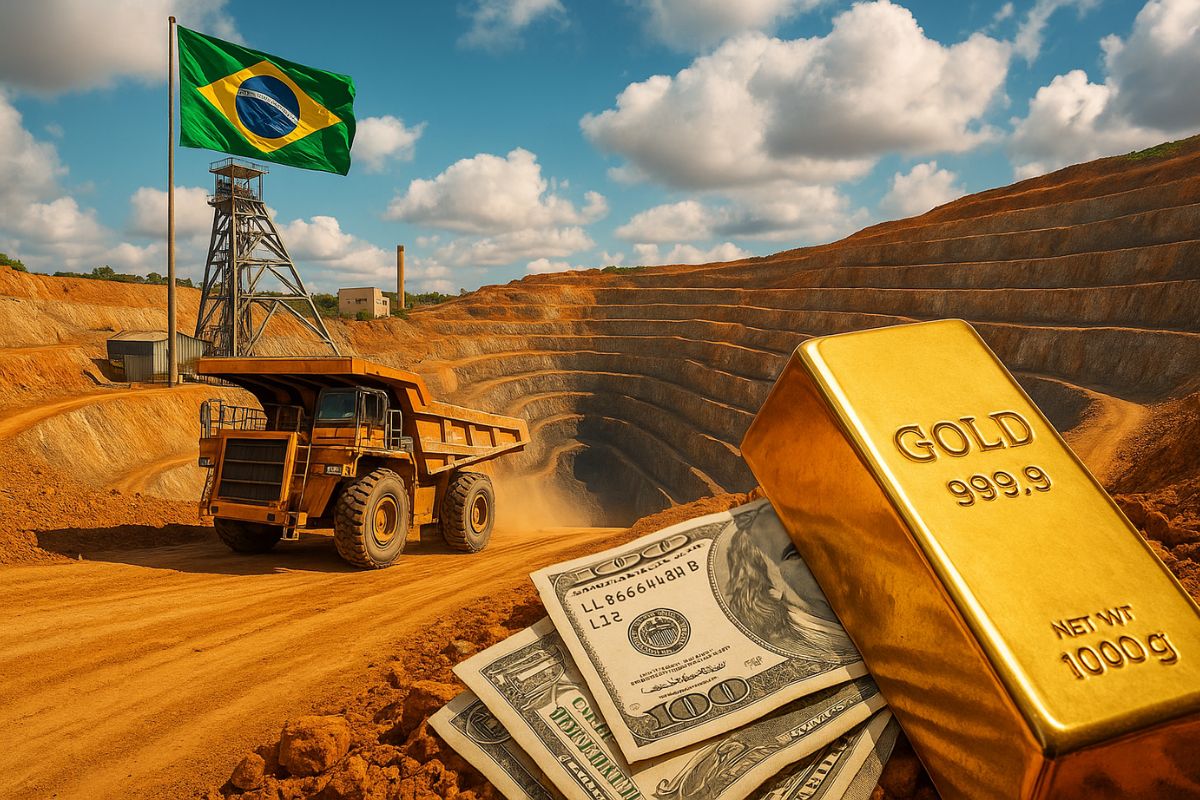


The Deepest Gold Mine in Brazil Has Surpassed 1,600 Meters, It Is Located in Sabará (MG), Operated by AngloGold Ashanti and Received a Package of R$ 1.1 Billion for Expansion and Modernization.
The deepest gold mine in Brazil is the Cuiabá Mine, in Sabará, in the Metropolitan Region of Belo Horizonte. The underground complex exceeds 1,600 meters below the surface and integrates a network of tunnels that totals hundreds of kilometers, a continuous operation that has established the asset as a reference in gold mining in the country.
With the new investment cycle of R$ 1.1 billion, AngloGold Ashanti accelerates the expansion of mining, modernizes critical systems and reinforces environmental practices that sustain the longevity of the asset.
The goal is to ensure a production horizon for decades, with gains in efficiency, safety, and operational predictability.
-
With 15 floors, an unusual building in Curitiba uses concrete, pilasters, and exposed roofs to create the effect of stacked houses.

-
Archaeologists opened a secret chamber that had been sealed by sand for 40,000 years inside a cave in Gibraltar and found what may be the last place where Neanderthals lived before disappearing from Europe forever.
-
The water that may have gone to the Moon with NASA during the Apollo 11 mission and been consumed by the astronauts springs in a Brazilian city at an altitude of 945 meters, famous for its thermal springs, above-average quality of life, and a natural radioactivity so unusual that it attracted Marie Curie.

-
In 200 days, a Finnish man builds with his own hands an 11-meter boat powered by solar energy with “infinite autonomy,” capable of dispensing with refueling and already used as a floating house.

Where It Is Located and Why Depth Matters
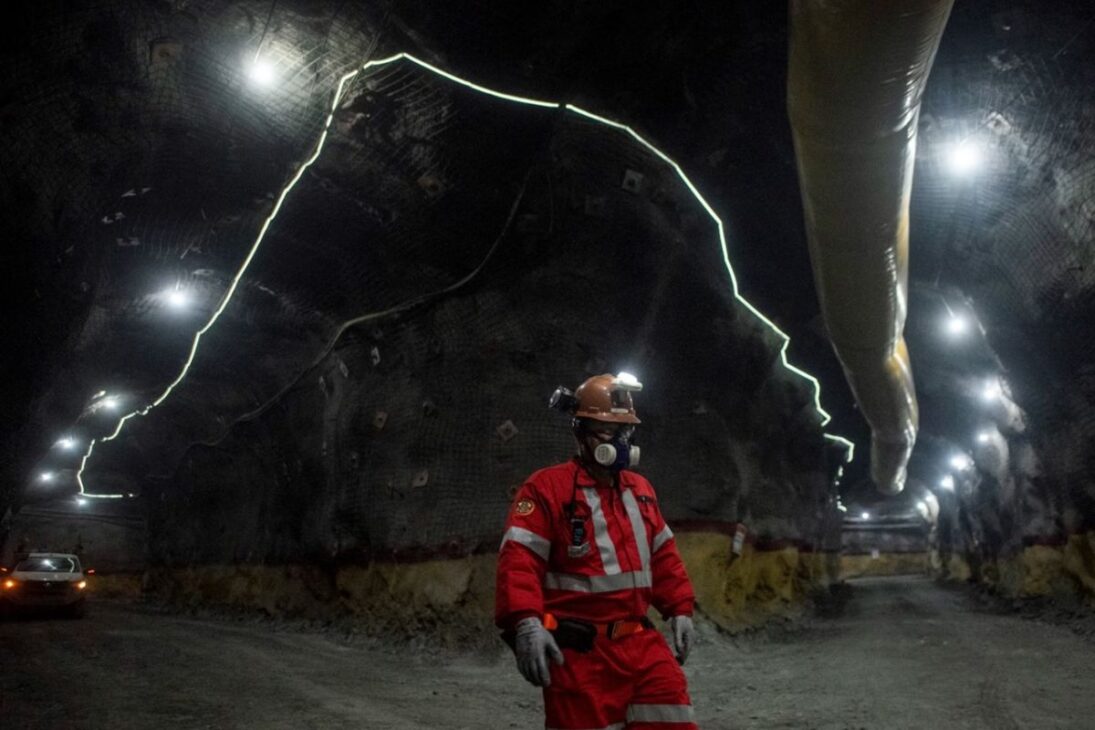
Located in the Iron Quadrilateral, the Cuiabá Mine operates in a geologically complex scenario, where depth and rock pressure demand robust technical solutions.
Working more than 1.6 km deep involves dealing with higher temperatures, intensive ventilation, and logistics of people, equipment, and ore over long vertical and horizontal distances.
This depth allows access to more “mature” ore bodies, maintaining the continuity of mining with long-term planning.
The deeper you go, the greater the need for geological precision, directional drilling, and strict stability control factors that increase unit costs, but also the technical barrier to entry and the resilience of the project.
What Changes with the R$ 1.1 Billion
The investment package prioritizes three fronts: (1) access to new levels, (2) modernization of underground infrastructure, and (3) environmental and operational safety projects.
Opening and equipping new mining levels expands the “pipeline” of fronts, dilutes geological risk, and reduces production bottlenecks.
In infrastructure, the resources strengthen ventilation, energy, communication, and transportation systems essential to maintain productivity at great depths.
In parallel, monitoring technologies and maintenance standards enhance the reliability of critical assets, reducing unplanned shutdowns and stabilizing the production curve.
Engineering to Operate at 1,600 m
The underground operation combines elevation systems for ore and personnel, a network of galleries for drilling and blasting, and loading and transportation circuits to the surface. In Cuiabá, initiatives such as 100% electric vehicles underground stand out, which reduce heat, local emissions, and ventilation costs.
Another pillar is automation and connectivity. With a communication network underground, the mine operates with telemetry and real-time control, allowing for quick responses to deviations, team tracking, and dynamic planning of mining fronts.
More data, less uncertainty and faster decisions to keep production stable.
Sustainability and Tailings Management
Due to its size and depth, environmental management is central. The complex adopted dry stacking of tailings, a technology that eliminates traditional dam raises, reducing risks and increasing control over the fine material after ore processing.
It’s a game changer for operations seeking longevity with a smaller risk footprint.
Protocols for water reuse, instrumental monitoring, and contingency plans are integrated into the licensing.
In practice, environmental governance ceases to be an appendix and begins to dictate the mine’s design, influencing routes, sequences, and processed volumes.
Economic Impact and Supply Chain
The deepest gold mine in Brazil stimulates an extensive local supply chain: drilling services, heavy maintenance, ventilation, electrical, geotechnical, transportation, food, and technical training.
Direct and indirect jobs multiply, with a ripple effect spreading throughout Sabará and neighboring municipalities.
On a macro level, investments of this magnitude anchor taxes, purchases, and contracts over various cycles, attract specialized suppliers, and elevate the technological level of the Brazilian underground mining chain. The result is a more sophisticated and competitive ecosystem.
Production Horizon and Capital Discipline
The combination of new mining levels, modernized infrastructure, and cutting-edge environmental management supports a clear thesis: extend the mine’s useful life with predictability.
In underground assets, longevity depends on capital discipline, consistent geology, and the ability to execute the plan without surprises.
In this context, the deepest gold mine in Brazil positions itself to deliver gold for decades, softening the volatility typical of the sector through planning and engineering. Less operational noise, more consistency is what creates long-term value.
Risks and Mitigation: What Sustains the Operation
Every deep mine faces geotechnical, thermal, and operational risks. The response lies in efficient ventilation, dense instrumentation, front inspections, continuous training, and redundant access and evacuation routes.
Safety is the leading indicator: it anticipates problems and prevents events from propagating.
From a market perspective, the strategy is to protect margins through energy efficiency, automation, and subterranean economies of scale.
Thus, the operation navigates gold price cycles without abrupt stoppages, preserving cash and sustaining the long-term plan.
The deepest gold mine in Brazil demonstrates how engineering, technology, and environmental discipline can extend the life of a strategic asset delivering gold for decades and raising the standard of underground mining in the country.
The right investment, at the right time, transforms depth into a competitive advantage.
For you, what is the most decisive point for the longevity of a deep mine: geology, technology (automation/ventilation), or environmental management of tailings? Tell us in the comments how these factors weigh in the daily operation.





Ouvir e levar a sério as dificuldades queixas até familiares e pessoal dos trabalhadores todos os dias antes das realizações dos trabalhos para evitar acidentes.
Sinceramente creio eu que os dois fatores tem que estarem juntos! Embora tecnologia e geologia sejam fundamental, o fator ambiental é prioridade que determina resultado na longevidade de ativos.
ANGLO GOLD RECEBE INVESTIMENTO DE QUEM? DO BNDES/PISPASEP DO TRABALHADOR , A 0,75%aa? Isto, em troca de uns empreguinhos de valores ridículos comparados ao Canadá e EUA, donos de nosso ouro.
NEM DINHEIRO ELES INVESTEM! RECEBEM EMPRESTADO O REAL E COMPRAM NOSSOS DÓLARES NO BB OU NO BC.
Na África, negros têm mais vergonha: recebiam só 8% de retorno e expulsaram franceses de lá.
Aqui, pagamos com os dólares da exportação do agro para gringo comprar máquinas na terra dele… UMA VERGONHA!!!