





 Portuguese
  English
  Spanish
  4 min of reading
  0 comments


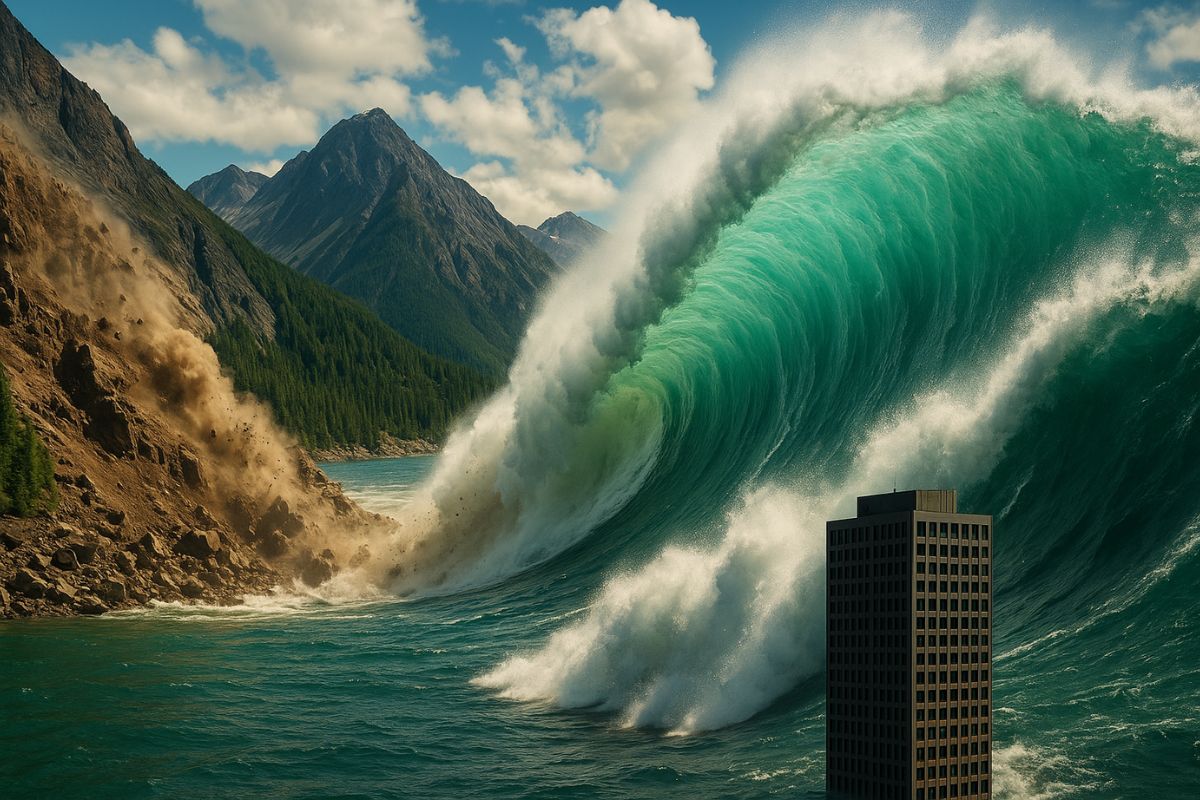
In 1958, a landslide of 90 million tons of rock in Lituya Bay, Alaska, triggered the largest wave ever recorded, a megatsunami that reached 524 meters in height, equivalent to a 170-story skyscraper, and completely redrew the local landscape
The largest wave ever recorded in history did not arise in the ocean, but in a secluded fjord in Alaska. On July 9, 1958, a 7.8 magnitude earthquake on the Fairweather fault caused the collapse of 90 million tons of rock and ice in Lituya Bay. The impact generated a wall of water so colossal that it rose 524 meters above the bay’s level, uprooting entire forests and leaving visible scars to this day.
Despite the violence of the phenomenon, five people died, a small number given the magnitude of the event, classified by scientists as a megatsunami, a type of wave caused not by tectonic movements on the seabed, but by sudden impacts or mass landslides.
The Origin of the Wave That Defied Logic
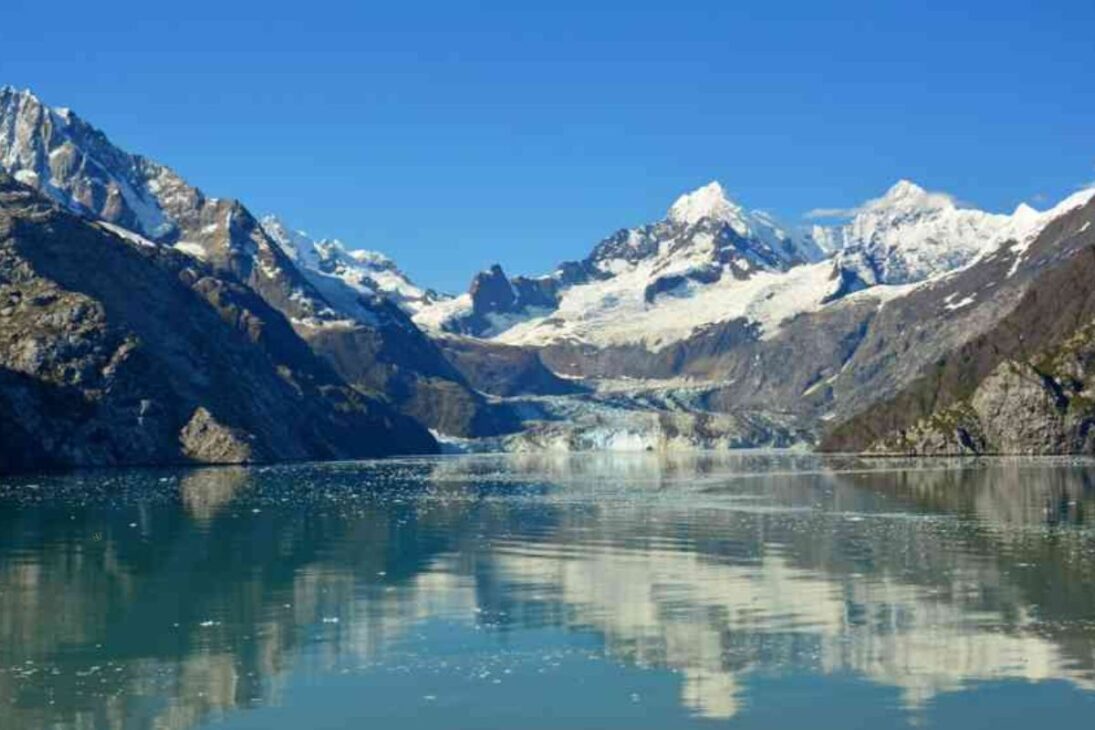
Lituya Bay is a narrow, deep fjord surrounded by steep mountains, characteristics that amplified the impact of the landslide.
-
Nikola Tesla said that intelligent people tend to have fewer friends, and now science partially confirms this: a study with over 15,000 people showed that for the more intelligent, socializing too much can even reduce life satisfaction.

-
A superyacht worth US$ 17 million is delivered in impeccable condition, sets out to sail, and hits a bridge in the Bahamas just two hours later.

-
Residents of Australia woke up to a sky completely red like blood before the arrival of Cyclone Narelle, which hit the coast with winds of 250 km/h, tearing off roofs and lifting iron dust in a scene they described as apocalyptic.
-
New 100% clean fuel produced in Brazil could retire diesel.


When the rocks fell from a height of 600 meters over the cove known as Gilbert Inlet, the mass displaced a gigantic volume of water.
The result was a wave of concentrated energy that swept the bay’s shores with unprecedented destructive force.
The force of the impact was so intense that it completely swept away vegetation, soil, and trees from an area of 10 square kilometers.
Aerial images taken shortly after the event showed the slopes stripped of trees up to the top, clearly marking the height reached by the wave.
The Survivors and the Chaos in the Bay
At that moment, there were three fishing boats anchored in Lituya Bay.
Two of them were destroyed, but one managed to escape, and the account of its captain became a crucial testimony of the phenomenon.
The fisherman Howard G. Ulrich, who was with his seven-year-old son, described the moment when the boat was lifted as if it were being “swallowed by a wall of water”.
He was able to maneuver the ship toward the wave, avoiding being crushed.
The vessel rode the crest of the wave and landed on the other side of the bay, miraculously intact.
Another couple, Bill and Vivian Swanson, also survived, being swept for miles before managing to escape from the sunken boat.
The other fishermen and campers in the area were not so lucky; they were swept away by the logs and debris thrown by the force of the megatsunami.
The Geological Impact and the Scars Left Behind
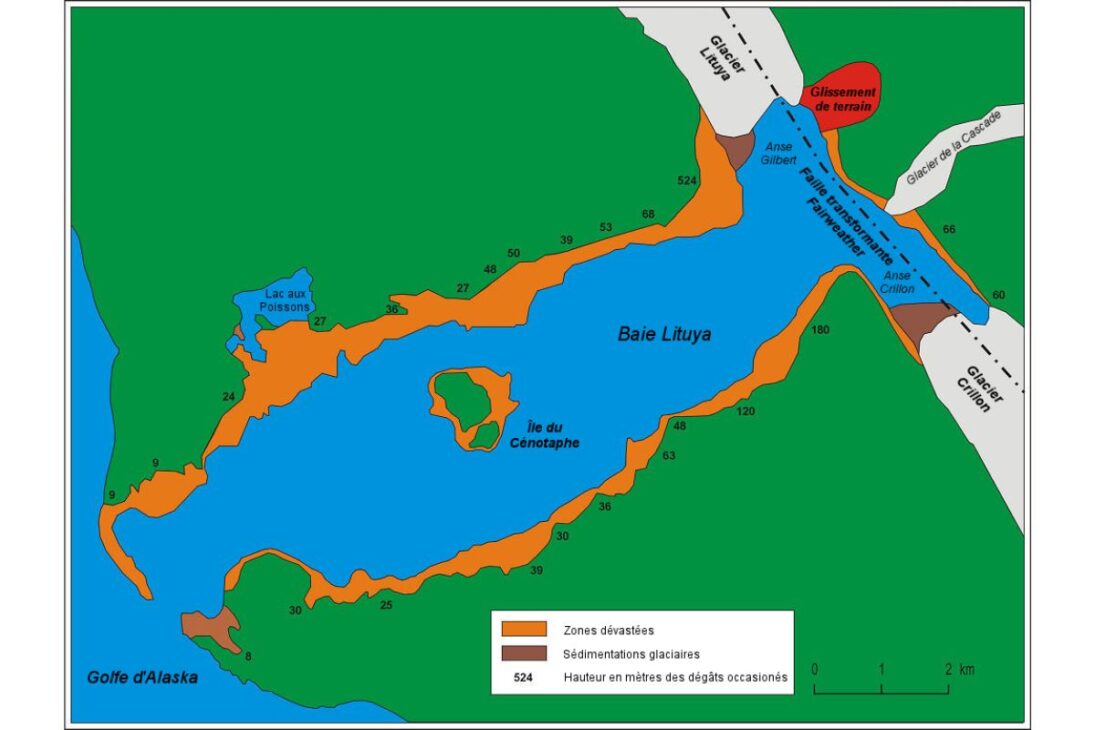
The event completely reshaped the local geography.
The 524-meter wall tore away trees, soil, and rocks from the slopes, creating a clear outline in the vegetation that remains visible today.
Subsequent studies showed that the topography of Lituya Bay was one of the main factors for amplifying the event.
Its funnel shape and steep walls forced the wave’s energy upward, increasing the vertical reach of the impact.
Geologists estimate that the energy released by the landslide was equivalent to that of a nuclear explosion of 10 to 12 megatons, making the megatsunami one of the most powerful natural phenomena ever recorded in a non-oceanic environment.
Comparisons That Help Understand the Magnitude
To grasp the size of the largest wave ever recorded, one can compare it to some of the tallest structures in the world.
The wall of water in Lituya Bay reached 524 meters, surpassing:
- The Empire State Building in New York (443 meters including the antenna)
- The Willis Tower in Chicago (442 meters)
- And approaching the height of the Burj Khalifa in Dubai (828 meters)
In terms of energy and reach, no other known tsunami came close to this record.
The 2004 Indian Ocean tsunami, which killed over 230,000 people, had waves of about 30 meters; while the 2011 Fukushima tsunami in Japan reached 40 meters at certain points.
The difference is that the event in Alaska was localized but far more intense.
The Scientific Legacy and Alerts for the Future
The megatsunami in Lituya Bay became a landmark in research on tsunamis caused by landslides.
From it, geologists developed new simulation models to predict similar behaviors in fjords and glacial regions.
Recent studies indicate that global warming may increase the risk of similar events, as the melting of glaciers and the weakening of mountain slopes raise the chances of mass landslides.
Alaska, Greenland, and the Himalayas are today areas of constant monitoring.







-

-

2 pessoas reagiram a isso.