





 Portuguese
  English
  Spanish
  5 min of reading
  0 comments


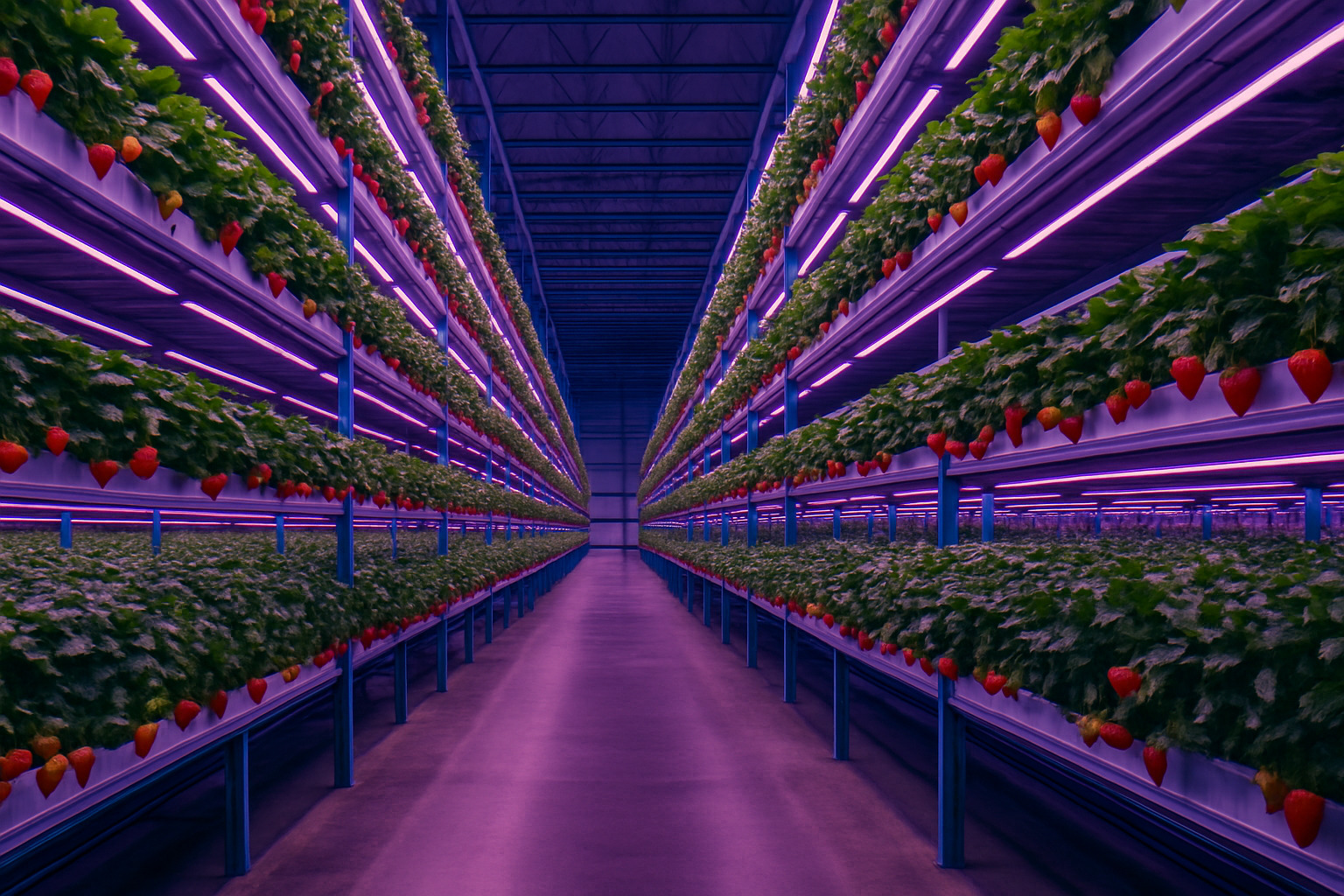
With 2 Tons Daily, Bowery Farming’s Vertical Farm in the U.S. Is the World’s Largest Soil-Free Strawberry Farm Using 95% Less Water and AI for Unprecedented Efficiency.
In a windowless warehouse on the outskirts of New York, where concrete and electrical wires replace open fields and tractors, thousands of strawberries grow quietly, stacked in vertical rows reaching to the ceiling. They do not touch the soil. They do not receive rain, sun, or wind. They are fed by a combination of recycled water, LED light calibrated to the ideal spectrum for photosynthesis, and continuous monitoring by smart sensors. This is the future of agriculture, and it’s already a reality.
The company responsible for this achievement is Bowery Farming, one of the largest references in vertical farming in the United States, operating what can justly be called the largest vertical strawberry farm in the world.
With the capacity to produce up to 2 tons per day, this facility impresses not only with its volume but with the water efficiency, environmental control, and sustainability it is achieving by using 95% less water than traditional crops and absolutely no pesticides.
-
While Russia dominates the global wheat market, Brazil emerges as an unexpected competitor in the Cerrado, offering grain available in July and August when stocks in the Northern Hemisphere are at their lowest point of the year.

-
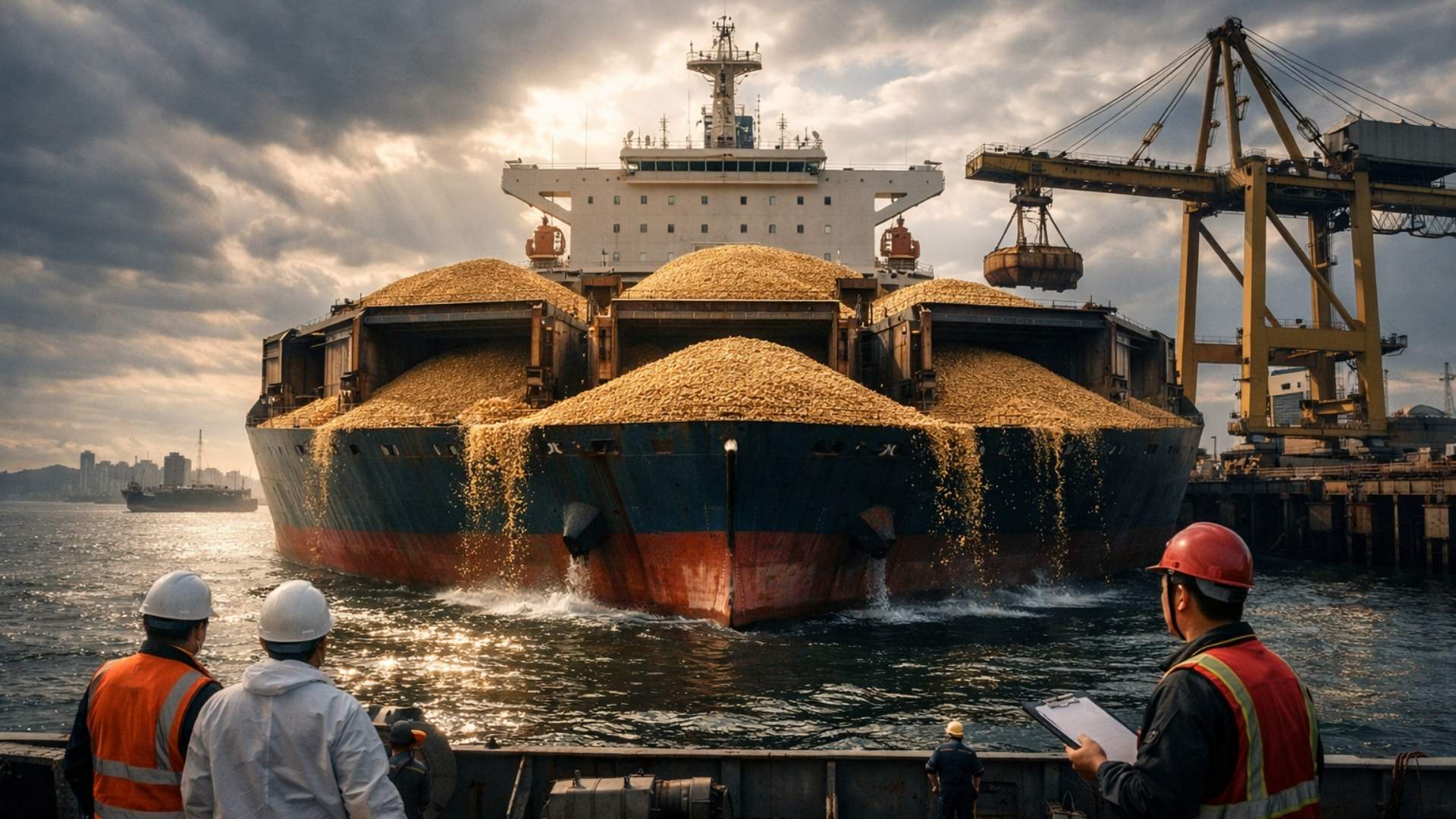
China returned almost 20 Brazilian ships with soybeans, but now everything could change: the country that buys 80% of the grain is considering relaxing regulations after impurities held up shipments of thousands of tons and caused million-dollar losses.
-
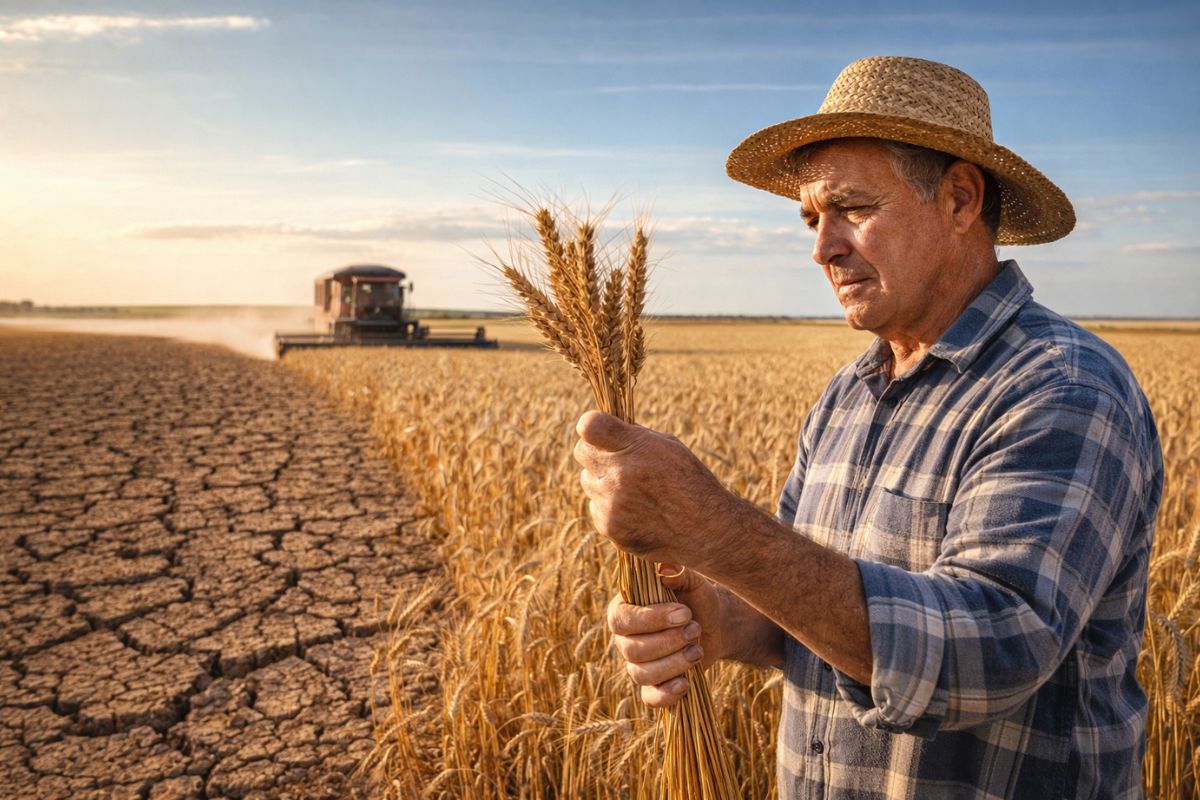
The drought of the cerrado was considered an enemy of wheat, but Brazilian scientists turned the lack of rain into a competitive advantage by creating a grain with quality that is already attracting the attention of international mills around the world.
-
THE OWNER of Brazil: a farmer who came from laundries, created an ’empire’ and today runs a company valued at R$ 42 billion after tripling its value in less than a year and receiving a billion-dollar investment from the USA.


How Does a Vertical Strawberry Farm Work?
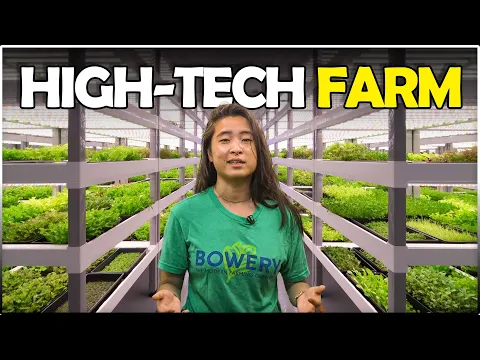

The central idea of vertical agriculture is simple: replace horizontal miles of crops with a compact, stacked structure in vertical layers. In the case of Bowery Farming, strawberries are grown in multi-tier hydroponic systems, fed by digitally controlled nutrient solutions and without the use of soil.
The ideal conditions of light, temperature, humidity, CO₂, and nutrients are automatically regulated by artificial intelligence, which learns from previous cycles and makes real-time adjustments. This means that each plant is monitored from germination to harvest by algorithms that maximize productivity with minimal resources.
The roots are suspended in trays or inert substrates, where liquid solutions rich in minerals circulate continuously. Since there is no direct evaporation and water is reused in the system, water consumption is drastically reduced by up to 95% compared to traditional open-field farming.
Where Does All This Productivity Come From?
Producing 2 tons of strawberries per day inside a closed warehouse seems impossible at first glance. But the secret lies in the combination of:
- Continuous Growth: the plants do not depend on seasons. Ideal conditions are reproduced year-round.
- Vertical Layer Cultivation: space is multiplied dozens of times in height.
- Accelerated Cycles: specialized LED light allows for up to 22 hours of photosynthesis per day, shortening harvest time.
- Absence of Pests: without the risk of insects or fungi, plants grow faster and with less loss.
Productivity per square meter far exceeds any traditional rural crop. In practical terms, a single Bowery Farming warehouse is equivalent to the production of dozens of hectares of strawberries in the open air without relying on climate, fertile soil, or agricultural chemicals.
Technology, AI, and Precision Agriculture
One of Bowery’s boldest differentiators is the intensive use of machine learning and interconnected sensors. Each plant, from the seed to the fruit, is monitored by cameras, thermal, spectral, and humidity sensors. The system collects millions of data points per second and uses them to:
- Automatically adjust the intensity and spectrum of LED lighting
- Precisely dose nutrients for each stage of growth
- Identify microvariations in plant health, anticipating possible failures
- Optimize the exact timing of harvest
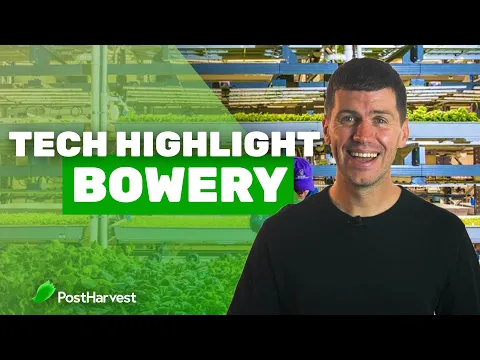
This data is processed by the company’s proprietary platform, called BoweryOS, which acts as the “brain” of the farm. With it, it’s possible to standardize production across multiple facilities, predict harvests with nearly surgical precision, and increase productivity over time—something traditional agriculture rarely manages to control.
Sustainable, Local, and Fresh Strawberries
In addition to innovating in technology, Bowery also redefines distribution logistics. The company’s vertical farms are located close to major urban centers, such as New York, Baltimore, and Philadelphia. This means that the strawberries produced there reach consumers in less than 24 hours, with superior freshness and without the need for long refrigerated transport.
This model drastically reduces the carbon footprint associated with food transportation. And since no pesticides are used, the products arrive clean, safe, and ready to consume, something increasingly valued by premium markets, gourmet supermarket chains, and high-end restaurants.
And What About Taste? That Was Considered Too
One of the most common myths about controlled-environment agriculture is that it produces tasteless vegetables and fruits. But Bowery Farming strawberries are surprising. As the growing variables can be adjusted precisely, the sugar content, acidity, and texture are genetically calibrated and grown to reach the ideal point.
The company works with selected varieties not for their transport resistance, as in conventional agriculture, but for flavor, aroma, and nutritional profile, since there is no need for long journeys or extended shelf times.
The result is a sweeter strawberry, with a firm texture, intense color, and freshness that lasts longer, ideal for markets that demand premium sensory quality.
A Replicable Model for the World
Bowery Farming’s strawberry farm is just the spearhead of a global vertical agriculture movement, aimed at meeting the growing demand for food on a planet with less arable land and greater water scarcity.
With climate change affecting crops and global urbanization on the rise, soil-free cultivation in vertical structures emerges as a scalable, sustainable, and resilient alternative. Major urban centers worldwide, such as Tokyo, Dubai, London, and Shanghai—are already analyzing similar projects to integrate local fresh food production with smart urban logistics.
Even in Brazil, initiatives in São Paulo, Belo Horizonte, and Curitiba are beginning to test vertical hydroponic models adapted to the tropical climate.
The world’s largest vertical strawberry farm is, therefore, more than just a technological curiosity. It is a living laboratory of what could be the new agricultural revolution — a revolution that happens in warehouses, with artificial intelligence, LEDs, algorithms, and recycled water, producing clean, tasty food at scale.









-

-

-

-

5 pessoas reagiram a isso.