Portuguese
  Spanish


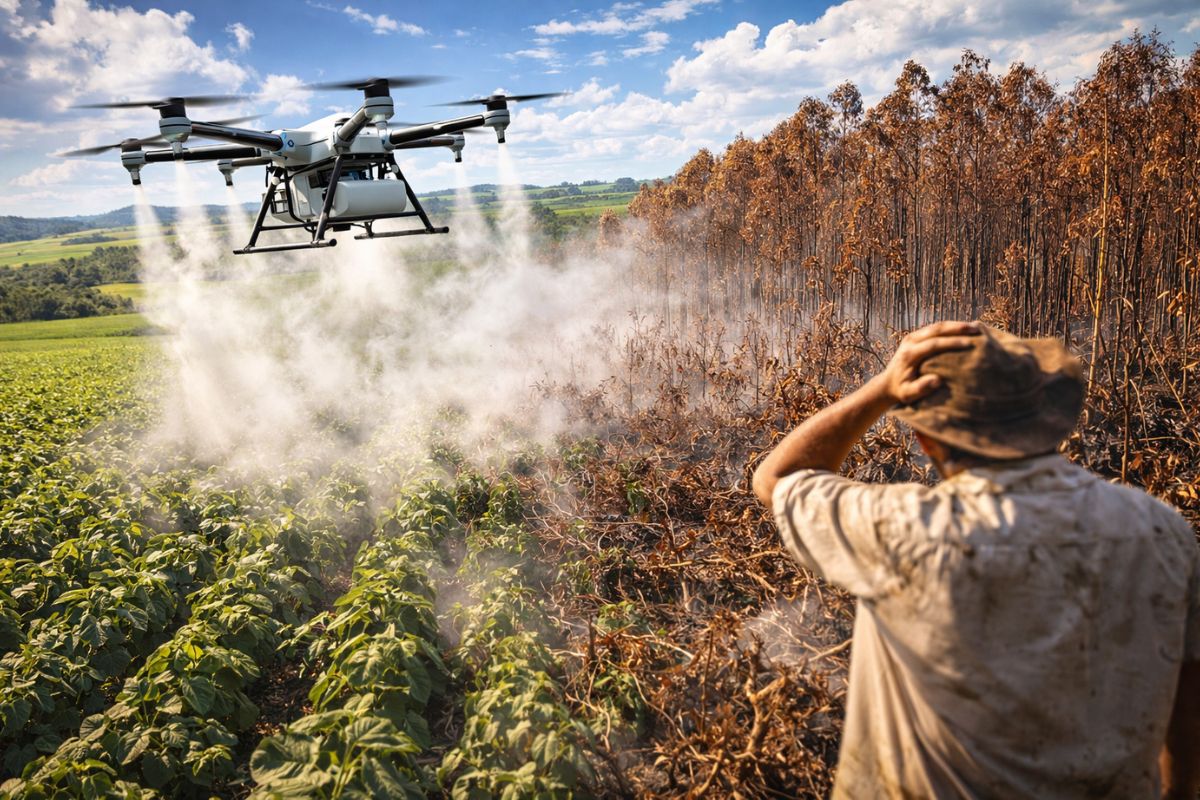

Drone application spreads herbicide over eucalyptus and chayote in neighboring property and causes estimated damage of R$ 1 million
The drone used for herbicide application in a pasture area became the center of a rural dispute in Goiás after the mist of the product reportedly reached the neighboring property and destroyed a significant part of two crops. According to the affected producer, the damage compromised about 40,000 eucalyptus trees and a chayote crop in full production phase.
The situation was recorded in Leopoldo de Bulhões, in the Estrada de Ferro region, and is already mobilizing an investigation. The estimated damage reaches R$ 1 million, adding losses in eucalyptus and the garden, while samples of the plants were collected for technical investigation regarding the product used and its possible relation to the damages.
The affected rural producer claims that he derives his family’s livelihood from the property and is now trying to measure the extent of the financial impact. According to the report, the application was allegedly made via drone on a neighboring farm, using herbicide for pasture cleaning, but the product ended up drifting onto the adjacent crops.
-
A company from SC that moves R$ 125 billion in agribusiness is integrated into an international group, maintains its headquarters and jobs in Chapecó, and is preparing to expand software for cooperatives, grain companies, and industries while targeting new markets without leaving the western region of Santa Catarina.

-
Producer receives news and had to cull almost the entire herd, bounced back with the help of compensation, and is now producing 450 liters of milk per day in SC.

-
Quail Eggs Reveal a “Secret Code” on Their Shells Explaining Unique Patterns and Colors

-
Rare Tropical Fruit Canistel, with Egg Yolk Color and Caramel Flavor, Gains Interest from Researchers and Small Producers in Brazil



According to him, the mist affected an area of approximately 10 hectares of eucalyptus and another 8 hectares of chayote. The effect of the herbicide reportedly compromised already established plants and also crops in the productive phase, which increases the severity of the loss.
Eucalyptus had 40,000 trees affected

In the eucalyptus area, the scenario is one of severe compromise, according to the producer. He reports that the signs of the product appear from the root system to the upper parts of the plant, leaving specimens dry and without proper development.
The presented estimate points to 40,000 eucalyptus trees planted on 10 hectares. The investment in the area would have been made between October 2025 and last month, with total expenses between R$ 350,000 and R$ 400,000. Of this amount, the certain loss in eucalyptus is estimated to be around R$ 200,000.
Chayote in production was also destroyed

In addition to eucalyptus, the application with drone would have completely affected the chayote garden, which occupied 8 hectares. The impact is even greater because the crop was in full production season.
At the end of February, the average harvest was 1,000 boxes of 22 kilograms per week. Now, according to the producer, everything has been lost.
The estimate is that only in chayote the future loss will reach around R$ 800,000, considering the time needed for replanting and resuming production. The sum of the two crops leads to a total close to R$ 1 million.
Investigation will ascertain product and possible responsibility
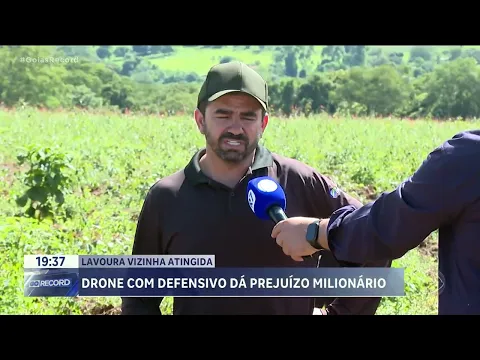

In light of the case, the producer filed a police report. The Scientific Police collected samples of the plants for analysis, and the report should indicate which product was used and whether it may have contributed to the destruction of the crops.
The investigation will also verify whether the pesticide used was regulated and if there was any assumption of risk in the application.
This point could be decisive for any liability for the damage, as the investigation seeks to understand if there was conduct that could characterize damage to another’s property.
Use of drone in the field requires strict control
The episode shows how aerial application with drone requires strict technical control, especially in areas close to other crops.
When there is dispersion of the product beyond the initial target, the impact can affect entire plantations and generate significant losses in a short time.
In the case reported in Goiás, the concern is not limited to financial value. The producer states that he will need to start practically from scratch in areas essential for the family’s income.
More than a dispute between neighbors, the episode exposes the extent of the risk when there is a failure or deviation in the application of herbicides in rural areas.
Producer tries to restart after losses
While the technical report is not ready, the affected producer claims that the path now is to try to rebuild production.
The phrase is simple but summarizes the scenario left after the application with drone: start over, plant again, and try to recover what was lost.
The outcome of the case still depends on the conclusion of the analyses and the definition of any responsibility.
Until then, the property remains marked by a mist that, according to the report, crossed the boundary and turned productive crops into million-dollar losses.
Do you think that the use of drones for herbicide application should have even stricter rules and oversight in the field?