





 Portuguese
  English
  Spanish
  4 min of reading
  0 comments


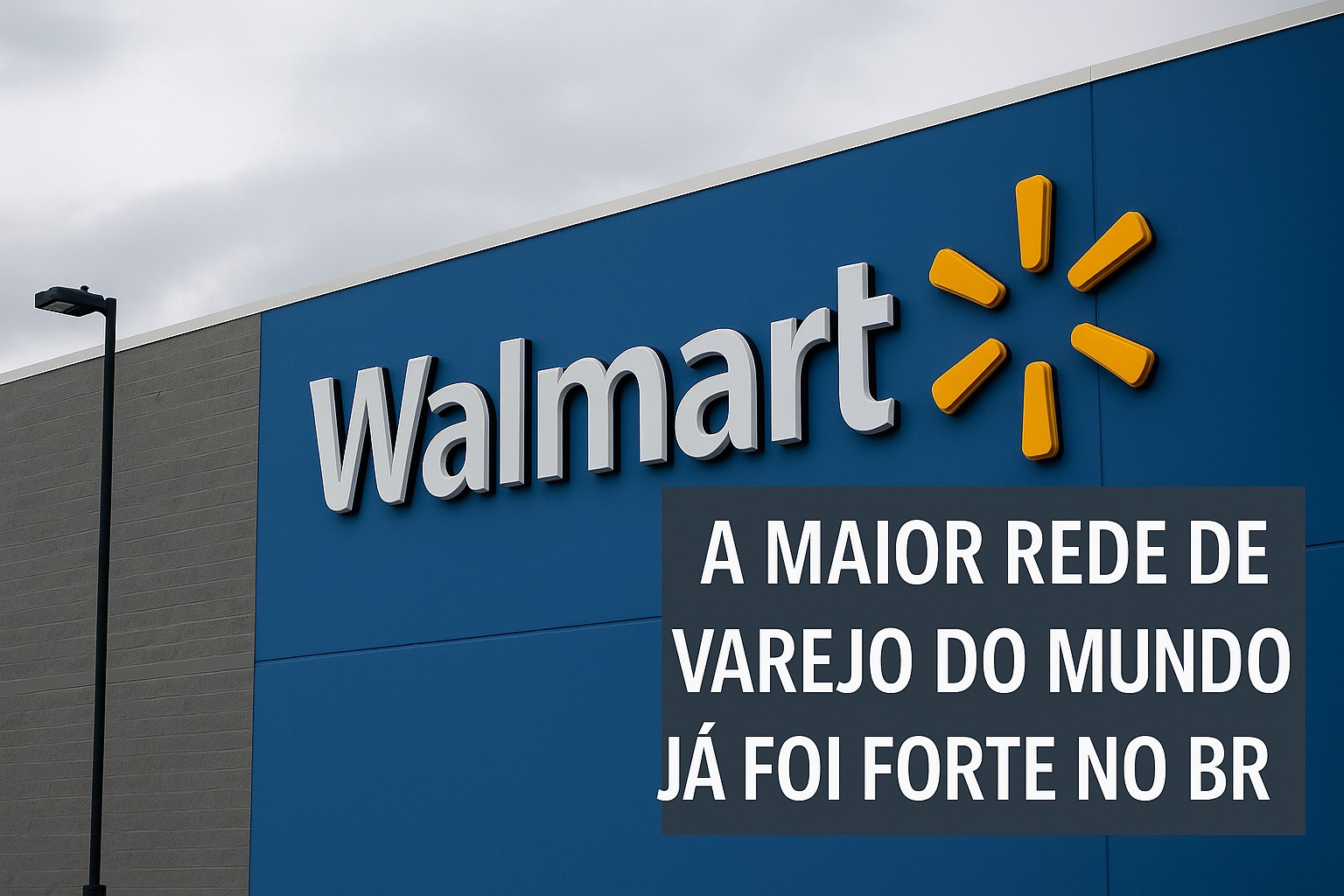
After Ending Brazilian Operation with 438 Stores in 18 States, Walmart Preserves International Scale, Record Revenue in Fiscal Year 2025 and Number One Position in Global Retail
The world’s largest retail chain invested in Brazil for 22 years, sold 80% of its operation in 2018 after reaching 438 stores in 18 states, but maintains US$ 681.0 billion in revenue for fiscal year 2025 and an active presence in 19 countries.
Walmart attempted to consolidate retail in Brazil for 22 years, sold 80% of its operation in 2018 after operating 438 stores in 18 states, but continues as the largest global retailer, with revenue of US$ 681.0 billion in fiscal year 2025, maintaining international leadership.
The current size of the group appears in the annual report for fiscal year 2025, which records total revenue of US$ 681.0 billion, mainly composed of net sales of US$ 674.5 billion, highlighting the centrality of traditional retail in its structure.
-
Historic bankruptcy of Centauro shocks the market, and the century-old company puts more than 500,000 products, machines, and complete infrastructure up for online auction.

-
New shoe factory in Ceará is expected to create 400 jobs and strengthen the local economy.

-
No one imagined it, but a mixture of sawdust with a mineral that fights fires surprises scientists with a result that changes the course of fire-resistant construction.

-
From empty land to a high-end house, wooden construction uses a lightweight system, metal structure for the foundation, ventilated ceramic cladding, and special windows to create an efficient and comfortable living space throughout the year.

According to the corporate report, Walmart employs about 2.1 million people worldwide, serves approximately 270 million customers and members per week, and operates more than 10,750 physical stores and digital platforms.
Operations in 19 countries, combining stores and e-commerce, help explain why the company continues to lead global retail rankings, even after a significant withdrawal from the Brazilian market.
This contrast between local performance and global scale has made the Brazilian case a recurring reference in industry analyses, especially as it involves a leading group in global revenue.
From The Height of Acquisitions to The Sale of Control in Brazil in 2018
The exit of Walmart from Brazil was formalized in 2018, when the Administrative Council for Economic Defense, Cade, approved without restrictions the sale of 80% of Walmart Brazil to Advent International fund.
In the operation approved by Cade, the group retained a 20% stake, while control passed to the financial investor, ending a strategy of direct presence in the national supermarket and hypermarket retail.
At that time, Walmart had been in Brazil for 22 years, operated 438 stores in 18 states, and was already facing operational difficulties and successive losses, according to media reports at the time.
The regulatory decision by Cade outlined companies and structures included in the transaction, without imposing competitive remedies, indicating that there were no formal obstacles to the change of corporate control.
In practice, the operation marked the end of Walmart’s long-term bet in the country, after a trajectory marked by acquisitions, standardization of processes, and logistical execution challenges.
In 2019, the resulting company adopted the corporate brand Grupo BIG and announced an investment plan of around R$ 1.2 billion over 18 months, already under new governance.
The episode has since been cited in Brazilian retail as an example that international scale does not guarantee automatic adaptation to highly competitive local markets.
Why Global Leadership Continued Even with The Brazilian Setback
The global scale of Walmart acts as a main buffer against local failures, supported by a revenue base of US$ 681.0 billion in fiscal year 2025, according to the company’s annual report.
In addition to financial volume, the presence in 19 countries and more than 10,750 stores allows risks to be diluted and poor performances in certain markets to be offset by positive results in others.
International rankings continue to place the group at the top of the sector. According to Deloitte, Walmart leads again the Global Powers of Retailing study, which compares large global networks by revenue.
The National Retail Federation, NRF, in partnership with Kantar, also ranks Walmart as number one in the Top 50 Global Retailers 2025 report, attributing US$ 676 billion in global revenues.
The difference between the US$ 681.0 billion in the annual report and the US$ 676 billion cited by NRF and Kantar arises from distinct methodologies, cuts, and reference periods, but does not alter the leadership.
The group’s annual report also highlights the omnichannel strategy, integrating physical stores, apps, and online operations, increasing purchase frequency and creating new recurring revenue streams.
In 2025, the document reinforces that most of the revenue continues to come from net sales, indicating that the core of the business remains large-scale retail, not ancillary activities.
Walmart in Brazil
In the Brazilian context, the experience showed that global leadership does not ensure local traction, but also demonstrated the group’s ability to reconfigure its portfolio when results do not appear.
For the sector, the case serves as a warning about execution, as 22 years of presence and 438 stores did not prevent losses and the decision to sell control of the operation.
The financial logic remains measurable: the same company that ends a national cycle preserves its global lead by sustaining cash, scale, and recurring demand in multiple countries.
In Brazil, the regulatory milestone was Cade’s authorization on 06/22/2018; internationally, the most recent data is fiscal year 2025, with reported revenue of US$ 681.0 billion.
As a complementary antecedent, the restructuring post-sale, with the shift to Grupo BIG and the announcement of investments, indicates that the Brazilian operation followed its own path under different strategy and management.
Sources consulted for this article: Agência Brasil, Correio Braziliense, Veja, Central do Varejo, and other reliable sources.







-

Uma pessoa reagiu a isso.