





 Português
  Inglês
  Espanhol
  4 min de leitura
  1 comentário


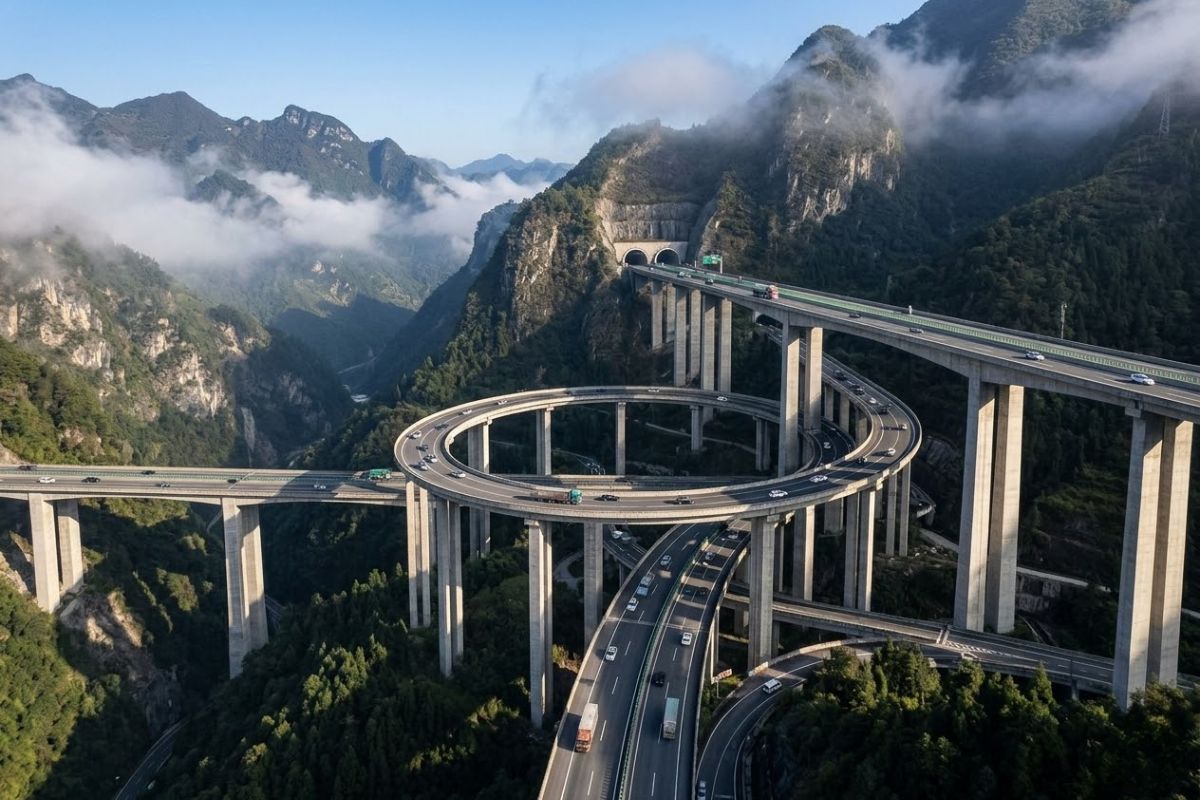


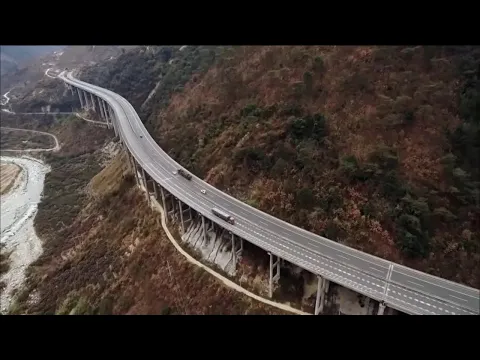
Crossing Deep Mountains of the Chinese Province of Sichuan, the Yaxi Expressway, known as the “Sky Road,” connects isolated valleys with an impressive sequence of bridges and tunnels, reducing routes that previously took about 10 hours to approximately 8 hours.
Crossing steep mountains, deep valleys, and high passes over 2,000 meters above sea level, the Yaxi Expressway has become one of the most impressive highways in China. The road, often referred to as the “Sky Highway,” winds through the province of Sichuan on a route marked by bold engineering and dramatic landscapes.
Along the way, 270 bridges and 25 tunnels pierce the mountains, creating a connection that has transformed regional transportation. What once required about ten hours of travel can now be traveled in approximately eight, shortening distances and connecting important routes for truck drivers, residents, and goods.
A Road Built to Conquer the Mountains
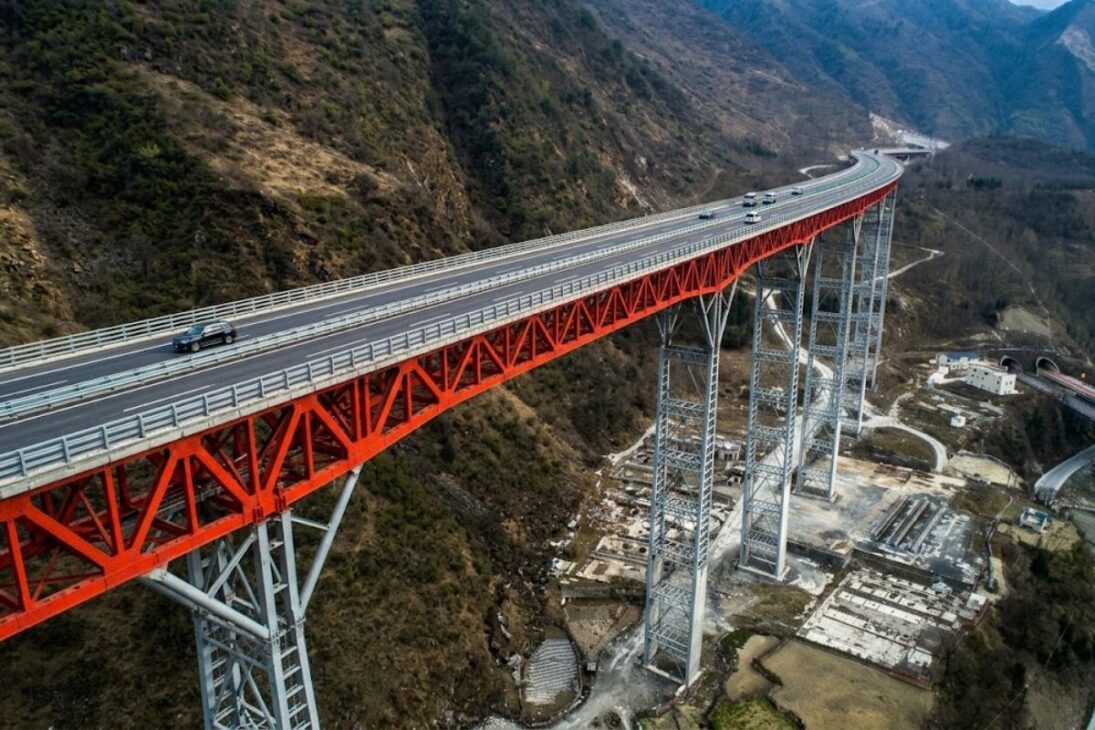
The Yaxi Expressway traverses one of the most challenging terrains in southwestern China. Between Xinjiang and Ya’an, the mountainous terrain posed a gigantic challenge to the engineers responsible for the work. The highway stretches over steep slopes and deep valleys, requiring technical solutions that allowed the road to remain stable at high altitudes.
-
The world’s first octopus farm wants to open in the Canary Islands and is already provoking an international reaction: the plan aims to produce 3,000 tons per year.

-
Drought may be creating stronger superbugs in the soil and helping antibiotic resistance reach hospitals, warns a study highlighting a problem that could grow alongside extreme weather.

-
The biggest scam in history: Napoleon’s France deceived the United States by selling them a territory that was Spanish.

-
Why is the Danakil Desert so dangerous? It has unstable terrain and how extreme temperatures and toxic gases turn the region into one of the most hostile environments on Earth.

To overcome this complex environment, the project took about five years of intensive work. Elevated bridges were built over rivers and canyons, while tunnels were dug directly into the mountains to allow the road to continue advancing even where the terrain seemed impossible.
The result is an infrastructure that combines heavy engineering with adaptation to the terrain. In certain sections, the highway features three stacked lane levels in just 11 kilometers, with an elevation difference of about 400 meters.
Giant Bridges and Structures Designed for the Extreme Terrain
Among the most impressive points of the highway is a metal viaduct with about two kilometers in length. The geology of the region prevented the use of conventional concrete structures, forcing engineers to develop a solution based on hollow steel tubes to reduce the weight of the construction.
This bridge was built at approximately 110 meters high and mobilized hundreds of workers for years. More than 800 people participated in the construction, facing the challenges of working at high altitudes and in mountainous environments.
For those traveling along the highway, these structures create the sensation of being on a roller coaster suspended between valleys and slopes. Each curve reveals new mountain landscapes, reinforcing the almost cinematic nature of the road.
Truck Drivers Confront Weather, Altitude, and Long Climbs
Despite the beauty of the scenery, the Yaxi Expressway also requires constant attention from drivers. Truck drivers transporting food and goods face long climbs and inclines greater than 7%, which demands constant effort from engines and heightened attention.
During winter or abrupt weather changes, fog and snow can turn the mountains into an even more challenging environment. In these conditions, the road requires careful driving, especially on bridges and elevated sections.
At certain points along the highway, road patrols work daily to monitor the road conditions. Teams check the pavement temperature, assist trucks struggling to climb, and monitor the flow of vehicles, ensuring that traffic continues to function even under the most adverse conditions.
Long Descents and Mechanical Risks in the Mountains
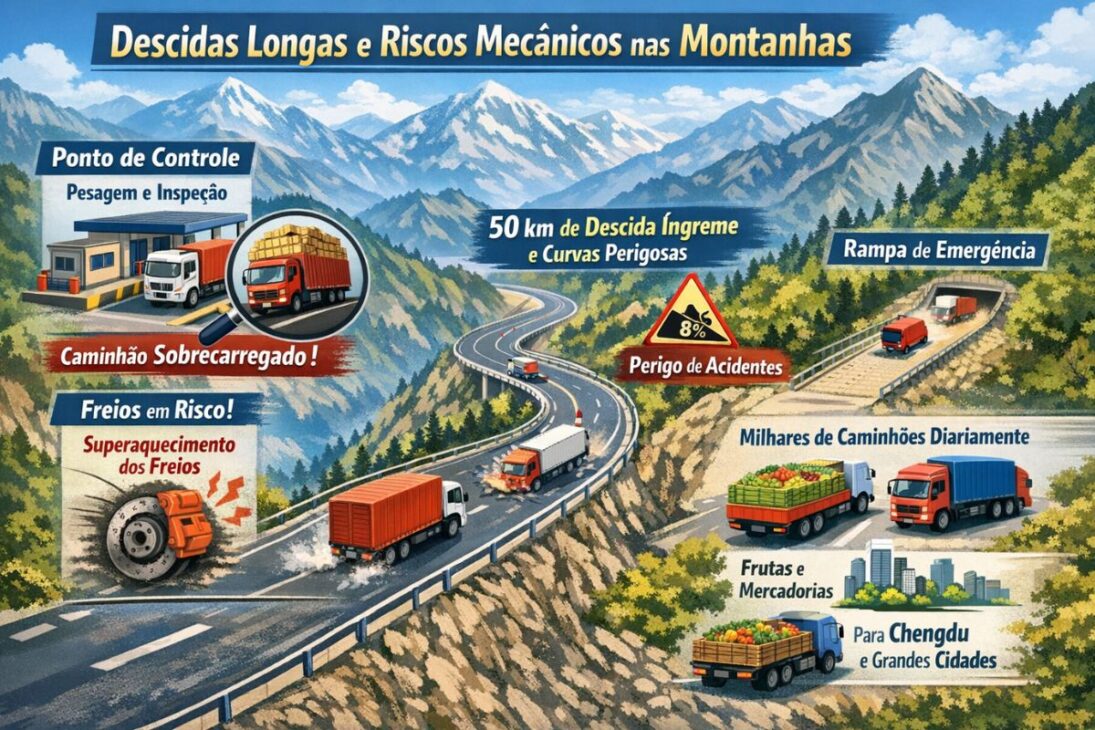
If the climbs require power, the descents in the mountains require caution. One of the best-known sections of the Yaxi Expressway has over 50 kilometers of continuous descent, testing the brake systems of trucks.
To prevent accidents, vehicles go through checkpoints where they are weighed and inspected. An overloaded truck may lose braking efficiency, increasing the risk of accidents on a road marked by curves and prolonged declines.
Even with these challenges, thousands of trucks cross the highway daily transporting fruits, vegetables, and other products to larger cities in the region, including Chengdu, the capital of the province.
The Sky Road and the Transformation of the Regional Route

In addition to the logistical impact, the Yaxi Expressway has also altered the dynamics of the region. Travel time has been reduced from about ten hours to approximately eight, facilitating the transportation of goods and connecting communities previously isolated by the mountains.
The road follows part of ancient trade routes that crossed Sichuan toward Tibet. Today, the modern infrastructure traces the historical paths that for centuries were traveled by porters and caravans.
Along the way, new projects continue to be planned, including even larger bridges and additional connections to facilitate the flow of trucks and vehicles between the mountainous regions of western China.
Among mountains, giant bridges, and tunnels carved into the rock, the Yaxi Expressway represents one of the most impressive highways ever built in mountainous terrain. More than just a road, it symbolizes how modern engineering can traverse landscapes deemed nearly impassable.
At the same time, the highway reveals the everyday life of those living along it: truck drivers who face unpredictable weather, long climbs, and dangerous descents to keep transportation running.
Now we want to know your opinion: would you dare to drive on a road suspended between mountains at over 2,000 meters above sea level? Is the scenery worth the challenge, or would the risk be too great? Share your thoughts in the comments.








Na vida as pessoas fazem escolhas. Algumas pessoas dão a própria vida pra viverem fortes emoções. Há os viciados por adrenalina. Sem dúvida, é impressionante essa Estrada do Céu. Com um olhar romântico, uma aventura inimaginável e sensacional. Mas para quem enfrenta diariamente o perigo nas estradas nas serras isso está longe de ser uma estrada do céu. Eu não me arriscaria. Prefiro gastar mais duas horas de viagem, ganhar menos dinheiro porque a vida é muito mais do que viver fortes emoções.