





 Português
  Inglês
  Espanhol
  5 min de leitura
  0 comentários


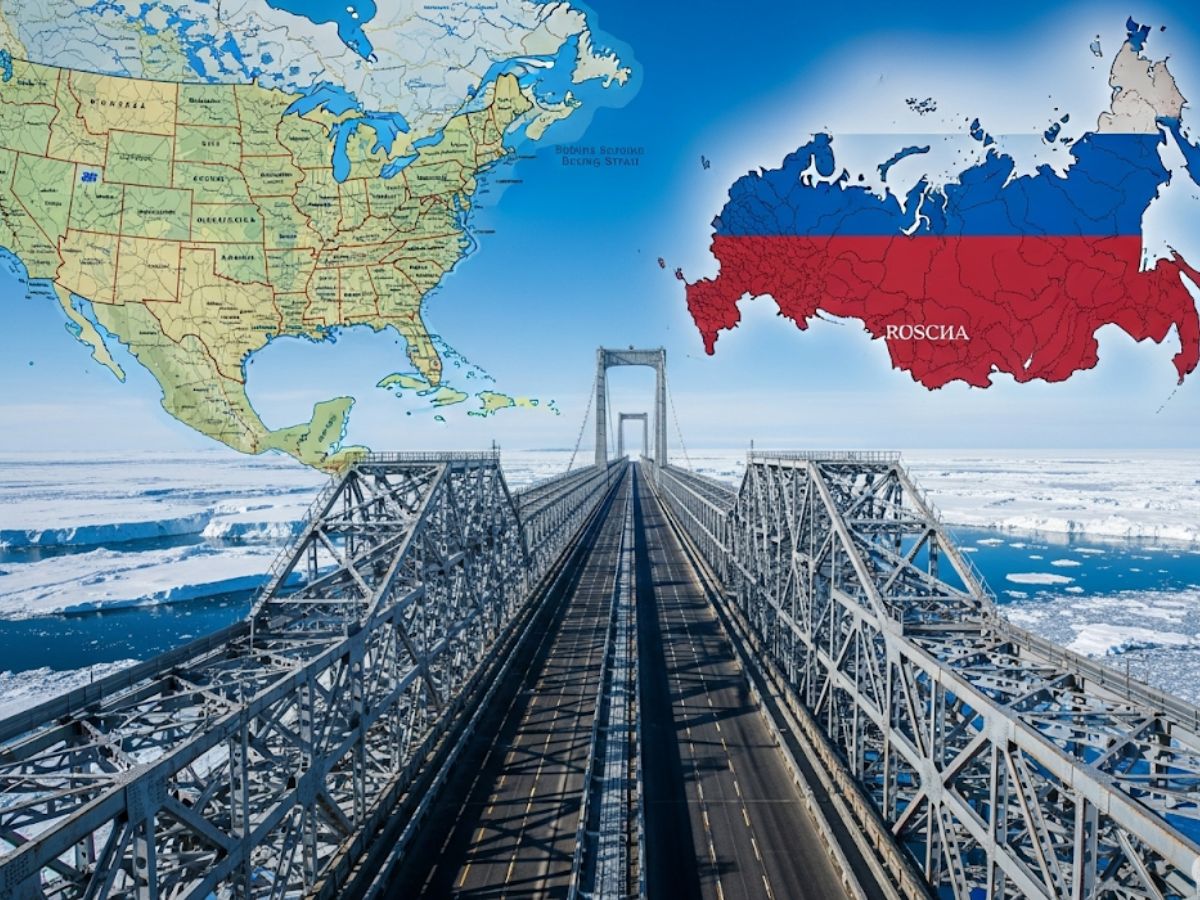
A Physical Link Between Continents: Explore The Ambitious Project Of A Bridge Or Tunnel To Connect The United States And Russia Across The Bering Strait, Its Challenges And History
The idea of a crossing in the Bering Strait, whether a bridge to connect the United States and Russia or a tunnel, is an engineering vision that has persisted for centuries. This project aims to physically connect Siberia (Russia) and Alaska (USA), extending approximately 64 to 100 kilometers.
From proposals by Czar Nicholas II to modern concepts, the link seeks to facilitate the transport of cargo, energy, and passengers, integrating into a potential “China-Russia-Canada-America” railway. This article details the history, technical challenges, costs and the complex geopolitical implications of this monumental proposal for a bridge to connect the United States and Russia.
The Historical Vision Of The Bridge That Will Connect The United States And Russia
The proposal for a physical link between Eurasia and North America, a bridge to connect the United States and Russia or a tunnel through the Bering Strait, is one of the most persistent engineering visions. The first ideas date back to the 19th century, with figures like William Gilpin, governor of the Colorado Territory, proposing a “Cosmopolitan Railway” to connect the world. It is claimed that even Abraham Lincoln believed in the viability of such a project, consistent with his vision of railway expansion.
-
The world’s first octopus farm wants to open in the Canary Islands and is already provoking an international reaction: the plan aims to produce 3,000 tons per year.

-
Drought may be creating stronger superbugs in the soil and helping antibiotic resistance reach hospitals, warns a study highlighting a problem that could grow alongside extreme weather.

-
The biggest scam in history: Napoleon’s France deceived the United States by selling them a territory that was Spanish.

-
Why is the Danakil Desert so dangerous? It has unstable terrain and how extreme temperatures and toxic gases turn the region into one of the most hostile environments on Earth.


In the early 20th century, Joseph Strauss, future engineer of the Golden Gate, proposed a railway bridge to the Russian Empire, but it was rejected. A significant initiative emerged in 1904, with an American syndicate proposing a Siberian-Alaskan railroad, including a tunnel. Czar Nicholas II approved the plan in 1905, but the project was thwarted by political instability and lack of funding. During the Cold War, engineer Tung-Yen Lin advocated for the “Intercontinental Peace Bridge,” aimed at fostering trade and understanding. Later, Lyndon LaRouche promoted the idea of an “Eurasian Land Bridge.” The central goal has always been to facilitate global rail transport.
Engineering Behind The Bridge To Connect The United States And Russia
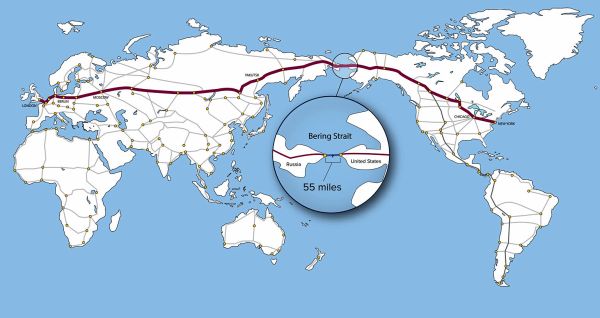
Building a bridge to connect the United States and Russia or a tunnel in the Bering Strait faces monumental engineering challenges. The choice between a bridge and a tunnel considers the use of the Diomede Islands as intermediate points. A bridge would face colossal forces of floating ice, extreme weather with temperatures of up to -50°C, and the need for long spans. A tunnel, favored in recent proposals like that of InterBering, would offer protection against the weather and ice, but would involve complex excavation, ventilation, and earthquake safety.
The Arctic environment imposes severe conditions. Long, dark winters restrict construction to a few months in the summer. Permafrost, permanently frozen ground, requires special techniques to prevent thawing and subsidence, both on the coasts and in the vast land connection areas. The seafloor geology, with a maximum depth of 55 meters, is considered technically feasible, but the region’s seismicity adds complexity.
One of the biggest obstacles is the lack of linking infrastructure on both shores. Thousands of kilometers of new railways and roads would need to be built in remote territories. Differences in rail gauge between Russia (1520mm) and the USA/Canada (1435mm) would require solutions such as cargo transloading, variable gauge axles, or double tracks.
The Viability Of A Bridge That Will Connect The United States And Russia
Cost estimates for a bridge to connect the United States and Russia or a tunnel in the Bering Strait vary enormously, from US$ 60-100 billion to “many hundreds of billions”, potentially reaching trillions if complete high-speed networks are included. Proposals like the TKM-World Link estimated the tunnel at US$ 10-12 billion and the total project at US$ 65-66 billion. InterBering projects US$ 35 billion for its tunnel system, but US$ 250 billion with the conventional railway network.
The crossing itself often represents a fraction of the total investment. Most costs reside in building the auxiliary railway and road networks. For example, in InterBering’s proposal, the tunnel would be only 14% of the total cost of the conventional system. The main economic justification is to revolutionize global trade, with potential to transport 3% of global freight (TKM-World Link) and significantly reduce transit times compared to maritime transport.
Another economic driver is the access to vast mineral resources and fossil fuels in Siberia and Alaska. The railway could unlock these riches and promote development corridors. Socioeconomic benefits include the creation of tens of thousands of jobs and the potential for tourism. However, the return on investment is highly speculative, with optimistic projections of 10 years (TKM) to longer periods of 20-25 years.
The Future Of The Bridge
Experts and analysts believe that although modern engineering theoretically has the capacity to build a bridge to connect the United States and Russia or a tunnel, the project’s viability is more a matter of political will and global cooperation than of technical capability. The project transcends engineering, serving as a “barometer of international relations,” especially between the USA, Russia, and China.
Historical analysis reveals that interest fluctuates with geopolitical ambitions and economic opportunities, being shelved during periods of heightened tensions or prohibitive costs. The main obstacles identified are of a geopolitical, financial, and logistical nature. Louis Cerny, a specialist involved in discussions, estimated the cost of the tunnel at around US$ 120 billion, a figure that underscores the financial challenge.
The prevailing conclusion is that, without a significant change in the geopolitical climate and robust international cooperation, the project will remain conceptual. Overcoming political obstacles is seen as more critical than overcoming engineering challenges to realize this transcontinental link.
Geopolitics And The Environment In The Crossing Between Continents
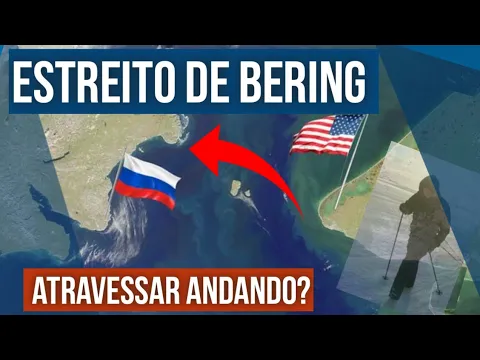

The construction of a bridge to connect the United States and Russia would have profound geopolitical implications, especially in the USA-Russia-China triangle and Arctic dynamics. The link could facilitate Russian access to North America, raising security concerns in the USA, or solidify the Russia-China partnership in the region. The security of such critical infrastructure would be paramount, especially considering the current climate of tensions and the growing militarization of the Arctic.
Environmentally, the Bering Strait is a fragile marine ecosystem and a vital migration corridor for whales, polar bears, and millions of birds. Construction could disrupt habitats, generate underwater noise, and create physical barriers. Pollution from accidental spills is a constant risk. In coastal areas, construction and supporting infrastructure could accelerate erosion and the thawing of permafrost.
The Indigenous communities of the region would be profoundly affected, with threats to their hunting and fishing-based livelihoods, food security, and cultural heritage. Environmental Impact Assessments (EIA) and the free, prior, and informed consent of Indigenous populations are crucial. Environmental management and impact mitigation would require an unprecedented effort across multiple jurisdictions.








Seja o primeiro a reagir!