





 Portuguese
  English
  Spanish
  8 min of reading
  0 comments


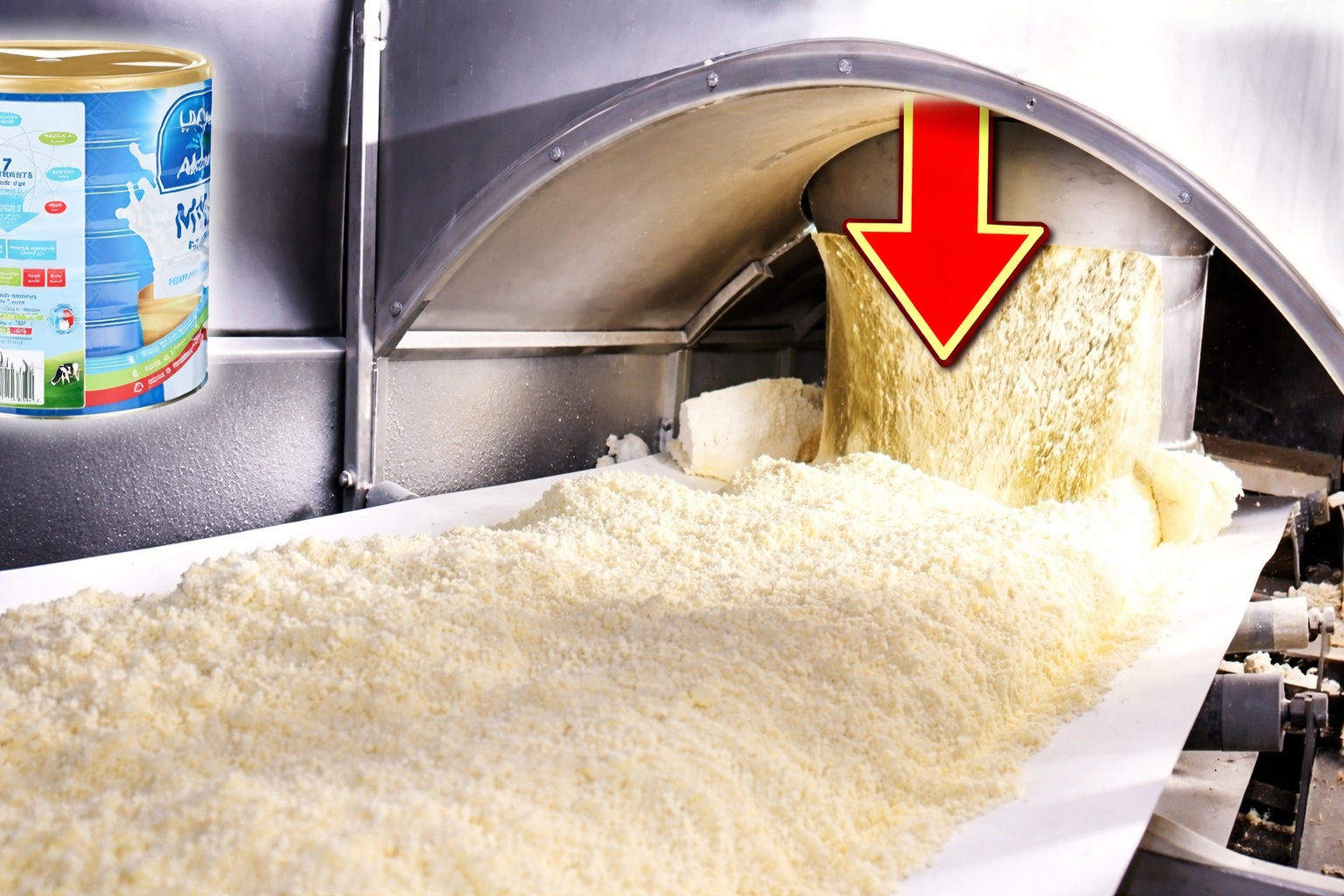
In Adrar, Algeria, a Megaproject by Baladna with GEA Technology Promises to Produce 100 Thousand t/year of Powdered Milk and Reduce Imports.
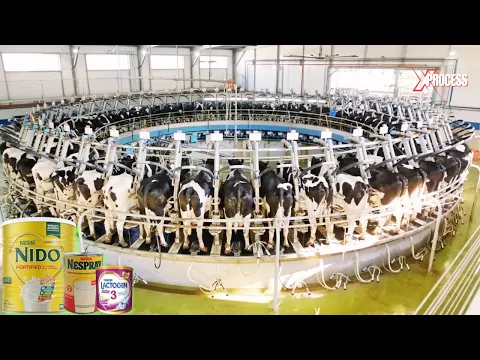
On July 28, 2025, in Algiers (Algeria), the German company GEA signed a contract with Baladna (Qatar) and the National Investment Fund of Algeria (NIF) to build, in the province of Adrar (south of the country), a complex described as the largest integrated dairy farm with a powdered milk unit in the world, aiming to operate by the end of 2027 with an estimated annual capacity of 100,000 tons of powdered milk. What makes this “giant” project remarkable is not just the number reflected in its capacity: it is the idea of building, practically from scratch, an entire chain in the middle of the Sahara, with industrial-scale milk production, processing, drying (spray drying), and packaging in a single productive ecosystem. It’s the kind of endeavor that blends food engineering, logistics, water, energy, and biosecurity at a level where each mistake costs an entire harvest and each success can change the map of import dependency.
Megaplant for Powdered Milk in Adrar: Where Is It and Why Was the Desert Chosen
Adrar is a province in southern Algeria, in a desert region, far from the more populous coastal hubs of the country. Precisely for this reason, the project draws attention: milk is a product sensitive to heat, water, and cold chain, and the decision to move production to an arid area requires infrastructure that is not typically reflected in the “label” when discussing just tons of powdered milk.
According to information released about the contract, the structure will be managed by a new entity, Baladna Algeria S.P.A., created to finance and operate the venture with participation from NIF and Baladna. GEA comes in as a supplier of solutions and equipment throughout the chain—from handling and milking to processing and powdered milk plant.
-
Friends have been building a small “town” for 30 years to grow old together, with compact houses, a common area, nature surrounding it, and a collective life project designed for friendship, coexistence, and simplicity.

-
This small town in Germany created its own currency 24 years ago, today it circulates millions per year, is accepted in over 300 stores, and the German government allowed all of this to happen under one condition.

-
Curitiba is shrinking and is expected to lose 97,000 residents by 2050, while inland cities in Paraná such as Sarandi, Araucária, and Toledo are experiencing accelerated growth that is changing the entire state’s map.

-
Tourists were poisoned on Everest in a million-dollar fraud scheme involving helicopters that diverted over $19 million and shocked international authorities.


In practice, this means it’s not “just a factory”: it’s an industrial arrangement to produce milk continuously and transform that milk into a stable product that is easy to store and transport—which is exactly why many countries import powdered milk when they need to ensure supply even with internal bottlenecks.
100 Thousand Tons Per Year: What This Number Really Means in the Powdered Milk Industry
“100 thousand tons per year” seems like an abstract figure until you translate that into operational reality: a plant with this ambition needs a regular supply of raw milk, standardization, sanitary control, quality laboratory, and, above all, a highly efficient drying system, because the production of powdered milk depends on removing water on a large scale without destroying the characteristics of the product.

The most common industrial path involves concentrating the milk before drying (to reduce the volume of water to evaporate) and then applying spray drying: the concentrated liquid is atomized into fine droplets in a hot air stream, forming powder almost instantly.
This process, although “seems simple”, is a choreography of temperature, humidity, airflow, particle size, and energy efficiency, and any instability results in yield loss, changes in solubility, clumping of the powder, or sensory variations.
This is where giant projects tend to concentrate money and risk: drying towers, evaporators, cyclones, filters, heat recovery, automation, and contamination control by particles. In an operation that aims to be “the largest,” it is not enough to dry; it must dry with industrial repeatability.
Production Technology: Why Powdered Milk Is “Air Engineering,” and Not Just Milk
Powdered milk is, at its core, a preservation technology: reducing water to extend shelf life and facilitate transport.
The “secret” is that this does not happen in a tank, but in contact with controlled air and heat—which makes the process as dependent on thermal engineering as it is on livestock.

The technical handbook for dairy processing describes the industrial logic: first, concentration of milk through evaporation; then, drying by spray drying, with parameters adjusted to preserve product properties and ensure stability.
It is a system where energy and efficiency matter as much as raw materials because evaporating water at factory scale is one of the most expensive tasks in the food industry.
When a project of this magnitude is announced for a desert region, the subtext is clear: either the plant will be extremely well planned (including water, energy, maintenance, and supply chain), or the operational cost will swallow the promise of “food security.” For this reason, the choice of location often comes with a robust engineering and financing package.
Timeline 2026–2027: Why “Starting in 2026 and Operating in 2027” Is a Real Challenge
The disclosed contract indicates construction beginning in 2026 and operation by the end of 2027. This is aggressive for a complex that involves a farm, processing plant, and powdered milk facility, because many parts have rigid dependencies: you can’t run a drying tower without milk in volume; you can’t scale milk without a sanitary system and logistics; you can’t ensure quality without a laboratory, standards, and trained staff.
What tends to happen in such ventures is the “ladder” of commissioning: lines enter testing, pilot productions validate parameters, fine adjustments are made before the factory reaches regular operation. When the announcement talks about the end of 2027, the most important thing for the reader to understand is: this is not the moment when “everything begins,” but when the project expects to be significantly operational.
And there is an additional factor: powdered milk does not forgive inconsistency. In drying industries, a detail like variation in solids in the milk, instability of energy, or filtration failures can lead to stoppages and rejected batches. The promised scale puts pressure on all links simultaneously.
Food Security and Imports: Why Algeria Became a “Huge Market” for Powdered Milk
For years, Algeria has appeared as a very relevant market for dairy commodities, especially powdered milk. A Reuters report on Russian dairy exports describes Algeria as a potentially “number one” buyer in volume for these commodities, even mentioning the milestone of a first delivery of 500 tons of skimmed milk powder (SMP) in December (in the context of Russian exports) and the strategic interest in this market.
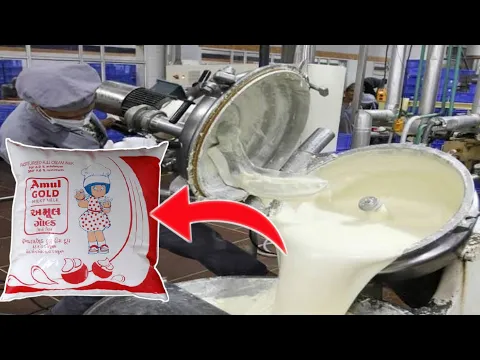
This background helps to understand why a project “of the largest integrated facility” makes political and economic sense: powdered milk is a key product for stabilizing supply, especially when a country depends on external purchases and wants to reduce vulnerability to price, exchange, and logistics.
The project in Adrar fits into this logic as an attempt to shift part of the supply inward, creating structured production and, at the same time, a processing industry capable of transforming raw milk into a product of high strategic value and easy storage.
What Does “Integrated Facility” Mean and Why Does It Change the Economics of the Project
An integrated facility is not just about “having everything in the same place” for convenience. It is about reducing losses, minimizing bottlenecks, better controlling milk standards, synchronizing production with processing, and reducing the risk of interruptions in raw materials. It is also a way to concentrate technology and standardization in an “anchor” project, capable of attracting suppliers, services, and specialized labor.
When GEA is cited as a supplier throughout the chain, it points to a systems engineering approach: instead of assembling disconnected pieces, the goal is for the farm and factory to “talk” in parameters—volume, quality, cleaning routines, traceability, and automation.
For the reader, the consequence is simple: integrated projects tend to be more expensive to start, but they can be more stable to operate if the infrastructure is well resolved. That is exactly why they appear as “megaprojects”: because they require capital, planning, and execution at scale, not makeshift efforts.
Local Impact: Jobs, Production Chain, and What Often Goes “Invisible” in the Headline
Public information about the contract mentions creating local jobs as part of the impact package. But the real effect of a megafactory often goes beyond the number: workforce training (technicians, maintenance, quality), creating logistical routes, refrigeration services, and a supply network that sustains continuous operation.
In the case of Adrar, the logistical challenge tends to be a central part of the cost: transporting inputs, ensuring parts and maintenance, supporting operation in an extreme environment, and at the same time distributing the final product for internal consumption and industrial channels. Powdered milk is easier to transport than fresh milk, but the factory needs to survive the environment to produce.
That is why, when a project is described as “the largest in the world” in its integrated category, the size is not only in the final volume—it is in what is needed to keep the machine running day after day, with standards and without collapsing due to operational friction.
What to Observe From Here On: Signs That the “Largest Powdered Milk Factory” Is Becoming a Reality
The promise of 2026–2027 puts the project in a short window. To follow whether this materializes, the most concrete signs typically are: licenses and infrastructure works, announcements of equipment acquisition/installation, commissioning stages, and institutional publications from the company and government with execution milestones.
The second sign is technical communication: when details about processes, production lines, and operational startup timelines begin to surface. In drying and powder projects, this usually comes along with information about evaporation capacity, dryers, automation, and quality control—because this is where the promise is sustained.
The third sign is the market: if Algeria is treated as a huge buyer of powdered milk in international trade, any change in volume imported over time (or announcements of substitution by local production) tends to appear in trade and supply news, as already seen in reports about the race for markets in North Africa.
The greater ambition of this megaproject is not just to break records; it is to reduce import dependence and create stable industrial capacity in a product that is a staple of supply.
If it fulfills its promises (capacity, timeline, and integration), it becomes a reference for how a country tries to “industrialize milk” at the highest level: producing, processing, and storing at scale.










-

-

-

6 pessoas reagiram a isso.