





 Português
  Inglês
  Espanhol
  7 min de leitura
  0 comentários


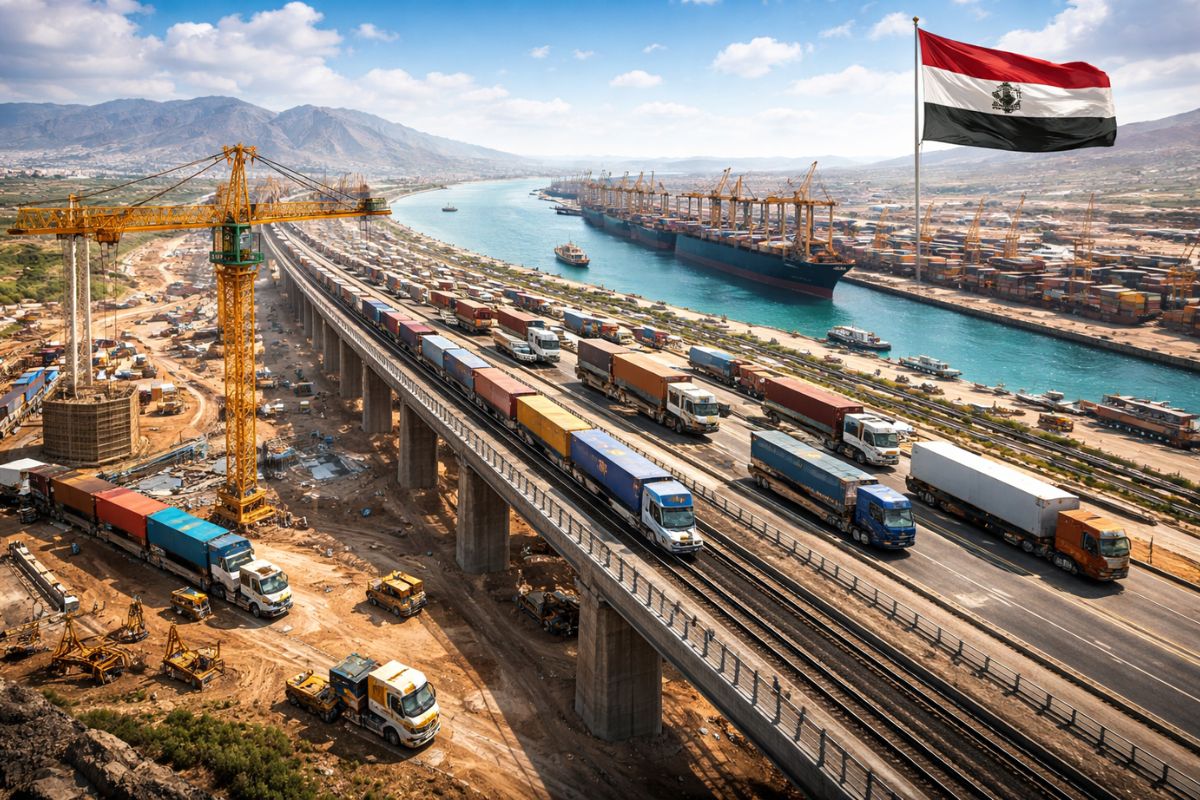
The mega project of the Grand Port of Faw accelerates in southern Iraq, promises to reduce dependence on traditional routes, and attempts to reposition the country as a new logistics power in global trade
The mega project advancing in southern Iraq is already being treated as one of the region’s most ambitious bets to transform trade flows between Asia and Europe. With an estimated investment of around R$ 89.4 billion, the Grand Port of Faw emerges as a central piece of a strategy that goes beyond infrastructure and aims to reposition the country on the global logistics map.
More than just expanding port capacity, the mega project aims to open a new strategic corridor capable of accelerating the transport of goods, reducing dependence on traditional routes, and attracting investments to an economy that seeks to lessen its historical ties to oil. If the proposal advances as planned, Iraq could gain a much more relevant role in global trade.
Where the mega project is being built and why it matters
The Grand Port of Faw is being built on the Al-Faw Peninsula, in the Basra province, in southern Iraq, with direct access to the Persian Gulf. This location helps explain why the venture is attracting so much interest.
-
Goodbye bedside table: floating shelves become a trend in 2026 by freeing up space in the bedroom, improving circulation, bringing visual lightness, and integrating technology without taking up floor space.

-
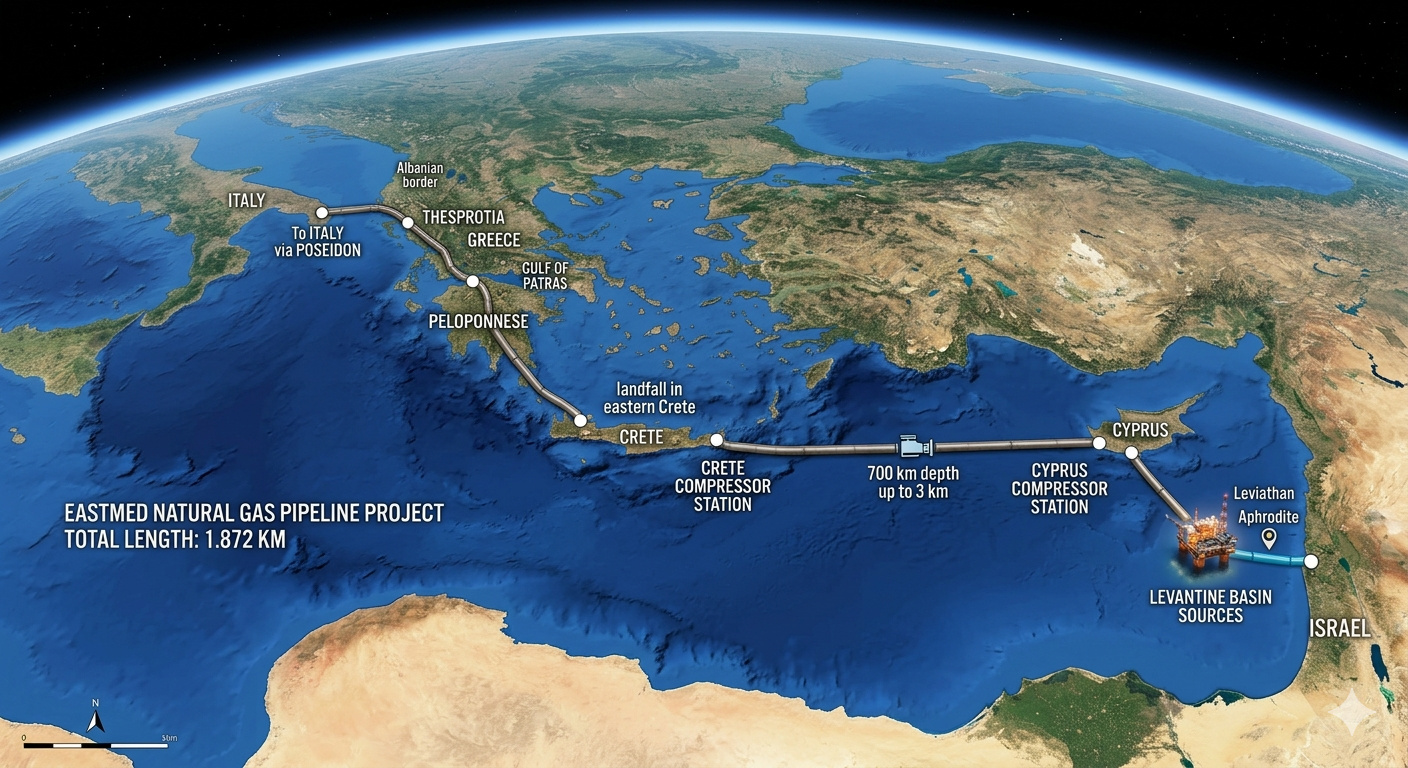
Israel, Greece, and Cyprus signed an agreement in 2020 to transport gas from the Mediterranean to Europe via a 1,872 km pipeline, but Turkey claimed sovereignty over part of the maritime route, and the project never materialized.
-
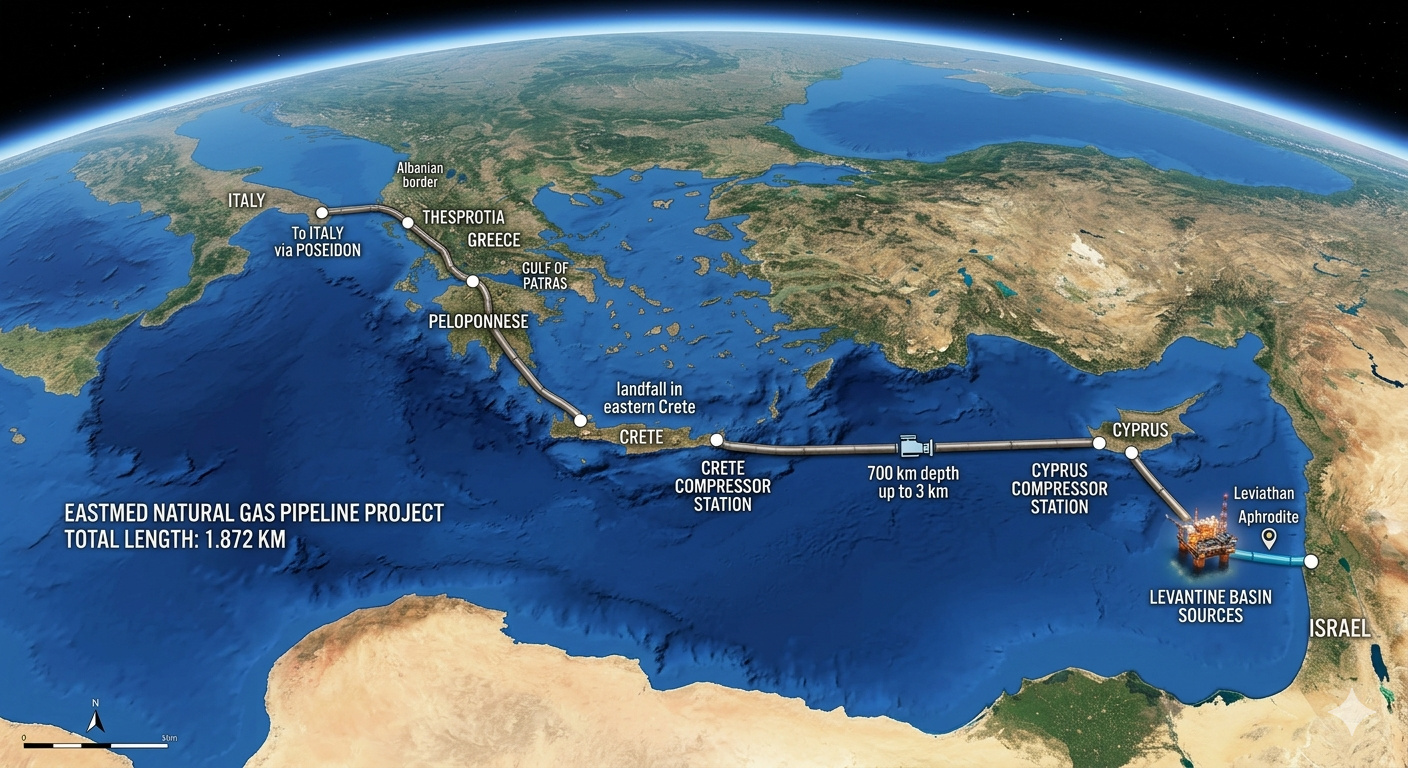
Israel, Greece, and Cyprus signed an agreement in 2020 to transport gas from the Mediterranean to Europe via a 1,872 km pipeline, but Turkey claimed sovereignty over part of the maritime route, and the project never materialized.
-
Abandoned house for 15 years disappears in the woods, shocks owner with unrecognizable scenery and is reborn in an intense transformation after almost 90 hours of work in just 10 days.

The port’s geographical position is considered strategic for international maritime routes. The proposal is to transform this natural advantage into a logistics platform connected to land corridors heading towards Turkey and then to Europe. In practice, the mega project attempts to convert location into commercial power.
This movement could change how Iraq is viewed on the international stage. Instead of appearing solely as an oil producer, the country is beginning to compete for space as a logistics link between continents.
What makes the Grand Port of Faw so ambitious
The scale of the project impresses both in terms of the investment amount and the engineering involved. The mega project was designed to operate with different types of cargo and to accommodate large vessels, which expands its capacity for insertion into international maritime trade.
Among the technical elements highlighted in the foundation are a total area of approximately 54 km², an initial capacity of about 3.5 million TEUs per year, the construction of one of the largest breakwaters in the world, and a submerged tunnel under the Khor Al-Zubair canal.
These components show that the project was not conceived as a common undertaking, but as a structure designed to compete on an international scale. This helps to understand why the port is treated as a central piece in the attempt to reposition Iraq as a relevant logistics player.
The billion-dollar investment behind the project
The financial weight of the venture reinforces its strategic dimension. The first phase of the port has an estimated cost between US$ 2.6 billion and US$ 2.7 billion, while the total investment is around 17 billion dollars, equivalent to about R$ 89.4 billion based on the provided figures.
This volume makes the port the largest investment in Iraq’s recent history. It is not just about building port infrastructure, but about betting on a project that can influence trade, employment, transportation, and the attraction of foreign capital.
When a country allocates this level of resources to a single logistical front, the message is clear: the project has been elevated to the status of a national priority.
How the mega project can alter global trade
The most relevant point of the mega project lies in its potential to alter flows between Asia and Europe. The stated goal is to reduce dependence on traditional routes, such as the Suez Canal, by creating a strategic alternative for the transport of goods.
If this happens, the impact could be broad. Travel times between continents could decrease, logistics chains could be reorganized, and new investments in infrastructure could accompany this corridor.
Moreover, Iraq’s centrality within this route would open up space for a new regional configuration. The mega project does not just aim to move cargo, but to change the logic of how that cargo passes through.
This is the kind of ambition that takes a project out of the realm of engineering and into the realm of economic geopolitics.
The logistics corridor that could strengthen Iraq
The proposal to connect the port to land corridors towards Turkey and Europe is one of the most strategic points of the initiative. This is because the value of the venture lies not only in the docks, terminals, or capacity to receive ships, but in the network it aims to activate.
By integrating maritime and land transport, the mega project seeks to transform Iraq into a regional logistics hub. This type of position generates chain effects: it increases the country’s commercial relevance, attracts companies linked to transport and infrastructure, and can stimulate new investments in the surrounding area.
An important port already changes the local economy. An international logistics corridor can change the entire role of a country.
Less dependence on traditional routes
One of the strongest points of this initiative lies in the attempt to reduce dependence on traditional routes. Today, certain passages concentrate a large part of the global flow of goods, creating bottlenecks and vulnerabilities.
By offering a new axis between Asia and Europe, the Faw Port mega project attempts to enter precisely this space. The advantage would be to provide a logistics alternative capable of redistributing part of the international trade flow.
This does not mean immediately eliminating already established routes, but rather opening a competitive option. When a new route gains scale, it does not need to completely replace the old one to already have an impact on global trade.
This is one of the reasons why the project attracts attention far beyond the Middle East.
The expected economic effects
The foundation points to some expected impacts if the operation advances as planned. Among them are reduced transport times between continents, strengthening Iraq as a regional logistics corridor, attracting foreign investments in infrastructure, creating direct and indirect jobs in the port sector, and partially redesigning maritime routes in the Middle East.
These effects show that the mega project was conceived as a vector of economic transformation. The port does not appear merely as a cargo terminal, but as a platform to energize entire sectors linked to the circulation of goods.
The greater the capacity for connection, the greater the economic multiplying power of the project tends to be. This applies to employment, associated services, and the regional weight of the country.
The mega project as an attempt to diversify the economy
Another central point is the symbolism of the port for a country historically tied to oil. The project represents a clear attempt at economic diversification, something essential for any country that wants to reduce excessive dependence on a single sector.
In this sense, the mega project functions as a double bet. On one hand, it expands infrastructure and competitiveness. On the other, it attempts to build a new economic identity for Iraq, less concentrated on energy and more connected to logistics services, transportation, and international trade.
This type of transition does not happen overnight, but large projects often serve as anchors for this change. The Grand Port of Faw appears precisely with this role.
What is at stake for the Middle East
The advancement of the port could also alter the regional weight of the Middle East in global trade. If Iraq can consolidate this structure as an efficient link between continents, the region could gain a new centrality in transportation chains.
This has economic and strategic implications. A country that controls or influences a relevant corridor of goods gains more weight in negotiations and more capacity to attract international interest.
The mega project of the Port of Faw, therefore, is not just a national undertaking. It carries the potential to interfere in the regional logistical balance and expand the competition for prominence in an area already marked by historical geographical importance.
A port that can redefine Iraq’s role
If completed as planned, the Grand Port of Faw could transform Iraq into one of the world’s main logistics hubs. The expression may seem ambitious, but it reflects the size of the bet embedded in the project.
The country is trying to move from a position primarily associated with instability and oil to take on a more active role in the global flow of goods. This repositioning requires robust infrastructure, regional integration, and operational capacity, exactly the pillars that the mega project seeks to build.
More than just a port, the project aims to create a new economic narrative for Iraq.
The advancement of the Grand Port of Faw shows how a mega project can go far beyond concrete, terminals, and billion-dollar contracts.
What is being constructed in southern Iraq is an attempt to create a new strategic corridor between Asia and Europe, reduce dependence on traditional routes, and reposition the country at the center of a global logistics dispute.
With billion-dollar investment, strategic location, and international ambition, the port presents itself as one of the most important initiatives in the Middle East in the area of infrastructure. If it delivers on its promises, the mega project could change not only Iraq’s logistics but part of the global trade map.
Do you believe that this mega project can really transform Iraq into a logistics power, or is it still too early to bet on such a big change?








Seja o primeiro a reagir!