





 Português
  Inglês
  Espanhol
  5 min de leitura
  0 comentários


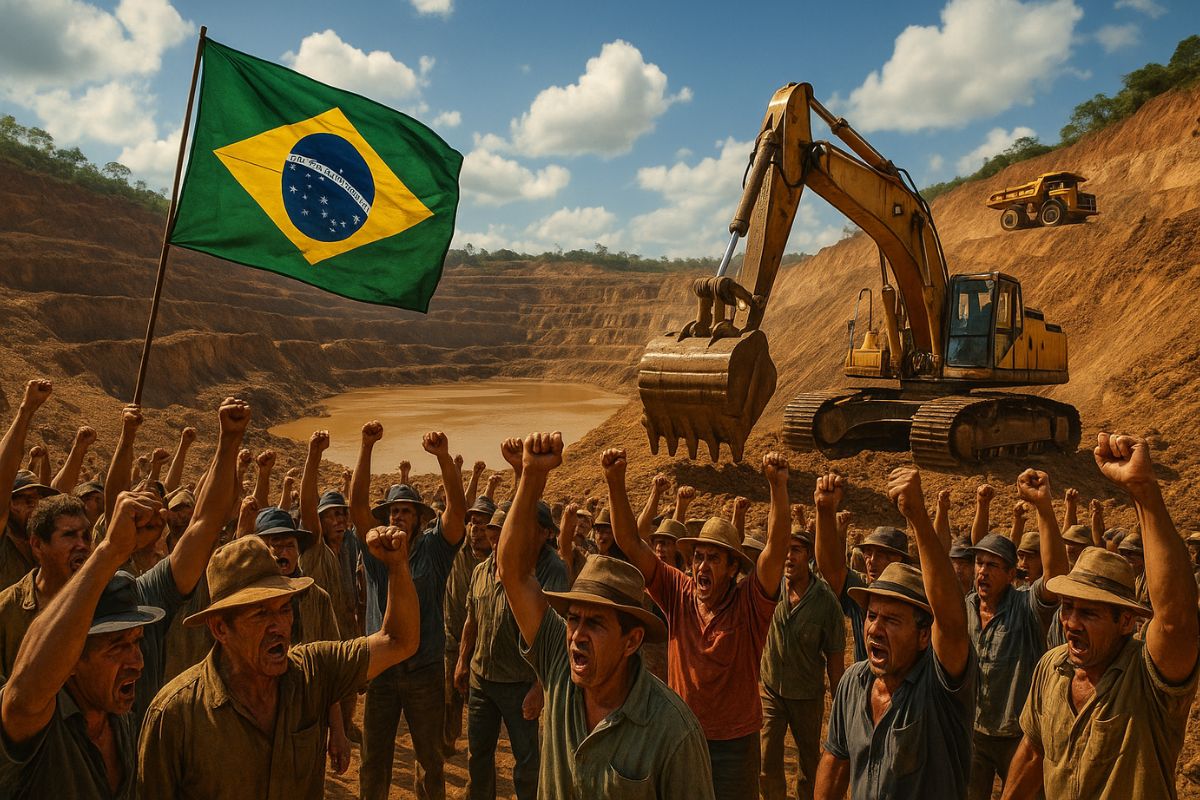
The Gold Mine That Stopped Brazil in the 1980s Still Mobilizes Former Workers Who Advocate for the Return of Activities Even After Three Decades of Paralysis and Amid Internal Disputes and Environmental Demands.
The Serra Pelada gold mine in Pará marked the Brazilian economy and imagination by gathering around 100,000 workers at its peak and becoming one of the largest open-pit mining operations in Latin America. Today, more than 30 years after its closure, former miners are advocating for the reopening of the area and maintain that there is still economic potential, but the process is fraught with legal, environmental, and governance obstacles. The movement reveals that the episode has not remained just a memory: it is still seen by many as an opportunity for social and financial recovery.
At the same time, the reactivation of a gold mine of this scale requires a different level of control than that seen in the 1980s. The Amazon region is subject to stricter environmental regulations, the old infrastructure is deteriorated, and the organizations representing miners are burdened with debts and internal disputes. Thus, the return of Serra Pelada depends not only on political will or historical memory, but also on technical and institutional capacity to operate a high-impact activity.
Serra Pelada Is Still a Reference for Brazilian Gold Mining
Serra Pelada was the symbol of the gold rush in the country. The attraction of a human tide in search of quick enrichment turned the place into an improvised economic hub, with intense circulation of people, goods, and services.
-
The world’s first octopus farm wants to open in the Canary Islands and is already provoking an international reaction: the plan aims to produce 3,000 tons per year.

-
Drought may be creating stronger superbugs in the soil and helping antibiotic resistance reach hospitals, warns a study highlighting a problem that could grow alongside extreme weather.

-
The biggest scam in history: Napoleon’s France deceived the United States by selling them a territory that was Spanish.

-
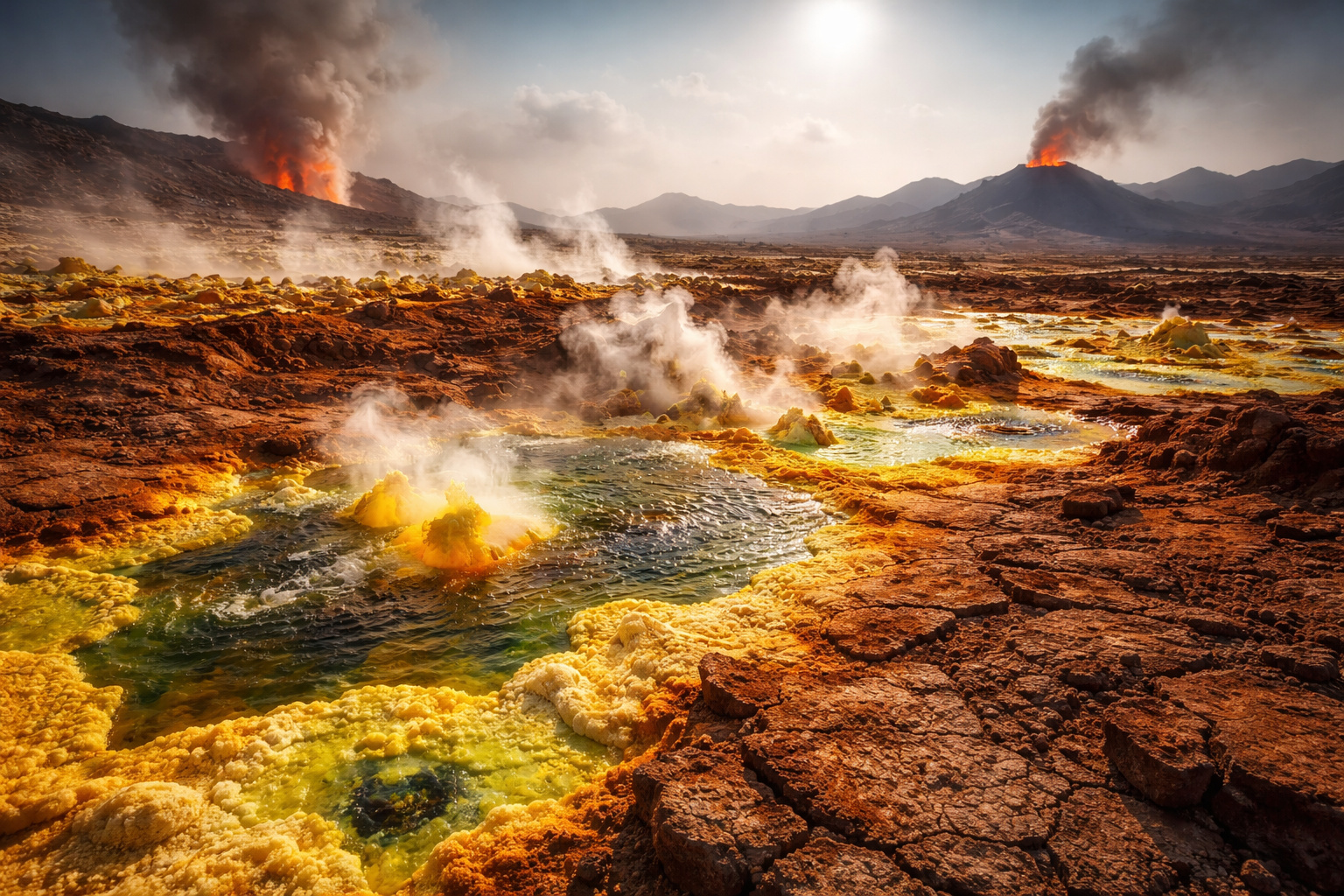
Why is the Danakil Desert so dangerous? It has unstable terrain and how extreme temperatures and toxic gases turn the region into one of the most hostile environments on Earth.

The unique aspect of this gold mine was precisely the volume of workers and the fact that the operation was predominantly manual, which increased both the risk and the fascination of mining.
Decades later, the memory remains among former workers who experienced the gold boom and now organize themselves into cooperatives.
Figures who worked in mining continue to advocate that the gold mine can start producing again and that this resumption would also be a way to provide historical reparation for those who risked their lives on the slope.
Organization of Former Miners Faces Internal Obstacles
Despite the mobilization, the cooperatives bringing together former miners encounter management problems, legal disputes, and lack of funding.
The institutional fragmentation prevents a single, technically robust project from being presented as a reopening proposal. Without unity, progress is slow.
Another sensitive point is the financial liabilities. Accumulated debts and questions about the current management make it difficult to attract investment or establish partnerships.
In modern mining, especially concerning a large gold mine, it is essential to demonstrate governance, transparency, and the capacity to meet regulatory agency requirements. This is still not the fully consolidated scenario in Serra Pelada.
Environmental Regulations Are Now Stricter
Reactivate the gold mine in the Amazon is not the same as operating it in the 1980s. Mineral exploration needs to prove that there will be no soil or watercourse contamination, especially due to the use of substances that, in the past, left environmental marks.
The region of Curionópolis, which experienced population explosions and makeshift infrastructure, is well aware of the social cost of an activity that grows faster than public authorities can keep up.
Therefore, any potential reopening would have to be planned within sustainability parameters. This means recovering degraded areas, installing safety equipment, ensuring effluent control, and clearly defining who is responsible for each stage of the operation.
Without proper environmental licensing, the gold mine will not be able to operate again.
Deteriorated Infrastructure Increases the Cost of Any Return
More than 30 years after the paralysis, the existing physical structure no longer meets safety standards. Stairs, access points, and machinery have been worn down by time and the region’s climatic conditions.
In mining, this type of scenario poses a direct risk to workers and the operation as a whole.
This means that, even with economic interest, the reactivation would require high investments just to bring the site to a minimal operational condition. In past manual mining operations, improvisation was common. In a reopening today, this is no longer acceptable.
The gold mine would need to operate with technical criteria comparable to those of regular mining ventures.
Social Impact Remains a Decisive Factor
Serra Pelada was not just a point of extraction. It formed an entire community around the promise of gold, concentrated people in vulnerable conditions and quickly reconfigured the territory.
At the height of its activity, Curionópolis experienced overcrowding, poor sanitation, and an increase in social problems.
Any return to activity would need to consider this component. A gold mine of this scale would attract workers and families again, put pressure on public services, and increase the circulation of money in the local economy. Without urban and social planning, the risk of repeating the disorderly scenario remains.
Reopening Is a Desire for Memory, but Depends on Viability
What keeps the reopening agenda alive is collective memory. For many former miners, Serra Pelada was the most significant moment of economic ascent and social protagonism. Resuming the gold mine would be, for this group, a chance to transform memories back into income.
But in practice, the equation involves three difficult-to-conciliate elements: environmental requirements, operational safety, and institutional organization.
As long as these three pillars are not balanced, the proposal for reactivation is likely to remain in the realm of attempts and negotiations.
Serra Pelada continues to be one of the most striking stories of Brazilian mining and still mobilizes those who experienced the peak of the gold rush.
The possibility of reopening the gold mine exists more as a project of memory and social reconstruction than as an immediate operation, because it depends on licenses, resources, and the unity of the former miners’ entities.
For you, in light of the environmental and social history of the region, should the reactivation of Serra Pelada proceed, or should this chapter of mining be closed?







-

-

2 pessoas reagiram a isso.