





 Portuguese
  English
  Spanish
  5 min of reading
  12 comments


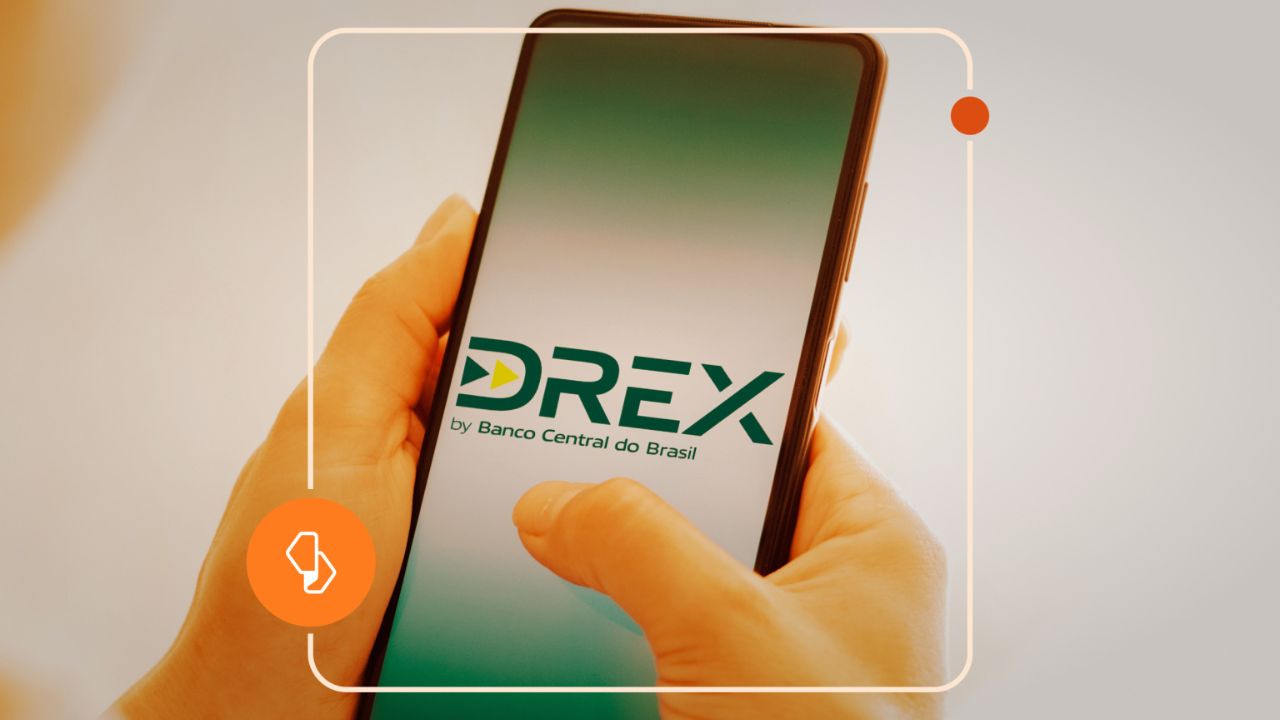


Understand How the New Central Bank Platform, the Brazilian Digital Currency, Promises to Transform Everything from Buying a Car to Large Investments, but Also Raises Alerts About Privacy and Security.
Brazil is at the forefront of a global financial transformation with the Drex, the digital version of the real. Led by the Central Bank, this initiative goes far beyond being just a new form of money. It is an infrastructure designed to catalyze a programmable and tokenized economy. Just as Pix simplified transfers, Drex aims to revolutionize more complex financial services, positioning itself as the next big innovation in the country’s payment system. However, this promise of efficiency and modernity walks hand in hand with critical challenges regarding privacy, security, and social inclusion.
What Is Drex and How Does It Differ From Other Digital Currencies?
Drex is the official digital currency of Brazil, technically called Central Bank Digital Currency (CBDC). Unlike bank balances that represent an obligation of your bank, Drex represents a direct obligation of the Central Bank, functioning as an electronic version of the banknotes and coins we already know.
It is essential not to confuse Drex with other digital assets:
-
The government requests the Federal Revenue Service for a new system to automate the income tax declaration, reducing errors, time, and bureaucracy for millions of Brazilians.

-
Pix in installments, international Pix, and contactless payment without internet: the Central Bank revealed the new features coming to the tool that is already used by almost every adult in Brazil.
-
Mercado Livre has just started selling medications with delivery in up to three hours to your door, and this move could completely change the way Brazilians buy medicines on a daily basis.

-
In Dubai, rising tensions from the war in the Middle East are causing super-rich individuals to leave the Gulf and direct their fortunes to a new financial refuge in Asia.


It Is Not a Cryptocurrency: While cryptocurrencies like Bitcoin are decentralized and operate without a central authority, Drex is centralized. It is issued, controlled, and guaranteed by the Central Bank of Brazil.
It Is Not a Stablecoin: Stablecoins are private assets that seek to maintain parity with a fiat currency. Drex is not “backed” by the real; it is the real itself in digital form.
The creation of Drex places Brazil within a global movement. Currently, more than 130 countries, representing 98% of global GDP, are already exploring their own versions of a digital currency.
How Will the Brazilian Digital Currency Work?
To innovate without destabilizing the financial system, the Central Bank designed a hybrid architecture of two levels. This means there will be two forms of Drex operating in an integrated way:
Drex Wholesale: This will be a digital currency for restricted use, circulating only between the Central Bank and authorized financial institutions (banks, cooperatives, etc.). Its function is to serve as the final settlement asset for transactions on the new platform, similar to current bank reserves.
Tokenized Real: This is the version that will reach the public. It will not be directly issued by the Central Bank, but rather issued by banks and payment institutions. The Tokenized Real will be a digital representation of the deposits customers already have in their accounts, with a 1-to-1 parity. Access will be through digital wallets provided by these institutions.
This structure avoids the risk of a “bank run” for the Central Bank, preserving the role of commercial banks in the customer relationship and credit granting, while the Central Bank provides the secure infrastructure for operations. The entire platform is built on (DLT) Hyperledger Besu distributed ledger technology, operating on a permissioned and controlled network.
Smart Contracts and the Tokenized Economy
The true revolution of Drex lies in its ability to program money. This is made possible by two core technologies:
- Smart Contracts: These are self-executing programs running on the Drex platform. The terms of an agreement are written in code, and once the predefined conditions are met, the contract executes the clauses automatically, without intermediaries.
- Atomic Settlement (DvP): Thanks to smart contracts, Drex allows for the simultaneous, conditional, and indivisible transfer of an asset and its payment. This concept of “delivery against payment” eliminates risk in complex transactions. The classic example is buying a car: the smart contract only releases the money to the seller the exact moment it releases the vehicle document to the buyer. If something fails, the operation is undone.
This same logic paves the way for tokenization, which is the process of transforming rights on real assets (real estate, vehicles, securities, artworks) into digital tokens. This can democratize access to investments, allowing people to purchase fractions of a property, for example, and injecting liquidity into traditionally rigid markets.
The Risks of the New Digital Currency
Despite its potential, Drex carries risks that generate intense debate. The main concern is the balance between citizen privacy and state control.
- Surveillance and Privacy: The traceable nature of DLT technology raises fears that the digital currency could become a tool for mass surveillance, allowing the state to monitor all transactions. The Central Bank states that it will follow the Banking Secrecy Law and the LGPD, but is still seeking a technological solution that guarantees privacy without hindering oversight against crimes.
- Cybersecurity: A platform that centralizes the financial system becomes a valuable target for cyberattacks. Ensuring the resilience and security of the Drex ecosystem against fraud and data leaks is a monumental challenge.
- Digital Exclusion: The use of Drex requires smartphones, internet access, and digital knowledge. There is a risk that vulnerable populations, the elderly, and residents of rural areas could be left behind, deepening the digital divide in the country.
The End of Physical Money? The Debate Surrounding Drex
The advancement of Drex has fueled speculation about the extinction of cash. The official position of the Central Bank is clear: Drex will be an additional payment option and was not created to replace physical money.
However, the public debate reflects a deeper anxiety. Cash is seen as a pillar of:
Privacy: It allows for anonymous transactions.
Resilience: It works without power or internet, being crucial in emergencies.
Inclusion: It is essential for millions of unbanked Brazilians or those with limited access to technology.
Although not its direct cause, Drex will certainly act as an accelerator in the trend of digitalization of payments, reducing the incentive to use banknotes and coins.
The Future of Digital Currency in Brazil
When comparing Drex to other major projects, the Brazilian model stands out. It distances itself from the e-CNY of China, which is more focused on state control, and seems more ambitious in immediate innovation than the Digital Euro, whose priority is monetary sovereignty.
Brazil is carving out a “third way“, with a digital currency heavily market-oriented and developed in collaboration with the private sector. The aim is not just to create digital money but to foster an open platform for innovation.
The success of Drex is not a technological certainty but a social and political choice. Its future will depend on Brazil’s ability to build a robust regulatory environment that ensures privacy, promotes inclusion, and, above all, gains the trust of the population. If successful, the Brazilian model has the potential to become a global reference for the future of money.








Acabar o dinheiro de papel,vai trazer imensas dificuldades para a maioria da população.Especialmente aos idosos,os com pouco estudo,sem muito conhecimento em tecnologia,e a população da zona rural.O fim do papel moeda,vai sim trazer muitos transtornos.Lembrando que os burocratas,não vivem a realidade do dia a dia da população.Vivem num mundo gira da realidade Estou preocupado.
Bravo!!! E verdade 100%!!!
Nada haver,sou idoso[62] e sou absolutamente pró drex!
Minha tia não tem celular, e ela paga as compras com o cartão no modo aproximação. O problema é quando faltar energia, ou quando o sistema e a internet cair.
Governo querendo nos controlar a qualquer custo .
O futuro será pior que a distopia escrita por Orwell em 1984 .
Controle total , até do seu pensamento 💭 !
É muito fácil controlar e manipular um povo , uma nação , basta controlar o su dinheiro 💶💰💶💰 .
Na minha humilde opinião é o fim da privacidade e ainda mais, é mais uma ferramenta de controle de nossas finanças, ou seja as instituições financeiras e o governo terão mais acesso e controle sobre o quanto nós temos de dinheiro e outros valores.
A pergunta é: seremos obrigados a aceitar?