





 Portuguese
  English
  Spanish
  4 min of reading
  10 comments


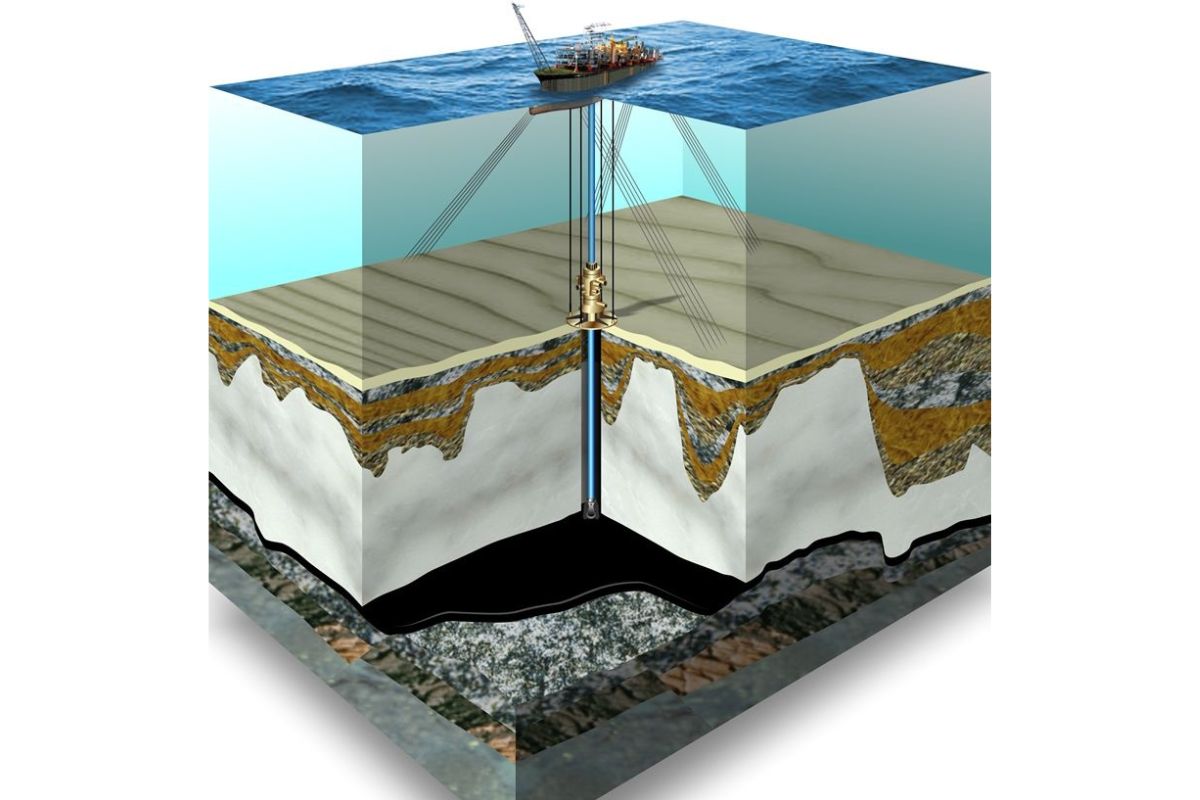


The Unstable Salt Layer of the Pre-Salt, Which Moves Like a Glacier, Was the Greatest Technological Challenge in Petrobras’ History, and Mastering It Placed Brazil Among the World’s Major Oil Powers.
To reach Brazil’s greatest wealth, Petrobras first needed to overcome a geological foe of mythical proportions: a colossal salt wall 2,000 meters thick, buried kilometers beneath the ocean.
Overcoming this geological barrier required Petrobras to develop unique technologies in the world, both to “see” through the salt and to drill it safely. Mastery over the unstable salt wall not only unlocked immense wealth but also solidified Brazil as an energy powerhouse and global leader in deep-water exploration.
The Geology of the Pre-Salt: How the Salt Wall Formed and Hid Oil for Millions of Years
The history of the pre-salt starts more than 100 million years ago, with the separation of the South American and African continents. In the process, large lakes formed, where an immense amount of organic matter was deposited and, over time, gave rise to oil.
-
Spain surprises the world by erecting 62 artificial dunes, mixing sand with natural remains of posidonia, and causing the structure to lose only 1.4% of its volume in 1 year.

-
With 16 Bulava missiles, improvements in acoustic stealth, and a design focused on silent patrols, Russia’s nuclear submarine was born to ensure Moscow’s invisible retaliation and has become one of the pillars of its maritime strength.

-
‘Populous’ city in Rio among the worst in Brazil in national ranking and exposes silent development crisis.

-
Couple buys house in the South Zone of São Paulo, opens a hidden door in the garage, and finds a secret wine cellar with dozens of old wines forgotten since the 1970s.

Then, with the ocean’s invasion and intense evaporation, a massive layer of salt was deposited over these reservoirs. This salt wall acted as a perfect sealing cap, trapping oil and gas for millions of years, while also creating a formidable barrier to exploration.
The Challenge of Drilling Through Salt: An Unstable Obstacle That Moves Like a Glacier
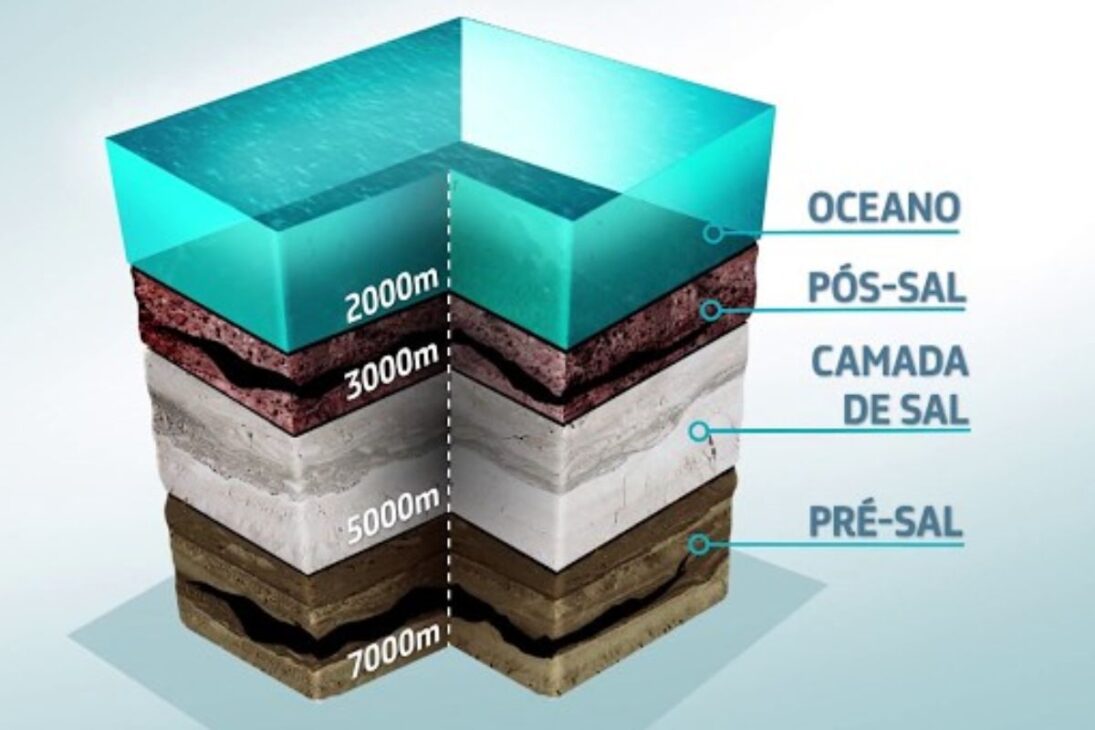
The greatest challenge of the salt wall is not its thickness, but the fact that it is ‘alive’. Under the immense pressure and temperature of the seafloor, salt is not a static rock; it behaves like a super slow glacier, ‘flowing’ and deforming. For a drilling bit, this means that the rock is constantly trying to crush the well, like a wound trying to close.
This phenomenon, called halokinesis, poses a constant danger during drilling. The movement of the salt can crush the drill string and collapse the well. To overcome this challenge, Petrobras had to develop special drilling fluids and the Managed Pressure Drilling (MPD) technique, which controls the well pressure in real-time to prevent collapse.
Petrobras’ Revolution to Create a Map Beneath the Salt Wall
Before drilling, it was necessary to see what lay beneath. For geophysicists, the salt wall acted like a funhouse mirror, distorting and scattering seismic waves in all directions. Seeing through it was like trying to read a map through broken and foggy glass, making the drilling of hundreds of millions of dollars worth wells a dangerous shot in the dark.
To solve this, Petrobras led a revolution in geophysics. The company pioneered the large-scale use of technologies such as:
Ocean Bottom Nodes (OBN): thousands of seismic sensors placed directly on the seafloor to capture sound waves from all directions.
Full Waveform Inversion (FWI): extremely complex data processing algorithms running on Petrobras’ supercomputers, the most powerful in Latin America.
This combination allowed for the creation of a precise ‘map’ of what exists beneath the salt, removing distortion and revealing the exact locations of reservoirs.
The Reward of the Conquest: Record Production and Brazil’s Dominance in 2025
After deciphering the enigma of the salt wall, Brazil’s reward was production that broke all records. In March 2025, pre-salt production reached 3.716 million barrels of oil equivalent per day, accounting for nearly 80% of total national production.
The combination of technology and favorable geology resulted in extraction costs among the lowest in the world, ranging from US$ 2 to US$ 3.3 per barrel. Furthermore, well productivity is phenomenal: while a well in the Gulf of Mexico produces about 10,000 barrels per day, an average well in Brazil’s pre-salt produces over 30,000.
The Future After Overcoming the Salt Wall: Brazil’s Competitive Advantage

Mastery of drilling technology in the salt wall has given Brazil and Petrobras a lasting competitive advantage. The accumulated knowledge in geophysics, drilling, and reservoir management in such a unique environment cannot be easily replicated by competitors.
This ‘technological moat’ built to master the salt wall guarantees Brazil’s leadership in deep waters. The technical achievement is undeniable. Brazil not only found its greatest treasure beneath the Atlantic but, by overcoming it, forged the technological sovereignty that will define its energy power in the 21st century.








Desde quando geleiras se chamam glaciar em português?
Necessita assistência do Aurélio lol
Glacier = Geleira foi abrasileirado pra Glaciar. Anota ai…
Nosso querido Brasil é formidável e possui imensas riquezas e também com muita gente competente, mas, infelizmente, há muito tempo está sendo assaltado e dominado pelas forças ocultas. E agora, uma quadrilha se apossou do poder e quer perpetuar isso.
O povo, na sua maioria, vive de migalhas concedidas pelos corruptos, para continuar com seus desmandos.
Acorda povo, levante já.
O problema todo é que o povo brasileiro só se revolta com futebol , fico revoltado quando vejo o povo se revoltando com jogadores e técnicos de futebol . Acorda meu povo ! Dinheiro de clube não é dinheiro público. Vamos nos revoltar contras os políticos que roubam nosso dinheiro .
Desenbolvemos e vendemos o primeiro sistema de cabeça de poço para o pré-sal