





 Portuguese
  English
  Spanish
  6 min of reading
  0 comments


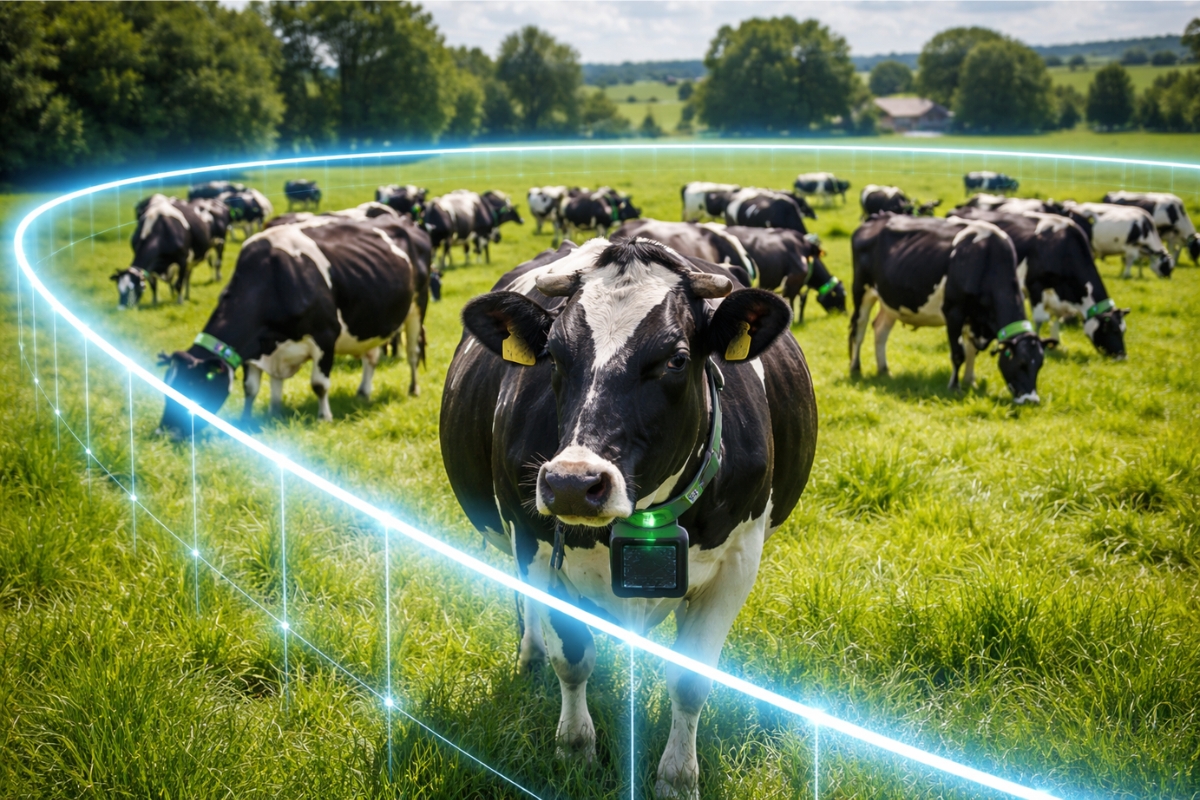
Smart collars with AI are changing livestock farming by replacing physical fences with virtual barriers, monitoring the herd in real-time, and identifying signs of behavior and health that can anticipate decisions in the field.
Artificial intelligence has begun to change the field quietly, but this movement has just gained a new symbol. The New Zealand company Halter, specialized in smart collars for cattle, received a new round of investment led by Founders Fund, a fund historically associated with Peter Thiel, co-founder of PayPal and Palantir.
The company develops a system that combines hardware, software, rural connectivity, and real-time data analysis to monitor animals, create virtual fences, and help farms and ranches operate more accurately. The plan now includes new markets, and the company itself has already mentioned South America as one of the targeted regions in the next stage of expansion.
What Halter does in practice
The core product of Halter is a lightweight, solar-powered collar, connected to a livestock management app. In practice, the solution allows the producer to draw virtual fences via mobile, move the cattle remotely, and monitor the behavior of each animal with continuous tracking.
-
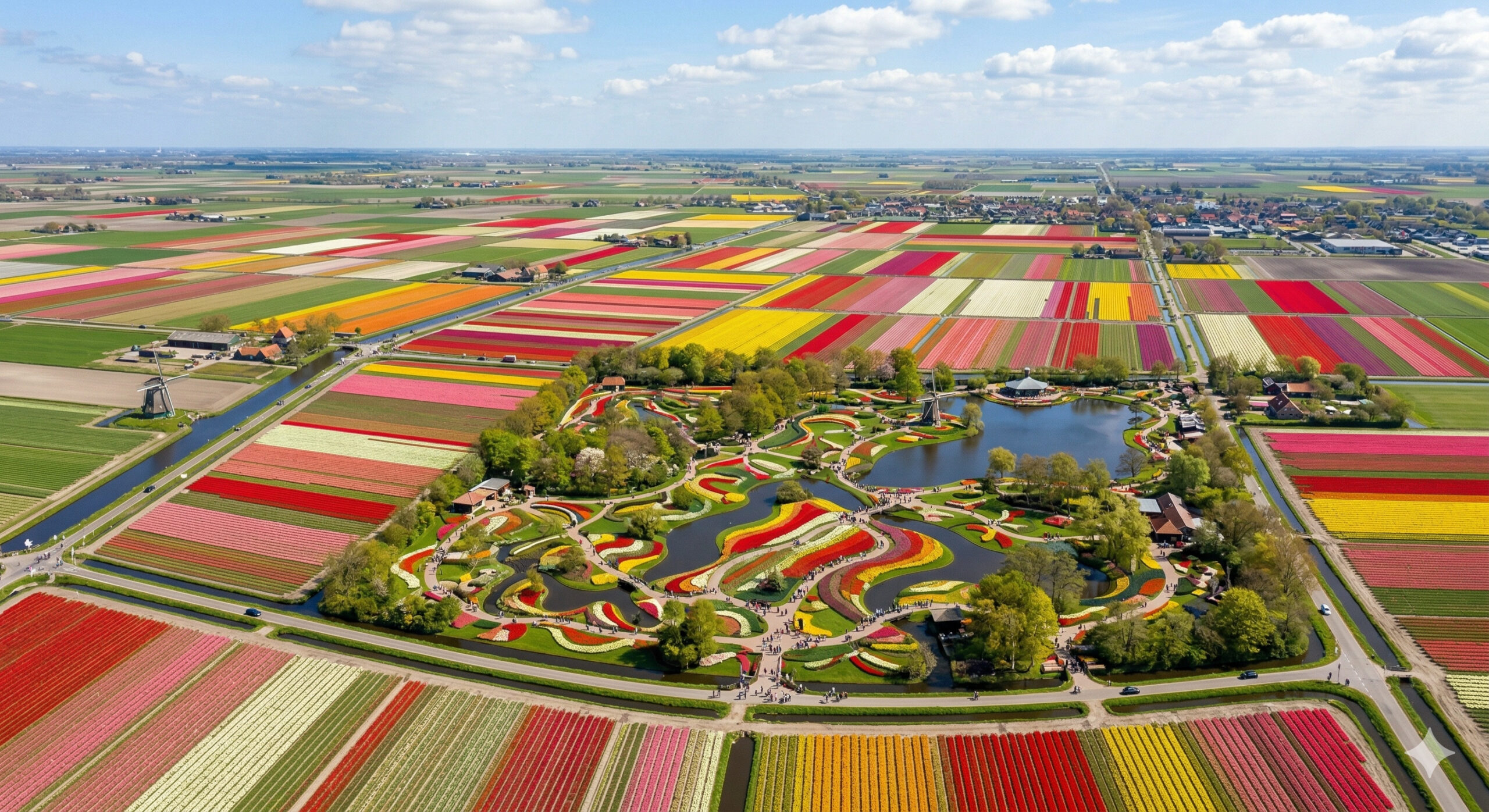
For a few weeks each year, an entire country blooms with billions of tulips, creating a mosaic of colors visible from the sky, while a single garden gathers more than 7 million flowers and attracts visitors from around the world to one of the most impressive shows in Europe.
-
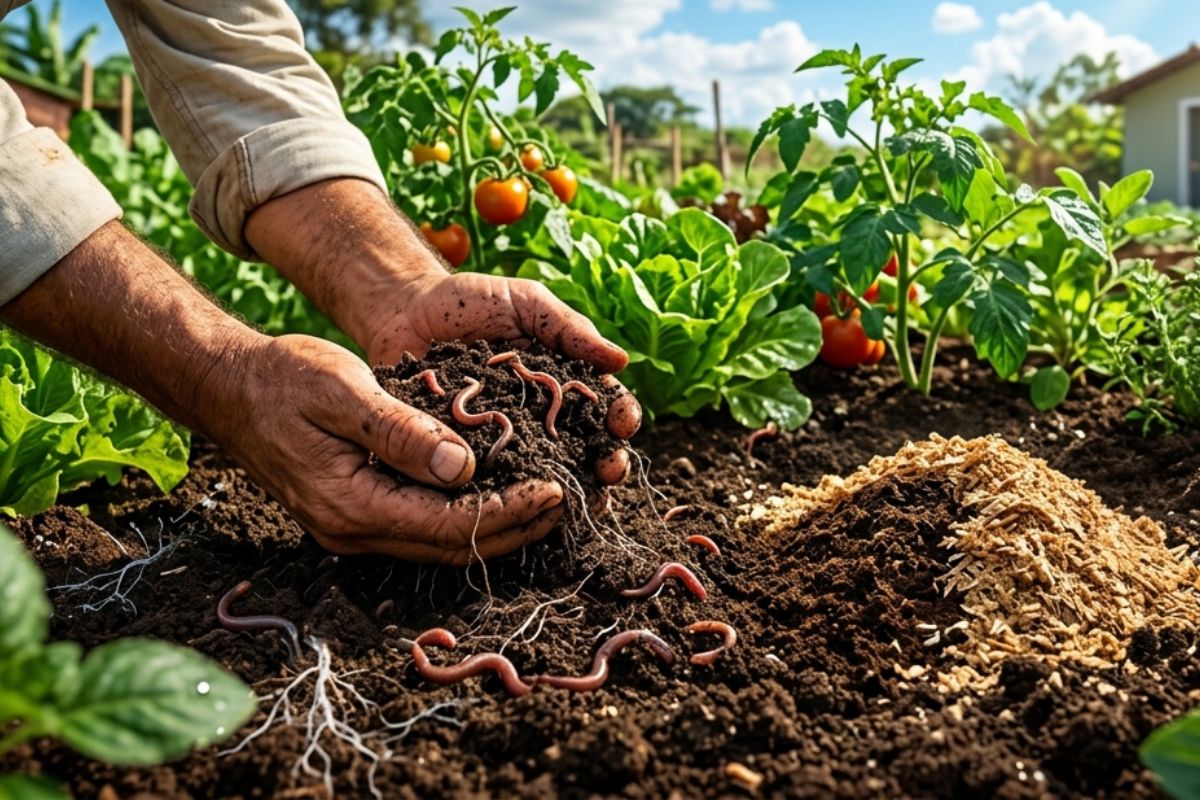
Bokashi, a Japanese technique of controlled fermentation, becomes the organic fertilizer that revitalizes the soil: it activates microorganisms and earthworms, improves pH and moisture retention, gradually releases nutrients, and helps prevent pests in the garden.
-
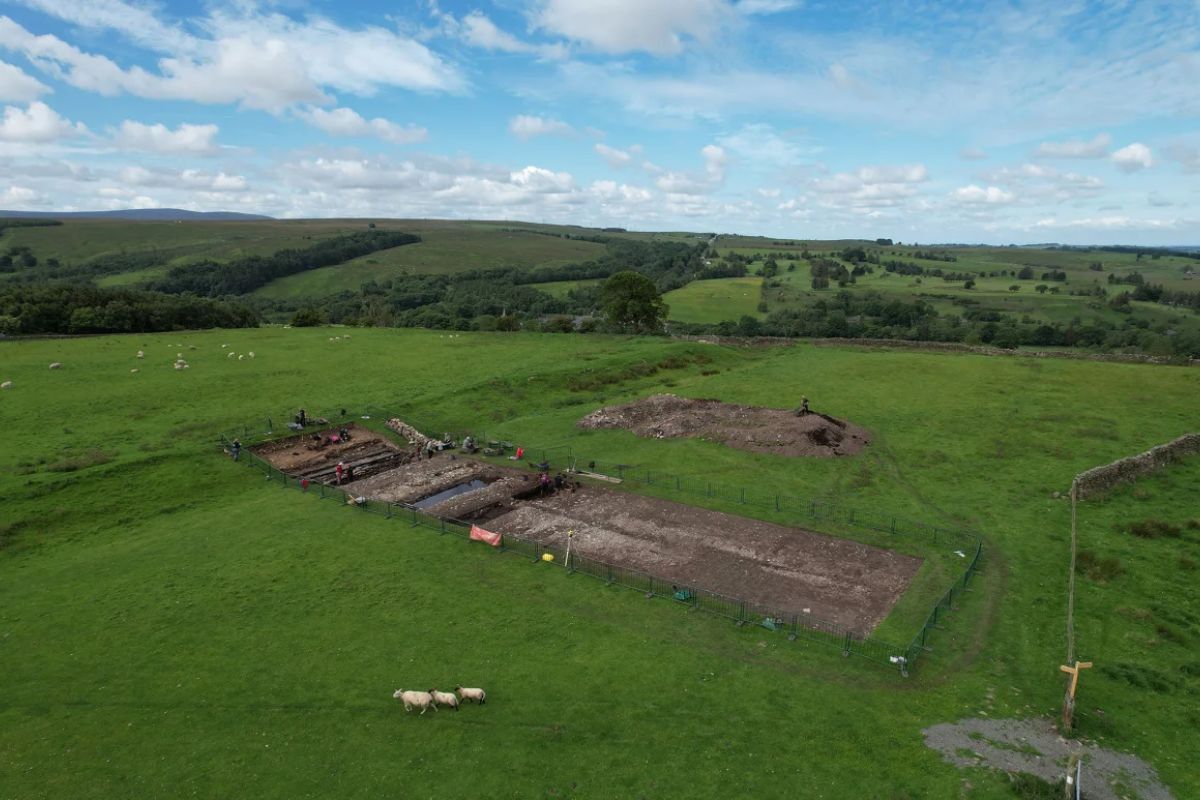
Archaeologists found giant shoes over 30 centimeters near Hadrian’s Wall that survived nearly two thousand years buried and now raise a mystery: who were these Roman soldiers so different from the others?
-
Meta’s new smart glasses are not just for seeing; they use artificial intelligence, analyze your food, summarize messages, and can even change the way you work in professions like engineering.

The technical proposal is ambitious because it goes beyond GPS tracking. The company claims that its system delivers 24-hour location, alerts about changes in behavior and health, as well as features for automatic heat detection and data-driven pasture management. In other words, it’s not just about “knowing where the cow is,” but transforming the herd into a layer of real-time operational data.

The numbers that catch attention in the global market
The latest public numbers help explain why Halter has become a topic beyond agriculture. According to the company itself, the Series E round announced in March 2026 was for US$ 220 million, or about NZD 377 million, one of the largest ever seen in global agtech.
The company claims to serve over 2,000 ranchers and farmers in New Zealand, Australia, and the United States, and has already sold 1 million solar collars. Since entering the American market in 2024, Halter customers have also reportedly built 60,000 miles of virtual fences with the technology. Converted, this represents something close to 96,500 kilometers of digital fencing.
Another relevant technical data point appears in the company’s own animal welfare material: in January 2026, the system was already being used by around 700,000 animals.
Why the technology draws so much attention

The attractiveness of Halter lies in addressing very concrete bottlenecks in extensive and semi-intensive livestock farming. Physical fences are expensive, require maintenance, and limit management flexibility. Manual monitoring of the herd consumes time, labor, and often only identifies problems once they have become visible. Halter’s proposal is to reduce this informational lag.
From a technical standpoint, the company positions its platform as a combination of three layers:
- The collar, which stays on the animal and collects movement and behavior signals;
- The farm’s connectivity network, which allows operation even without full cellular coverage;
- The app, which centralizes virtual fences, cattle movement, grazing history, and operational alerts.
This architecture is important because it solves one of the biggest bottlenecks of rural technology: irregular connectivity in remote areas. Halter explicitly states that it creates a private network on the property, connecting collars and the app without relying entirely on cellular signal.
Animal health, heat, and behavior: where AI tries to gain value
One of the most striking points of the platform is the attempt to transform animal behavior into a decision signal. The company highlights features for health monitoring, behavior alerts, and automatic heat detection, which places the product not only in the realm of virtual fences but also in precision livestock farming.
In practical terms, this means that changes in movement patterns, duration, grazing routines, or activity can be treated as early indicators of health events, stress, reproductive failure, or the need for intervention. The promise, therefore, is not just to automate management but also to anticipate anomalies before they become obvious to the naked eye — exactly the type of technical argument that attracts venture capital to agriculture.
The link with Peter Thiel
In reports and market posts, it is common to see the phrase that “Peter Thiel is betting on Halter.” As a summary, it works. But the technically more accurate formulation is different: the round was led by Founders Fund, an investment firm historically linked to Thiel.
Even so, the symbolic effect is enormous. When a digital livestock company receives a round of this size led by a fund with this history, the market reads the operation as a clear signal that the next frontier of AI may include not only corporate software but also productive infrastructure in the field. This is a market inference, supported by the size of the round and the profile of the investors.

South America has become an official expansion target
The most relevant point for Brazil and its neighbors is that Halter has publicly declared its intention to advance into new markets, including the United Kingdom, Ireland, and South America. This was stated by the company itself in the announcement of international expansion after Series E.
The company did not specify, in this announcement, which South American countries will be prioritized first. Still, the formal mention of the region is already enough to put the topic on the radar of producers, investors, and rural technology companies on the continent.
Why Brazil, Argentina, and Uruguay appear as natural candidates
Although Halter has not publicly confirmed the list of entry countries, there is a technical and economic logic that makes Brazil, Argentina, and Uruguay natural candidates.
Brazil is a global livestock powerhouse, with enormous territorial scale and operational challenges in management, fencing, tracking, and productivity. A technology for virtual fences and continuous monitoring would gain relevance precisely in contexts where physical infrastructure is expensive and dispersed.
Argentina combines livestock tradition, pressure for efficiency, and a strong technical culture in the field, which may favor the adoption of data-driven platforms.
Uruguay has a highly professionalized livestock sector strongly oriented towards export, a profile that tends to absorb solutions aimed at control, health, traceability, and fine management of the herd more quickly.
This part is still market reading, not an official announcement from Halter. But it is a consistent inference with the company’s positioning and the livestock map of the region.
What this technology can change in the field
If Halter’s proposal scales in South America, the impact could go beyond the futuristic appeal. The most direct gain would be in four areas: reduction of physical infrastructure, more control over grazing, faster response to health events, and better use of labor. This addresses a real pain point for producers: doing more with fewer people, less movement, and more operational predictability.
The central point is that the fence ceases to be just a physical asset and also becomes a digital asset. The herd stops being just a group of animals in the pasture and starts functioning as a continuously monitored network. And the farm stops operating solely with human observation and begins to incorporate a layer of automation based on behavioral signals.
Precision livestock farming has entered the game
The rise of Halter shows that livestock farming is entering a new technological phase. Until recently, the discourse of digital transformation in agriculture focused more on machinery, climate, satellites, and precision agriculture. Now, intelligence applied to animal behavior in real-time is beginning to gain its own prominence.
With US$ 220 million raised, 1 million collars sold, over 2,000 operations served, and South America officially mentioned in expansion plans, Halter positions itself as one of the most watched companies in the new cycle of livestock innovation.






Seja o primeiro a reagir!