





 Portuguese
  English
  Spanish
  4 min of reading
  0 comments


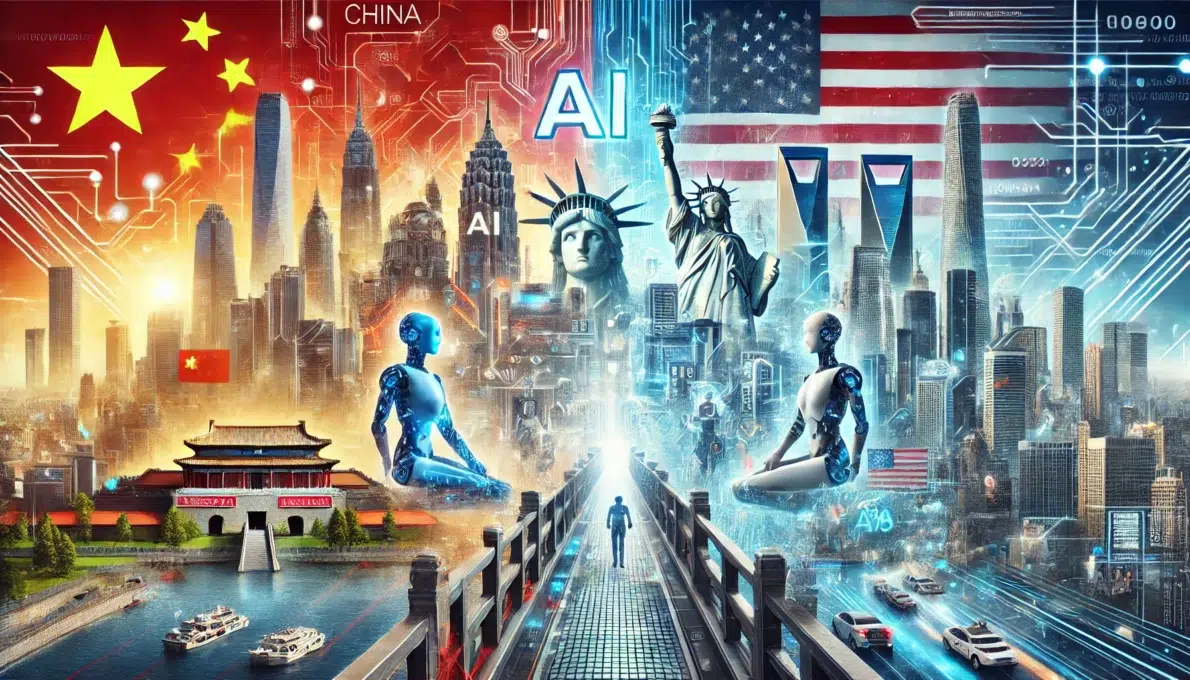
The New Space Race Between China and the United States Is Now in the Field of AI. Explore How the Competition for Open-Source AI and Advanced Technologies Is Impacting the Global Future
Chinese tech giants are launching artificial intelligence (AI) systems that increasingly rival those of the United States, reaching the general public. This Is the New Battle Between Powers, akin to the 20th-century space race. Sam Altman, CEO of OpenAI, calls for a block of democratic nations to confront China. Why is this important? China is rapidly catching up to the U.S. in AI development, which could have significant implications for technological innovation, national economies, productivity, and military power in the coming years.
The Context of the New Technological Race
For years, the United States has led the field of AI, with companies like OpenAI, Google, and Microsoft at the forefront. Recently, some Chinese companies have announced technologies that directly compete with American ones. Among the most notable advancements, Kuaishou launched Kling, an AI video generator comparable to OpenAI’s Sora, but already available to the public. Meanwhile, Sora is still on standby. 01.AI introduced a chatbot that achieved scores similar to the best American technologies in synthetic tests, and Alibaba has one of the best open-source AI technologies, according to global rankings.
The Chinese strategy for AI is rooted in open-source. Many of its companies openly share their code so that others can use and even improve it. This stance contrasts with the culture of American companies, which are more cautious and protective, concerned about the potential risks of exposing their information. This open-source approach and cooperativism could accelerate China’s progress in AI.
-
Seen from space, a colossal volcano nearly 5,000 meters high in Russia has released 1,600 km of smoke over the Pacific, forming “devil’s horns” of lava and revealing the brutal force of the Ring of Fire.

-
Expedition 501: Scientists drill into the ocean floor and discover a giant reserve of fresh water hidden beneath the sea, extracting nearly 50,000 liters and revealing an invisible system that could reshape the map of water scarcity.

-
Archaeologists find an intact tomb over 2,500 years old, with more than 100 preserved objects, weapons, jewelry, and human remains never touched.

-
Volcanic lava transforms into threads as fine as human hair that travel over 30 kilometers by wind and fall like cutting rain on roofs and backyards in Hawaii and Iceland.


The United States continues to impose export restrictions on advanced chips to China, which still relies in part on this basic American technology. However, China’s plan is to achieve self-sufficiency. Although the U.S. still leads in AI research, China’s open-source strategy and willingness to release technologies to the public may shift the balance of power in the coming years, especially as China begins to claim the global role it believes it has earned.
The Chinese Strategy: Open Source and Cooperation in AI
The Chinese strategy to dominate the field of AI is heavily based on the open-source concept. Chinese companies like Alibaba and Baidu are at the forefront of this approach, allowing researchers and developers worldwide to access and enhance their technologies. This movement not only fosters innovation but also creates a collaborative ecosystem that can overcome the barriers imposed by U.S. restrictions.
Alibaba, for example, has significantly invested in its open-source platform, allowing developers to use and improve its AI tools. This approach is not just a matter of technology but also a geopolitical strategy. By sharing its innovations, China not only accelerates its own progress but also builds a global network of collaborators who can help overcome the technological challenges posed by Western restrictions.
Another notable example is Baidu, which launched PaddlePaddle, an open-source deep learning platform that is gaining popularity among developers. This open approach strongly contrasts with the caution of American companies, which tend to protect their AI innovations through patents and trade secrets.
Future Challenges and Opportunities
Despite rapid advancements, China faces significant challenges. U.S. restrictions on the export of advanced chips and other critical technologies still pose a barrier. However, China has shown relentless determination to achieve technological self-sufficiency. Massive investments in research and development, coupled with favorable government policies, are paving the way for China to become a dominant power in AI.
Moreover, the growing tension between the U.S. and China regarding AI technology is driving a new era of global rivalry. While the U.S. continues to invest in its AI capabilities, China is quickly closing the gap. This competition may lead to significant advancements in AI but also heightens the risks to security and privacy associated with these technologies.
In terms of opportunities, China’s open-source approach could enable rapid adoption and innovation in AI worldwide. International collaboration, driven by the availability of open-source technologies, may lead to more advanced and accessible solutions. This, in turn, could benefit not only China but also other developing nations seeking to improve their technological capabilities.
The new technological race between China and the U.S. in AI is reminiscent of the 20th-century space race. With rapid advancements and an open-source strategy, China is closing the gap with the U.S. While significant challenges still exist, China’s determination to achieve self-sufficiency and its cooperative approach may shift the power balance in the field of AI in the coming years. As this rivalry intensifies, the world can expect significant advancements in AI, which will have profound implications for technological innovation, national economies, and global military power.







Seja o primeiro a reagir!