





 Portuguese
  English
  Spanish
  6 min of reading
  13 comments


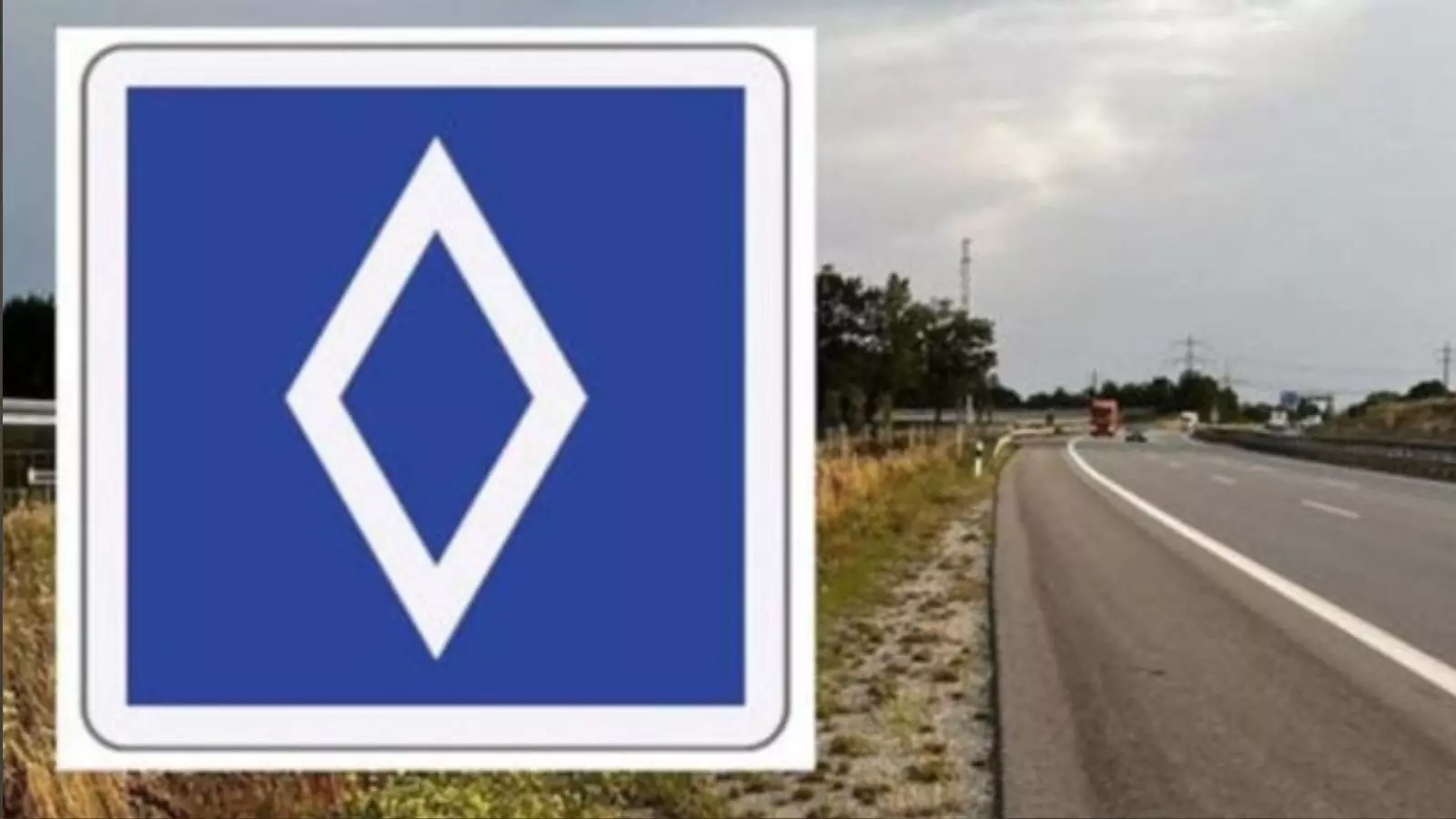


The New Blue Traffic Sign With a Diamond in the Center Has Started Being Implemented in France. It Indicates Exclusive Lanes for Carpooling and Can Generate Fines for Unwary Drivers. Learn How It Works and Who Can Use It.
A new traffic sign implemented in France is drawing attention and causing confusion among drivers: it is a blue sign with a white diamond in the center, which has started to appear on expressways and highways across the country. What many still do not know is that this signage is part of a new traffic regulation aimed at reducing congestion and carbon emissions. The symbol, which seems simple at first glance, actually indicates the operation of exclusive carpool lanes — a resource that is becoming common in major urban centers in Europe to encourage shared and sustainable mobility.
This new sign with the number 5 is also scaring drivers around the world
If misinterpreted, the new traffic sign can result in fines of up to 135 euros (approximately R$ 872), imposed by monitoring systems recently deployed in the metropolitan area of Paris. Therefore, understanding the meaning of the blue traffic sign with a diamond in the center is essential to avoid penalties and to drive in accordance with the new regulations.
-
The Argentine government celebrates the lowest poverty rate in 7 years, but experts warn that the methodology has changed, real wages have fallen, unemployment has risen, and the number of people on the streets of Buenos Aires has increased by 57% since Milei took office.

-
7.8 magnitude earthquake in Indonesia frightens the population, triggers tsunami alert, and hits an island with over 200,000 inhabitants this Thursday.

-
Google will finally let you change that embarrassing Gmail address you created in your teenage years without losing any accounts, logins, or old emails: the feature is already available in the United States.

-
Heading to Brazil in a Bonanza F33 single-engine aircraft: a couple departs from Florida on a visual flight, makes technical stops in the Caribbean to refuel and organize paperwork, and begins the staged crossing until they reach the country.

What Does the New Blue Traffic Sign With a White Diamond Mean?
The blue traffic sign with a white diamond in the center indicates that the lane where it is positioned is reserved for vehicles that share the trip — the so-called “carpool.” It signals special lanes where driving is only allowed if the vehicle meets certain conditions, such as:
- Having two or more passengers on board;
- Being a taxi, bus or public transport;
- Being an emergency vehicle, such as ambulances and police cars;
- Transporting people with disabilities or being accredited for that purpose.
In other words, it is not an exclusive lane for buses as many drivers initially imagined. The purpose of the sign is to differentiate and organize the use of these dedicated lanes, promoting more efficient use of road space and encouraging a reduction in the number of private cars on the streets.
Where Is the New Signage Being Used?
Since May 2 of this year, the new sign has already been in effect in sections of the Paris ring road and at two major points on the highways of Île-de-France: the A1 and the A13. The implementation is part of an environmental and urban mobility policy by the French government aimed at reducing congestion and lowering emissions of polluting gases.
The exclusive lanes are generally positioned to the left of the road, precisely to avoid interference from vehicle entry and exit — which makes traffic flow more continuous and prevents confusion for drivers who are not familiar with the new traffic sign.
Traffic on the lanes with the blue traffic sign with a diamond may be permanent or limited to certain hours, especially during peak periods.
How Does the Monitoring of These Lanes Work?
Monitoring is done by an automated system, but with manual validation. In Paris, 13 monitoring cameras have been installed to check vehicle circulation in these exclusive carpool lanes. The system records the vehicle’s license plate and captures images of the passengers, which are blurred to ensure privacy, according to the rules of the French General Data Protection Law (CNIL).
If it is detected that the car does not meet the requirements to be in the lane, the infraction is sent for analysis by a competent authority, and there is no automatic issuance of fines. If the infraction is confirmed, the driver receives a fine of 135 euros, an amount that can be reduced to 90 euros if paid in advance.
Importantly, the cameras do not monitor the entire length of the lane, but rather specific points and determined times, usually on weekdays during peak hours.
What Is Carpooling?
Carpooling is a system in which drivers share their cars with other people going to the same destination or a similar route. It is an increasingly encouraged practice in Europe, as it is a sustainable alternative to traditional individual transport.
The idea is to transport more people with fewer vehicles, which reduces:
- The number of cars on the streets;
- The consumption of fuel;
- The average travel time;
- The CO₂ emissions per person.
The new blue traffic sign visually represents this concept, with a diamond that has become the official symbol of carpool lanes in several countries.
Who Can Use the Lanes With the New Sign?
According to the regulations in effect in France, the following vehicles are permitted to operate in the lanes marked with the new sign:
- Cars with two or more occupants (including the driver);
- Operating taxis, with or without passengers;
- Public transport (licensed buses and vans);
- Motorcycles with two occupants or of the “wedge” type;
- Emergency vehicles (ambulances, fire trucks, police);
- Vehicles adapted and registered for people with disabilities.
Cars with only the driver (without a passenger or carpool) are not allowed to use these lanes, even if they are during low-traffic hours or are heading towards low-emission zones.
Why Did France Decide to Adopt This New Traffic Sign?
The measure is part of a package of actions to make French traffic smarter, greener, and more efficient. According to David Belliard, the deputy mayor of Paris responsible for transport, the intent is not to collect fines, but to change the mobility culture.
The French government wants to encourage citizens to:
- Share vehicles on the journey from home to work;
- Reduce dependence on individual cars;
- Minimize chronic congestion on major urban roads;
- Increase the efficiency of the existing road system without widening lanes or building new roads.
The blue diamond sign is a clear and easy-to-read visual representation, to facilitate the public’s adherence to this new logic of more collaborative traffic.
Will the Signage Be Adopted in Other Countries?
Yes, this practice already exists or is being analyzed in several countries across Europe and even in the United States. The white diamond on a blue background (or white on black pavement, in some cases) is the symbol internationally associated with carpool lanes (HOV – High Occupancy Vehicle).
In Germany, for instance, studies are underway for implementation in major centers such as Berlin and Munich. In the U.S., states like California, Washington, and New York have been using this system for years, with positive results.
In Brazil, there is still no forecast for this type of signage, but with the increasing debate about urban mobility and sustainability, it is possible that similar pilot projects will emerge soon — especially in capitals like São Paulo and Curitiba.
The new blue traffic sign with a white diamond in the center represents more than a visual change on the streets of France. It is a symbol of a new paradigm: to use fewer cars to transport more people. In times of climate crisis, chaotic traffic, and excess vehicles, initiatives like this point to the future of urban mobility.
For drivers, the challenge is to adapt. For governments, to ensure infrastructure, fair monitoring, and clear information. And for everyone, perhaps it is time to think differently about car use — and start seeing it as a shared solution, not an individual one.










Não há, sendo a proposta uma lei rodoviária da França, como não associar o símbolo da placa ao da montadora Renault – comicamente, parece que o carpool é uma pista exclusiva para carros Renault!!
Excelente ideia. Espero que se essa norma vigore no Brasil seja respeitada e caso contrário sejam aplicadas as multas pois infelizmente quando tem engarrafamento muitos motoristas trafegam nas pistas laterais onde não são permitidas a passagem nesses acostamentos por serem para emergenciais.
Ridículo!!! O trânsito da França não interessa para brasileiros.
Quem é militar sabe : está placa está indicando que o sub. está na pista 🤭🤣