





 Português
  Inglês
  Espanhol
  4 min de leitura
  7 comentários


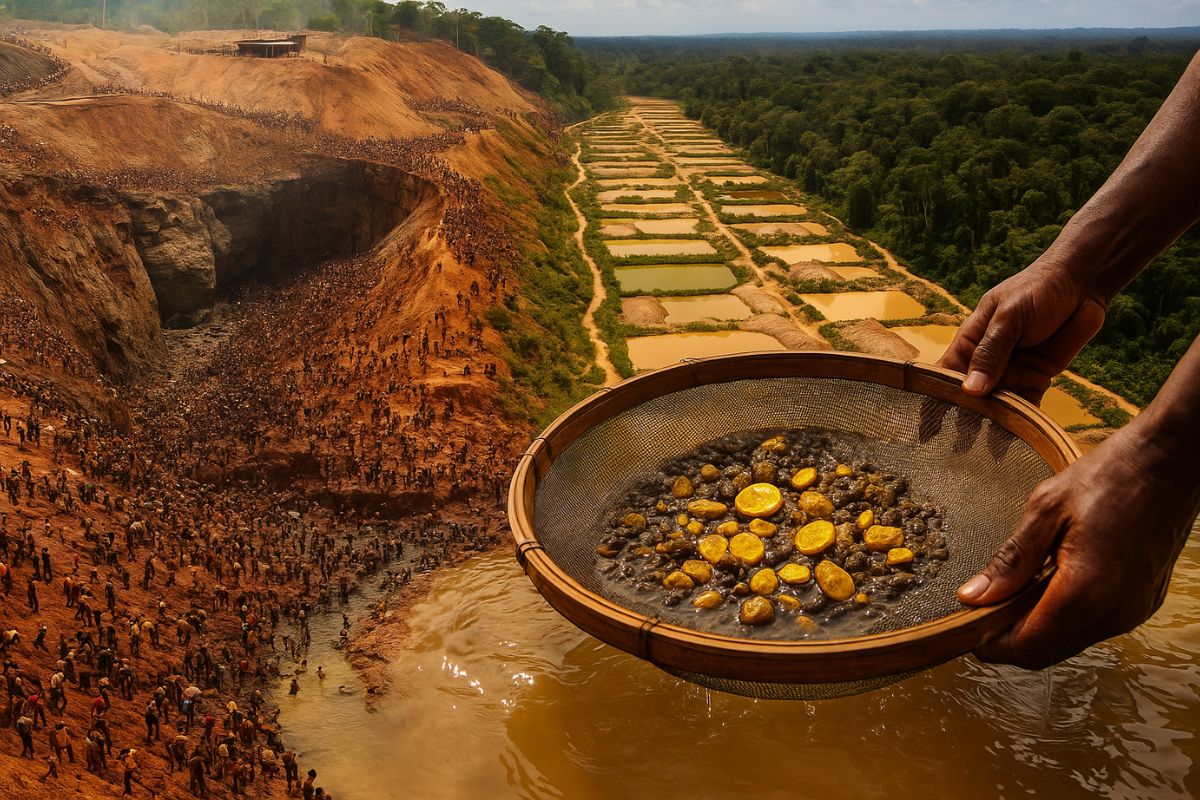


With Damages to Organized Crime Exceeding R$ 345 Million and the Seizure of 33 Aircraft and 123 Dredges, the New Gold Rush in the Amazon, Although Different, Already Surpasses in Some Aspects the Scale of the 1980s Gold Mining.
The image of Serra Pelada, the largest open-pit gold mine in history, still haunts Brazil’s memory. In the 1980s, tens of thousands of men dug a colossal crater in Pará in search of wealth. Today, the Amazon is experiencing a new gold rush, raising the question: is the region witnessing the emergence of a new Serra Pelada?
The comparison between the two phenomena reveals a complex scenario. While the original Serra Pelada was a spectacle of concentrated human force, the current gold rush is marked by technology, advanced logistics, and a diffuse operational scale, but equally impactful, measured in police operations and million-dollar losses to crime.
Serra Pelada (1980s): Reflecting on the Scale of Manual Extraction and the “Human Ant Hill”
The original Serra Pelada, which reached its peak in the 1980s, became a global myth. Sebastião Salgado’s photos immortalized the image of the “human ants,” tens of thousands of miners who, almost entirely by hand, dug and moved millions of tons of earth in search of gold.
-
The world’s first octopus farm wants to open in the Canary Islands and is already provoking an international reaction: the plan aims to produce 3,000 tons per year.

-
Drought may be creating stronger superbugs in the soil and helping antibiotic resistance reach hospitals, warns a study highlighting a problem that could grow alongside extreme weather.

-
The biggest scam in history: Napoleon’s France deceived the United States by selling them a territory that was Spanish.

-
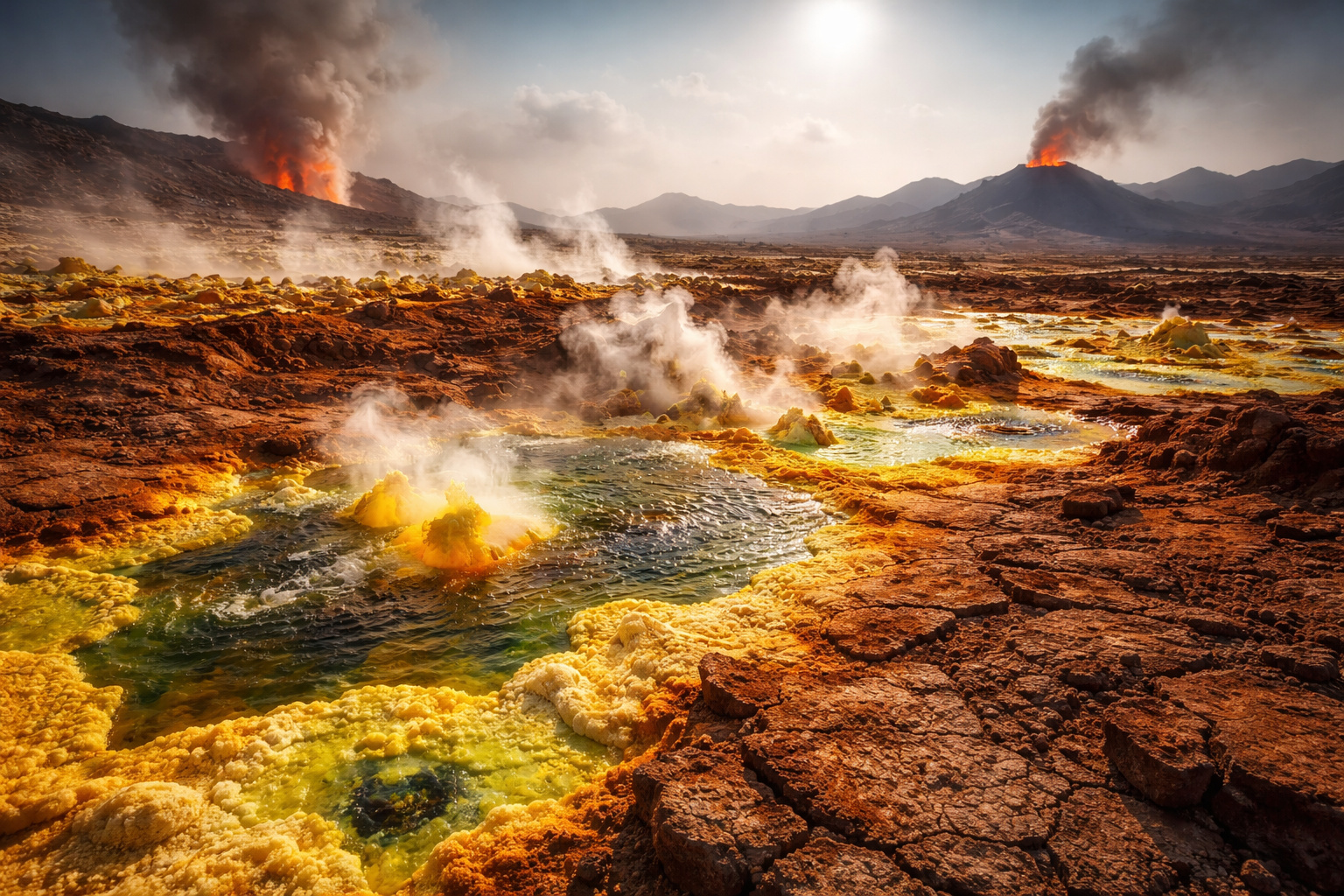
Why is the Danakil Desert so dangerous? It has unstable terrain and how extreme temperatures and toxic gases turn the region into one of the most hostile environments on Earth.

The work was rudimentary, based on brute force, with men carrying heavy sacks of ore on improvised wooden ladders, known as “adeus mamãe.”
The scale was visual and human: a single massive crater that grew each day through the action of thousands of individuals, a testament to ambition and physical resilience under extreme conditions.
The Gold Rush Today: The New Scale with Dredges, Tractors, and Advanced Logistics

Unlike the manual mining of decades past, the gold exploration in the Amazon today is mechanized and technologically equipped.
Illegal mining uses an arsenal of dredges, tractors, and excavators to disturb the riverbeds and forest soil, causing a much faster and broader environmental impact.
Logistics has also evolved dramatically. The modern operation involves clandestine airstrips, satellite communication networks, and a complex supply chain to deliver fuel and supplies to remote areas.
This technological advancement allows extraction to occur in previously inaccessible locations, expanding the reach of devastation.
The Confrontation in Numbers: R$ 345 Million Loss to Crime and Tons of Equipment Seized
The state’s response to the new Serra Pelada reveals the magnitude of the criminal operation. Operation Catrimani II, conducted between April 2024 and April 2025 in the Yanomami Indigenous Land, provides an overview of the scale of modern mining:
Loss to Crime: over R$ 345 million in losses for criminal organizations.
Aircraft: 33 aircraft supporting mining logistics were seized.
Heavy Machinery: 123 barges and dredges were seized or rendered inoperable.
Infrastructure: 508 illegal camps and 53 clandestine airstrips were destroyed.
Supplies and Ore: more than 186,000 liters of fuel, 34 kg of gold, and 158 tons of cassiterite were seized.
These numbers reveal an industrial operation, far removed from the image of the individual miner from Serra Pelada.
A Colossal Crater in Pará Against a Diffuse Devastation in the Amazon
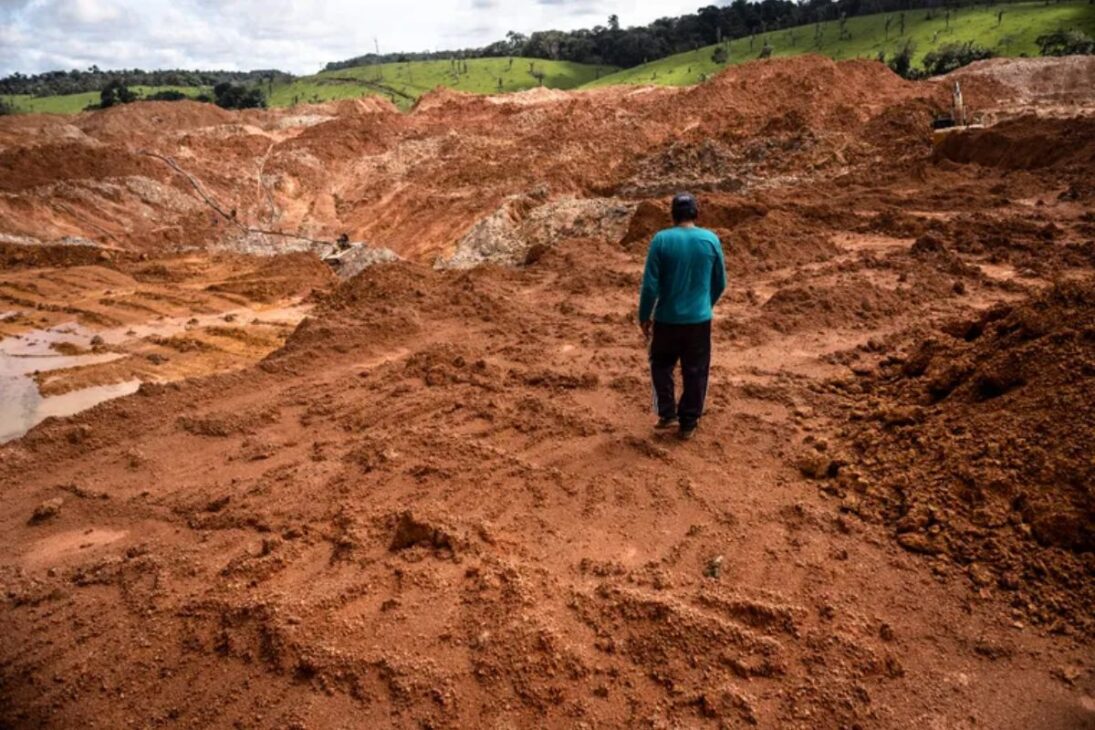
The greatest difference between the two phenomena lies in their geographic distribution. Serra Pelada was a unique and concentrated point, a crater visible from space.
The current exploration, on the other hand, is a diffuse problem. There is not a single “new Serra Pelada,” but rather thousands of mining points scattered across vast areas of the Amazon.
Only in the Yanomami Indigenous Land, for example, 50 hectares of new mining areas were opened between July and September 2024.
The destruction today is less concentrated in a single point, but the total of its areas can represent a much greater territorial impact, like a cancer spreading through the forest.
Is It a New Serra Pelada? The Differences in Organization and Economic Impact of Modern Exploration
Although the search for gold remains the same, the organization behind the exploration has radically changed. Modern mining is often financed and protected by organized crime factions, who use the activity to launder money and expand their influence.
The economic scale is also different. In the original Serra Pelada, although volatile, wealth circulated more directly among the miners.
Today, the main profit from illegal activities tends to concentrate in the hands of financers and leaders of criminal networks, who operate with a business logic.
Therefore, although the term new Serra Pelada evokes the past, the current phenomenon is more complex, technological, and dangerously integrated into large-scale criminal structures.








Só é divulgado as quadrilhas de dentro do Brasil , mas esquecem das milhares quadrilhas disfarçadas de ONGs de enchem os bolsos dos políticos corruptos .
Eu gostaria de saber, quais as empresas à que estão destinadas a extração desse minérios nesse local?
O Brasil esta dominado por quadrilhas: quadrilhas de agiotas, quadrilhas de **** e quadrilhas do crime organizado.
Todas elas estão com as garras cravadas nas entranhas do pais, e vão corroendo por dentro o combalido Brasil.
O baixo nível moral dos dirigentes levaram o pais ao estado deplorável em que se encontra.