





 Portuguese
  English
  Spanish
  5 min of reading
  0 comments


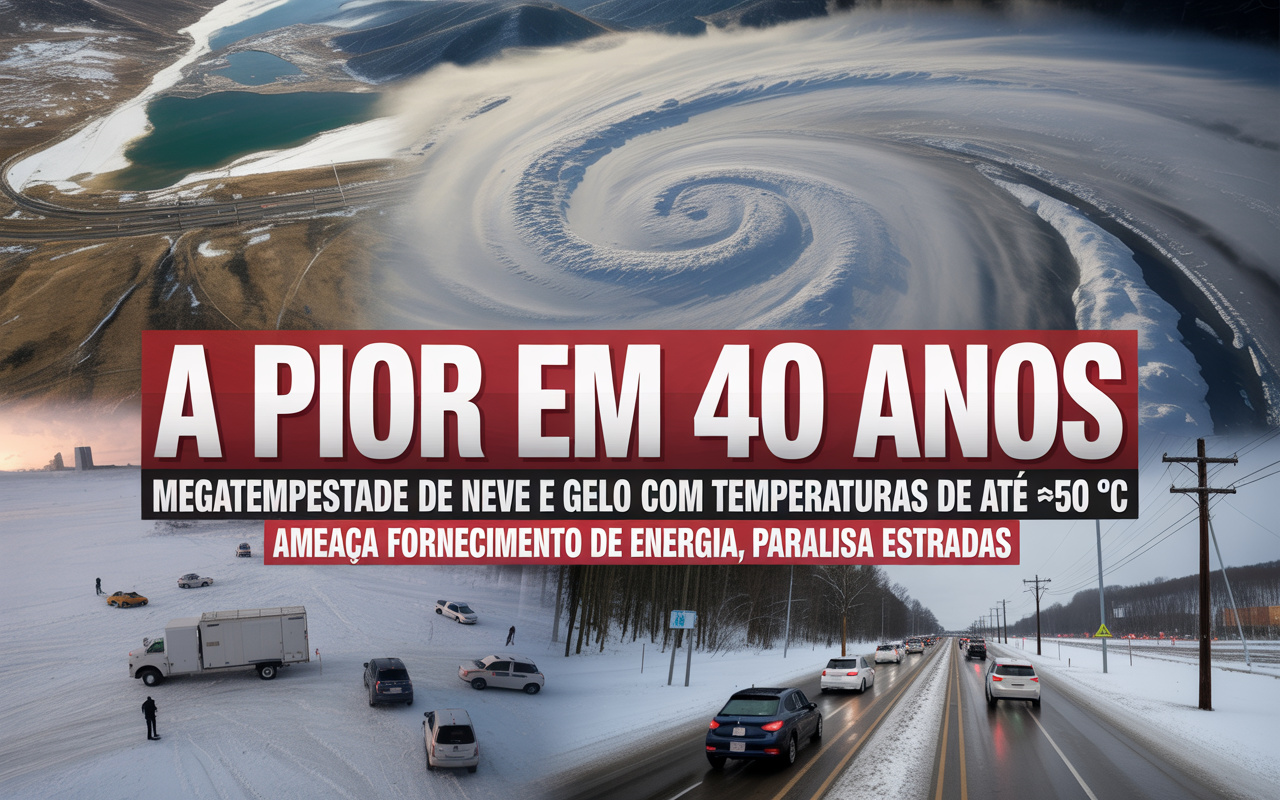
Considered the Worst in 40 Years, a Megastorm of Snow and Ice Hits Millions in the US, Threatens Extended Blackouts, Paralyzes Roads and Cancels Hundreds of Flights.
A winter megastorm considered by meteorologists to be the worst in about four decades is advancing over the United States and already causing nationwide impacts. The system, which combines heavy snow, freezing rain, thick ice, and extreme cold, stretches for thousands of kilometers and places hundreds of millions of people under official alerts. Authorities speak of a real risk of extended blackouts, logistical paralysis, and travel conditions labeled as dangerous or simply impassable.
The phenomenon is affecting regions from the South and Midwest to the Northeast, creating a continuous corridor of instability that threatens critical infrastructure, air and road transport, as well as the energy supply in several states.
A Winter System of Continental Scale
Meteorological data indicate that the storm extends over more than 3,000 kilometers, covering a range that stretches from the central-southern US to large, densely populated areas in the eastern part of the country. Estimates suggest that more than 170 to 200 million people are under some type of warning, including blizzard alerts, severe ice warnings, or extreme cold advisories.
-
This small town in Germany created its own currency 24 years ago, today it circulates millions per year, is accepted in over 300 stores, and the German government allowed all of this to happen under one condition.

-
Curitiba is shrinking and is expected to lose 97,000 residents by 2050, while inland cities in Paraná such as Sarandi, Araucária, and Toledo are experiencing accelerated growth that is changing the entire state’s map.

-
Tourists were poisoned on Everest in a million-dollar fraud scheme involving helicopters that diverted over $19 million and shocked international authorities.

-
Hidden beneath the dense forest of the Sierra Nevada, Betoma emerges in a neighbor of Brazil as the greatest archaeological discovery of the century, revealing a colossal ancestral city covering over 18 km², with 8,334 stone structures and the potential to rewrite the history of South American civilizations.




In cities in the Northeast, such as Washington, New York, and Boston, the forecast includes significant snow accumulation, while areas further south are facing an even more dangerous scenario: freezing rain, capable of forming thick layers of ice over roads, trees, and power lines.
Ice as the Main Threat to Infrastructure
Although snow visually attracts more attention, experts warn that accumulated ice is the most destructive factor in such events. Rain that freezes upon touching the ground forms solid layers that:
- dramatically increase the weight on trees and poles
- break transmission lines
- make highways and bridges practically unusable
Electric power authorities warn that in areas where ice accumulates for several hours, blackouts could last days or even weeks, depending on the extent of the damage and the access difficulties for maintenance teams.
Extreme Cold and Dangerous Wind Chill
In addition to snow and ice, the storm is accompanied by an arctic air mass that drastically lowers temperatures.
In parts of the Midwest and Central Plains, the wind chill can reach values close to −40 °C, a level considered dangerous for human exposure for just a few minutes. This intense cold increases the risk of:
- hypothermia
- frostbite
- heating system failures
- water pipe ruptures
Hospitals and emergency services are already operating at maximum alert in several regions.
Road Transport in Collapse
Strategic interstate highways are facing stretches completely blocked by compacted snow and ice. Trucks are getting stuck, light vehicles are losing traction, and authorities recommend avoiding any non-essential travel.
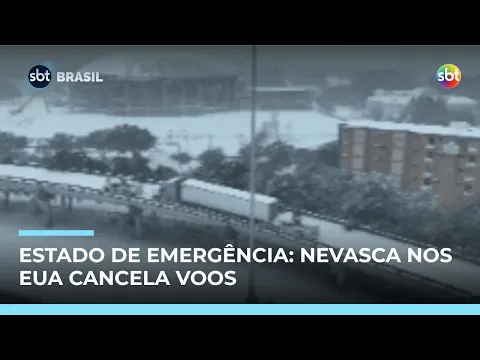
In some states, governors have authorized the preventive closure of roads to reduce accidents, while emergency teams are trying to keep minimal corridors open for ambulances and rescue vehicles.
The impact on air transport is immediate. Hundreds of flights have been canceled, with numbers already exceeding one thousand cancellations across the country, concentrated in major hubs in the east and center of the US.
Airlines such as Delta, United, and American Airlines have issued alerts for passengers to rebook their trips, citing:
- frozen runways
- reduced visibility
- operational restrictions at key airports
The forecast indicates that further cancellations may occur as the storm advances.
States of Emergency and National Mobilization
In light of the severity of the situation, several states and capitals have declared a state of emergency, releasing extraordinary resources and mobilizing:
- rescue teams
- national guard
- urban cleaning services
- logistical support for isolated populations
Emergency shelters have been prepared to accommodate people without adequate heating or who lose power for extended periods.
A Rare Phenomenon Due to the Combination of Factors
Meteorologists explain that the exceptional nature of the storm lies in the simultaneous combination of extreme factors:
- very intense arctic air
- large volume of atmospheric moisture
- wide and persistent trajectory
- transition from snow to ice in densely populated areas
This combination drastically increases the potential for damage, making the event comparable only to some of the worst winters recorded in recent decades.
Experts have already compared the current megastorm to historical winter events that marked the US in the late 20th century and early 2000s. The main difference now is the population scale exposed, as urban areas have grown and become more dependent on continuous energy, efficient transportation, and just-in-time logistics chains.
This makes the economic and social impacts potentially larger, even though the absolute volumes of snow are not record-breaking in all regions.
Economic Impact and Cascade Risks
In addition to direct damage, there are concerns about chain effects:
- disruption of supply chains
- delays in food and fuel distribution
- shutdown of industrial activities
- billion-dollar losses for the transportation sector
Analysts point out that events of this nature can leave economic marks that extend for weeks after the storm has passed.
Authorities Call for Maximum Caution
Civil defense agencies emphasize that the priority is to reduce travel, maintain basic supplies at home, and follow official communications. In regions with forecasts of severe ice, the recommendation is to prepare for extended periods without electricity.
For those who need to travel, the guidance is to postpone plans whenever possible.
An Extreme Test for Modern Infrastructure
The megastorm puts to the test systems built for a more predictable climate. Electric grids, roads, airports, and emergency services face a large-scale resilience test in a highly interconnected continental country.
Regardless of the storm’s ultimate duration, meteorologists agree on one point: it has already made the list of the most impactful winter storms of the last decades in the United States, both in terms of extent and potential for damage.







-

Uma pessoa reagiu a isso.