





 Portuguese
  English
  Spanish
  3 min of reading
  0 comments


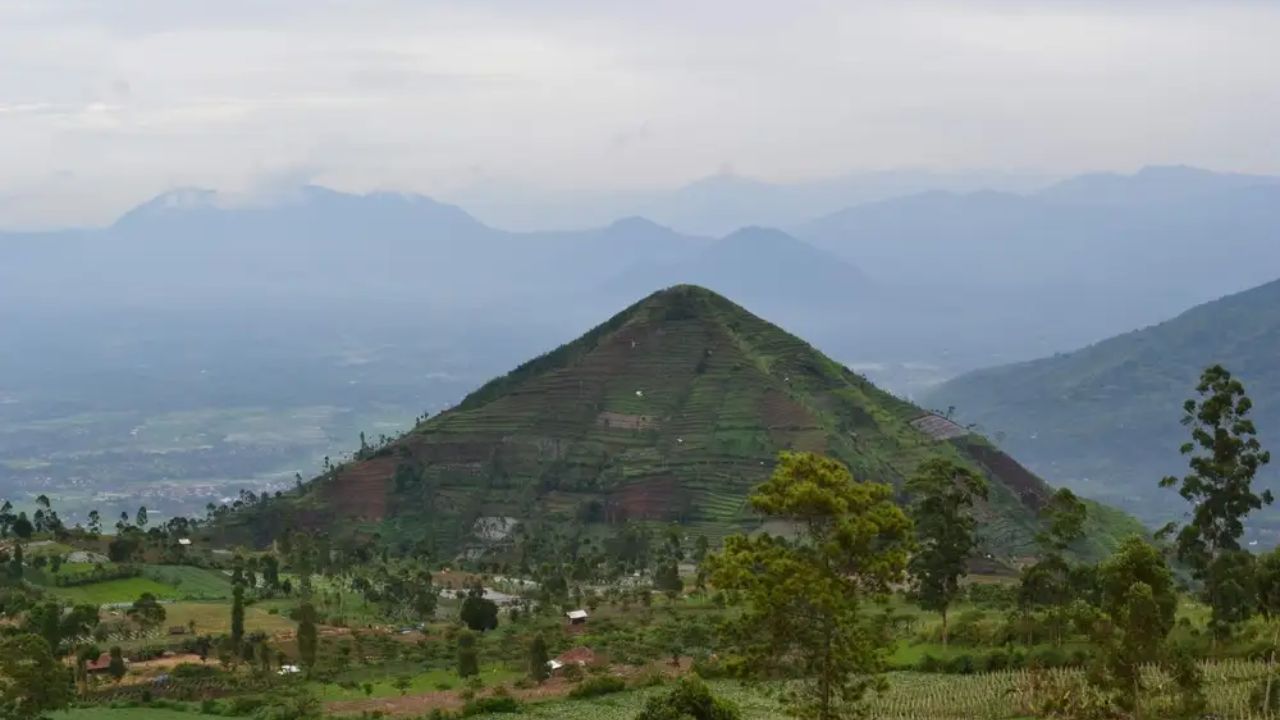
Discoveries Indicate That the Oldest Pyramid in the World, Located in Gunung Padang, Indonesia, May Be 27,000 Years Old, Surpassing Any Known Structure. But Was It Really Built by Humans or Just an Impressive Creation of Nature?
Have you heard of Gunung Padang, an archaeological site in Indonesia? It is known by some as the “oldest pyramid in the world.” The question is that this supposed pyramid may have been built by forces that are not exactly human. But how is that possible?
While the Pyramid of Djoser in Egypt shines in history books as the oldest known construction, dated to 2630 BC, Gunung Padang promises to revolutionize everything. Recent studies suggest that this formation may have been made an incredible 27,000 years ago! This would completely change our view of what humans at the time were capable of building. Were our ancestors more ingenious than we believe, or does nature have tricks up its sleeve?
Gunung Padang: The Archaeological Site That Divides Opinions
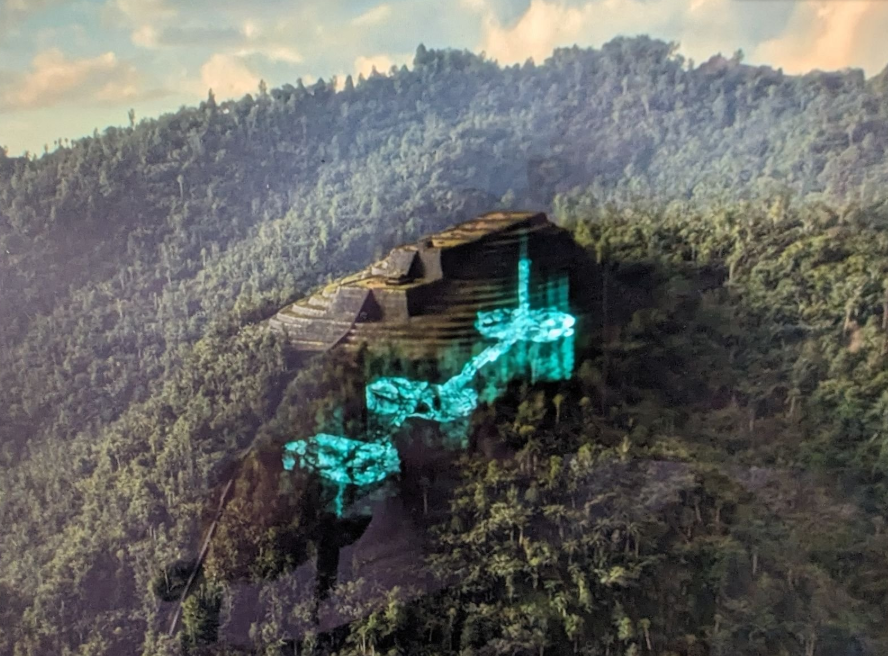
Gunung Padang, located on a volcanic hill in Indonesia, is not an ordinary place. For tourists, it is an almost mystical space, with stone terraces that look like giant stairs. However, for scientists, the site is a battlefield of theories about the pyramid.
-
Remains with battle wounds of over 100 soldiers from the Roman Empire are found beneath a football field in Vienna, leaving everyone surprised.
-
Elon Musk notes Brazil and lowers the price of his internet, Starlink, promising to connect all corners of the country with affordable plans, 10,000 satellites, and 1 million active users in the national territory!

-
Man creates an infinite source of FREE electricity at home with a PVC wind turbine using a repurposed motor.

-
An aquatic seed consumed for centuries in Asia is going viral in the West after studies highlighted its antioxidant compounds and potential anti-inflammatory properties. It pops like popcorn, has low fat content, and is already being called the new functional snack.


Research led by geologist Danny Hilman Natawidjaja used advanced techniques such as ground-penetrating radar and radiocarbon dating. The results indicated that the site is formed by various layers, possibly built at different times. If true, we would be facing a structure much older and more sophisticated than any previously discovered.
But not everyone is convinced. Renowned archaeologists like Flint Dibble point out that the stones may simply be natural formations organized by geological processes. He highlighted the lack of toolmarks or intentional alignments, which are fundamental elements to prove human intervention.
Oldest Pyramid in the World or a Work of Nature?
That’s the million-dollar question. Is the oldest pyramid in the world really there, hidden beneath layers of earth and time, or are we just being deceived by nature?
The more optimistic analyses claim that Gunung Padang was sculpted and architecturally covered by humans during the Ice Age. This would indicate that our ancestors had advanced construction techniques long before the advent of agriculture. However, skepticism persists. Recently, the journal Archaeological Prospection reported on one of the main studies on the subject, claiming that the evidence of human intervention was inconclusive.
Critics point out that the oldest soil samples do not contain classic signs of human occupation, such as charcoal or bone fragments. For them, the most plausible explanation is that Gunung Padang is a natural formation shaped over time.
Impact on Understanding Human History
If Gunung Padang is indeed a pyramid, this could change everything we know about the past. Imagine discovering that our ancestors mastered advanced construction techniques while still living as hunter-gatherers!
It makes us question how much we really know about early civilizations. The discovery challenges the idea that architectural complexity only arose with the development of agriculture.
Göbekli Tepe in Turkey is another example of how seemingly impossible structures for the time challenge our understanding of prehistory. Like Gunung Padang, it also raises questions about the level of sophistication of ancient societies.
Science and the Challenges of Investigating the Past
Exploring the past is like putting together a puzzle without having all the pieces. Gunung Padang shows how difficult it is to differentiate between what was made by humans and what is the work of nature.
Techniques such as ground-penetrating radar and radiocarbon dating have helped researchers look deeper, literally. But, even with all this technology, the conclusions remain uncertain.
The main difficulty lies in the lack of direct evidence. Without tools or human traces, it is almost impossible to prove that a formation was intentionally built.






-

-

2 pessoas reagiram a isso.