





 Portuguese
  English
  Spanish
  5 min of reading
  1 comment


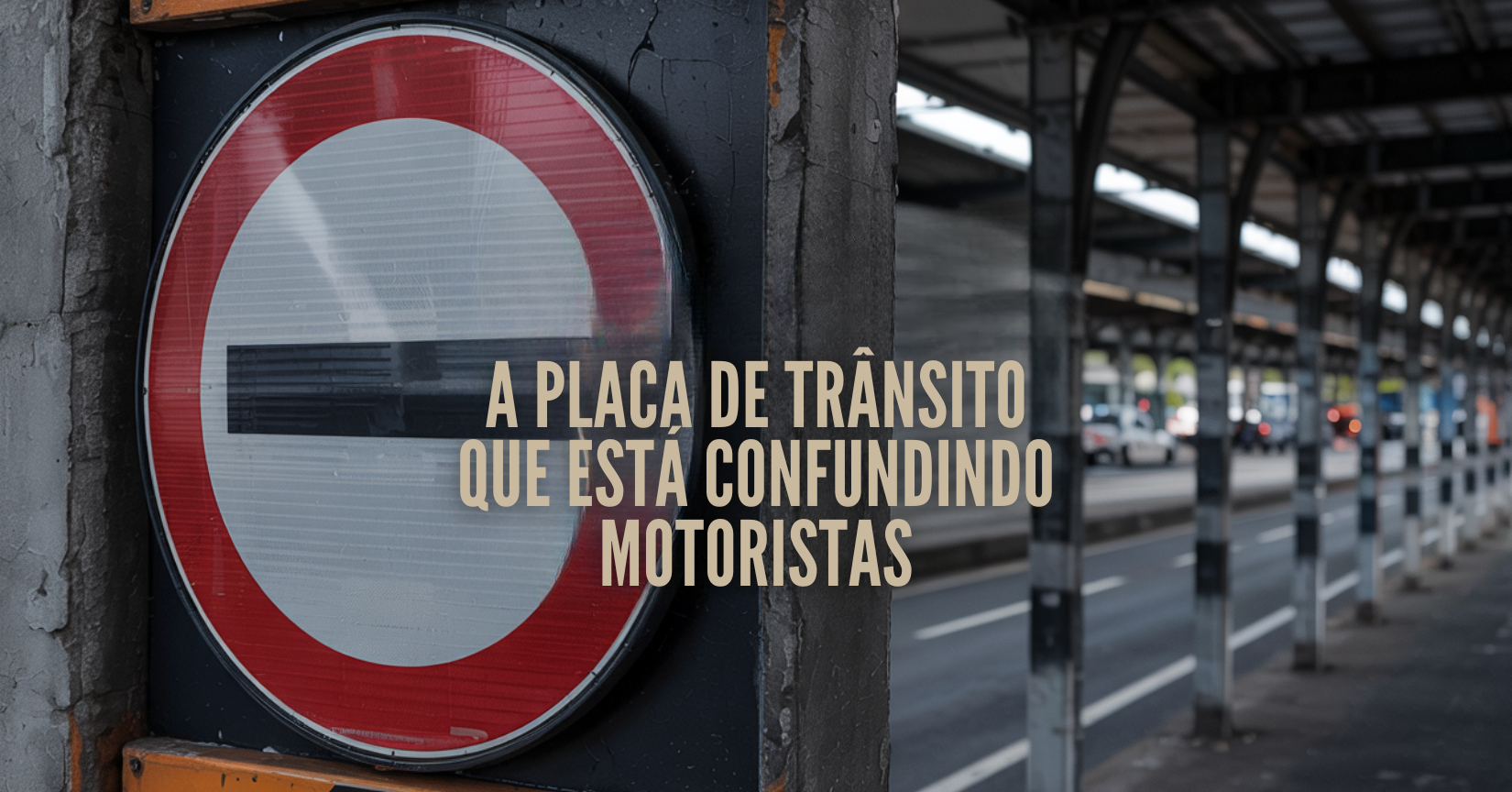


Have You Seen The Traffic Sign With A Red Circle And Black Stripe In The Middle? Know What The R-21 Traffic Sign Means, Used At Customs Posts In Brazil, And What The Penalties Are For Disregarding It.
If you frequently drive on Brazilian highways, it is very likely that you have come across a traffic sign with a red circle and a black diagonal stripe in the middle. Simple at first glance, this symbol has raised doubts among drivers of all ages — and its real function remains a mystery to many. Although it may seem just another one among the dozens of signs present on the roads, the truth is that this is one of the most specific traffic signs in Brazil: it indicates the proximity of a customs inspection post, that is, a border control barrier administered by agencies such as the Federal Revenue Service.
Officially registered as the R-21 Sign, this signaling plays a fundamental role in foreign trade inspection and customs security, but most drivers are unaware of its true meaning and the risks of ignoring it.
What Does The Traffic Sign With A Red Circle And Black Stripe In The Middle Mean?
The R-21 traffic sign is classified as a regulatory sign, and its symbol — a red circle with a black diagonal stripe — represents the mandatory stop order at a customs post.
-
The Argentine government celebrates the lowest poverty rate in 7 years, but experts warn that the methodology has changed, real wages have fallen, unemployment has risen, and the number of people on the streets of Buenos Aires has increased by 57% since Milei took office.

-
7.8 magnitude earthquake in Indonesia frightens the population, triggers tsunami alert, and hits an island with over 200,000 inhabitants this Thursday.

-
Google will finally let you change that embarrassing Gmail address you created in your teenage years without losing any accounts, logins, or old emails: the feature is already available in the United States.

-
Heading to Brazil in a Bonanza F33 single-engine aircraft: a couple departs from Florida on a visual flight, makes technical stops in the Caribbean to refuel and organize paperwork, and begins the staged crossing until they reach the country.

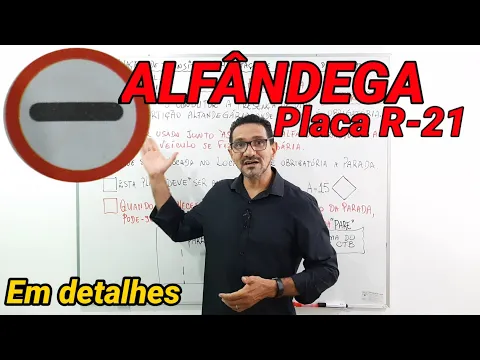

It is used to alert drivers of the necessity to stop at border inspection control points, usually near international borders, dry ports, airports, foreign trade zones, or on highways that lead to customs control areas.
This Brazilian traffic sign is, therefore, aimed at cargo vehicles, passengers, and also common drivers traveling in customs areas.
Why Is The R-21 Traffic Sign Important?
The function of this sign goes beyond simple road signaling. It is directly associated with federal and customs inspection operations and serves as an essential tool to:
- Prevent smuggling and tax evasion of goods;
- Suppress the illegal transportation of products without an invoice or illegally imported;
- Ensure the collection of federal taxes owed in foreign trade operations;
- Protect national security by controlling entries and exits in border zones.
By obeying this signalization, the driver allows customs agents to carry out inspections, check documentation, verify the transported content, and release the vehicle according to the law.
Where Does This Sign Typically Appear?
The R-21 sign is most common in:
- International border areas: such as Foz do Iguaçu (PR), Uruguaiana (RS), Corumbá (MS), and other cities with land connections to neighboring countries;
- Primary customs control zones: such as areas leading to ports and airports;
- Control points of the Federal Revenue and Federal Highway Police, with customs authority;
- Federal highways with international cargo traffic, including mobile inspection posts.
Despite this, its recognition is still limited, leading to doubts from drivers who are unfamiliar with foreign trade or more technical traffic legislation.
What Happens If I Disregard This Traffic Sign?
According to the Brazilian Traffic Code (CTB), disregarding the stop order at a location marked with the R-21 sign constitutes a serious infraction.
More specifically, Article 208 of the CTB states:
“Running a red light or a mandatory stop sign”
Penalty: fine of R$ 293.47 and 7 points on the driver’s license.
By ignoring the stop order imposed by this Brazilian traffic sign, the driver will be committing the same infraction as someone who runs a red light or ignores a “STOP” sign. This means that even if there is no customs agent present, the infraction may be recorded electronically or by witness testimony.
The driver can be classified under the following infraction codes:
- 605-01 – Traffic light;
- 605-02 – Mandatory stop;
- 605-03 – Electronic traffic light inspection.
What Does The CTB Say About The Customs Sign?
The regulation of the R-21 sign is supported by the Chapter XV of the CTB, which deals with infractions, and by the Resolution of the Contran that establishes the rules for regulatory signaling.
According to the sole paragraph of Article 208:
“Running a mandatory stop sign at a customs post is equivalent to the infraction of running a red light, unless in authorized places for right turns.”
In other words, it doesn’t matter if the sign is isolated or accompanied by a traffic light or physical barrier: the stop is mandatory whenever the R-21 signal is present, and the infraction will be considered serious in case of disobedience.
How To Correctly Identify This Brazilian Traffic Sign?
Visually, the traffic sign with a red circle and black stripe in the middle is quite specific:
- White background, with a red circular border (standard for regulatory signs);
- A black diagonal stripe cutting through the center of the sign, from the upper left to the lower right;
- Generally positioned before the customs barrier, accompanied by stop lines and, in some cases, a traffic light.
It is easily confused with other international signs that indicate “end of restriction” or “end of prohibition,” but in the Brazilian context, the R-21 indicates the start of a stop obligation — not the end of anything.
Why Do So Many Drivers Ignore This Sign?
This traffic sign is little known because:
- It doesn’t frequently appear in urban areas, where most drivers gain their experience;
- It is not widely addressed in driving school classes, being seen as a “border” sign;
- Many drivers have never passed through customs posts during their driving routine.
The result is widespread ignorance that can lead to unintentional infractions — with fines, point loss, and, in severe situations, even vehicle impoundment.
R-21 Sign and Truck Drivers: Extra Caution Required
Professional drivers, especially truck drivers and cargo carriers, should pay special attention to the R-21 sign. This is because:
- Trucks on international routes frequently cross customs areas;
- Loads may be inspected, documentation checked, and seals verified;
- Failing to stop may result in even harsher fines if there is an attempt to evade inspection.
For this reason, logistics companies and carriers invest in specific training to ensure compliance with legal obligations at these points.
The traffic sign with a red circle and black stripe in the middle — or R-21 sign, as it is officially called — is one of the clearest examples of how a simple symbol can carry a vital function within the Brazilian traffic system.
It is not just another sign: it is a legal instrument for control, inspection, and national security. Even though it is little known, disregarding it can lead to severe penalties, both for common drivers and for professionals.
Understanding the meaning of the R-21 traffic sign is, therefore, more than a curiosity — it is a responsibility for those who wish to drive responsibly and within the law.










Muito bom esse conteúdo.