





 Portuguese
  English
  Spanish
  4 min of reading
  0 comments


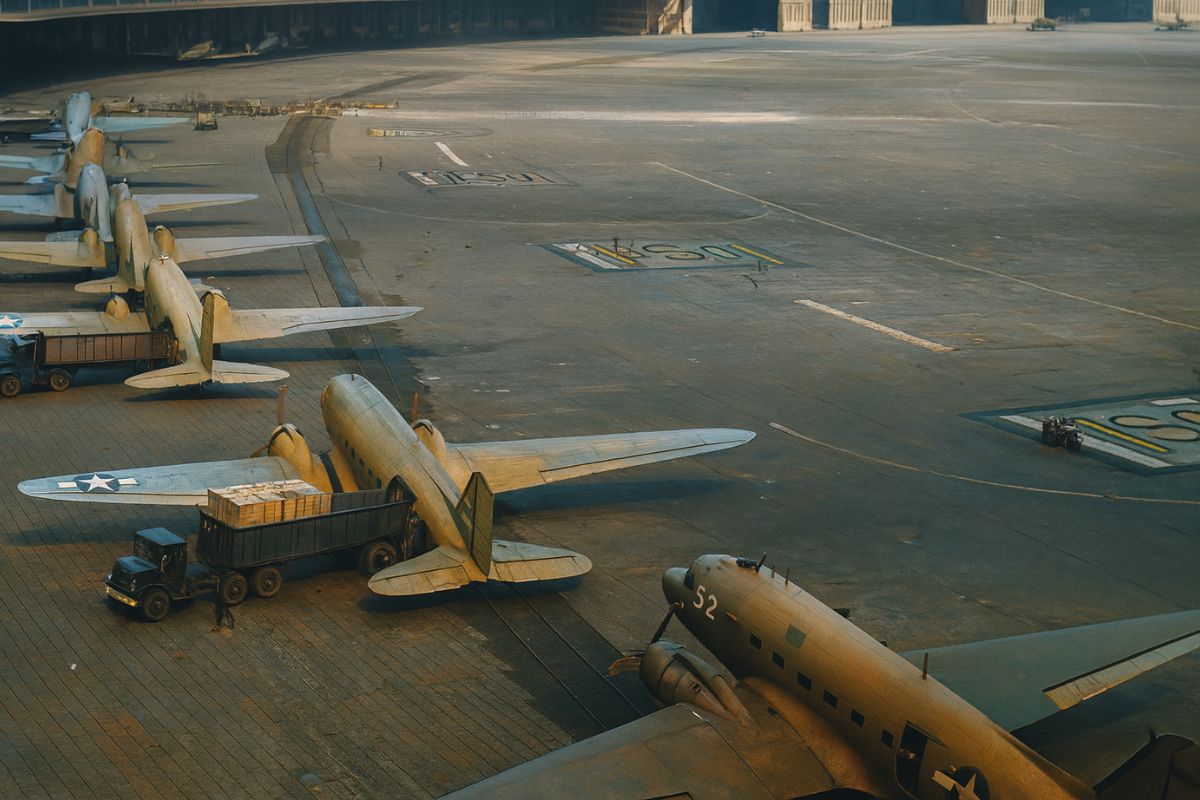
When The Soviet Union Tried To Subjugate Berlin By Starvation In 1948, The Allied Response Was An Unprecedented Logistical Feat. This Is The Story Of How Planes, Landing Every 90 Seconds, Won The First Great Confrontation Of The Cold War.
On June 24, 1948, the citizens of West Berlin woke up isolated. In a show of power, the Soviet Union blocked all roads, railways, and canals connecting the western sectors of the city to the rest of Germany. The intention was clear: force the Allies (United States, United Kingdom, and France) to abandon the former German capital or watch its 2.5 million inhabitants succumb to starvation and cold.
Faced with an impossible ultimatum and with the memory of war still fresh, the response came from where it was least expected: from the sky. What followed was the “Luftbrücke”, or Berlin Airlift, perhaps the largest and boldest logistical operation in history, an uninterrupted aerial ballet that redefined the limits of transport and human determination.
The Strangulation: Why Was Berlin Blocked?
After World War II, Germany and its capital, Berlin, were divided into four occupation zones: Soviet, American, British, and French. Berlin, however, was located entirely within the Soviet zone, making the western sectors an island of capitalism in a sea of communism.
-
New CCR concrete paving technology promises roads up to 3x more durable, less maintenance, and cost reduction in Brazil.

-
Made from recycled plastic, plastic wood is gaining space in the construction industry because it does not rot, resists moisture, and reduces maintenance costs over the years.

-
Florianópolis will receive a million-dollar BRT that will begin construction in 2026 with nearly 400 million in funding from the federal government and the Inter-American Development Bank, and the map already shows the routes for the exclusive bus corridors.
-
Without a blueprint, without an engineer, and using scrap from the dump, a father spends 15 years building an 18-room castle for his daughter, featuring tram tracks, 13 fireplaces, and over 700 m², which may now be demolished.


When the Allies decided to create a new strong currency for their zones (the Deutsche Mark) to rebuild the economy, Stalin saw this as a threat. In retaliation, he ordered the blockade of Berlin in 1948, closing all land and river access, betting that it would be impossible to supply the city any other way.
The Numbers Behind The Operation
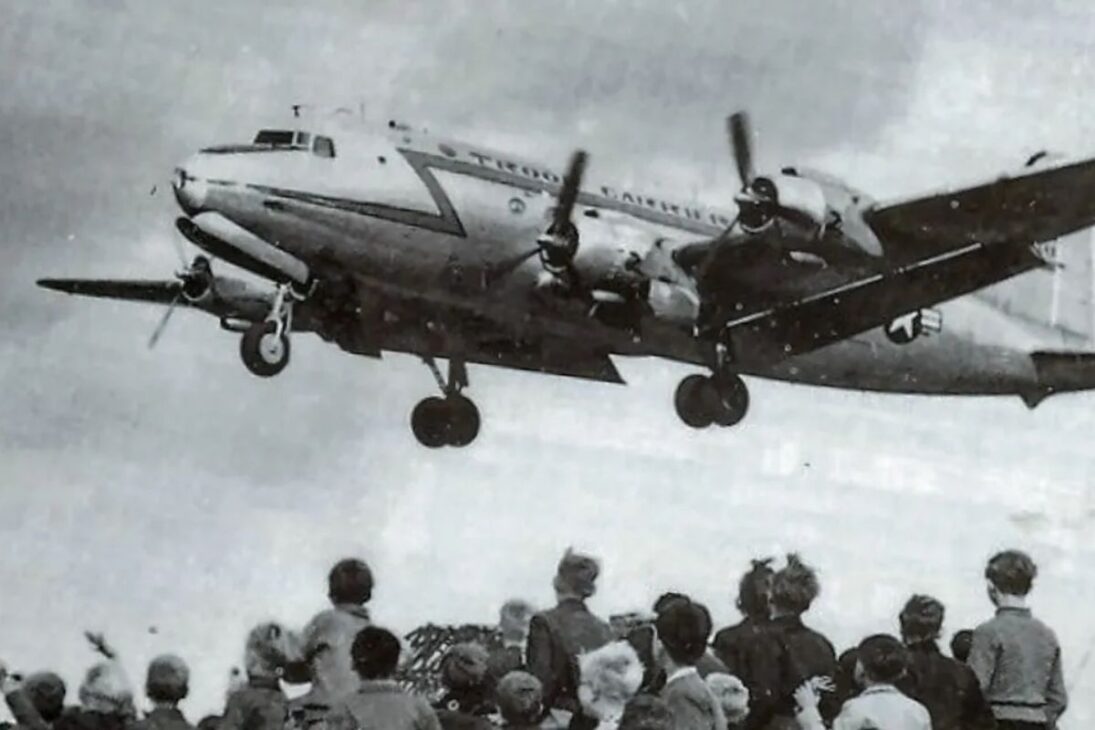
The task seemed superhuman. To survive, West Berlin needed a minimum of 4,500 tons of supplies per day, including food, medicine, and, crucially, coal to generate electricity and heating during the harsh winter.
Initial Challenge: At the beginning of the operation, the available fleet of C-47 Skytrain aircraft could barely transport 750 tons daily.
Industrial Scale: To meet the target, the Allies mobilized a massive fleet, mainly of the more modern C-54 Skymaster, which could carry 10 tons per flight, more than three times the capacity of the C-47.
Historic Record: At the peak of the operation, in April 1949, a monumental effort nicknamed the “Easter Parade” delivered nearly 13,000 tons of cargo in a single 24-hour period, with 1,398 flights.
Total: By the end of 15 months, the airlift conducted over 278,000 flights, transporting more than 2.3 million tons of supplies.
The Veins Of The Sky: The Genius Of Aerial Corridors
For the story of the Berlin airlift to be a success, efficiency needed to be absolute. General William H. Tunner, a logistics genius, implemented a rigorous system:
Aerial Corridors: Three narrow aerial corridors (only 32 km wide) were established for two-way traffic.
Flight Levels: Planes flew at five different altitude levels, separated by about 150 meters, to maximize flow.
“Single-Handed” Operation: The rule was strict: if a pilot misjudged their approach for landing, they were prohibited from circling. They had to return to their base in West Germany and join the end of the queue again. There was no room for errors or delays.
Incredible Frequency: Thanks to this system, at the height of the operation, a plane landed at Tempelhof Airport in Berlin every 60 to 90 seconds.
The unloading of planes was also timed. German ground crews unloaded the 10 tons of a C-54 in under 10 minutes, allowing the aircraft to be refueled and take off in record time.
The ‘Candy Bombers’: The Human Side Of Logistics
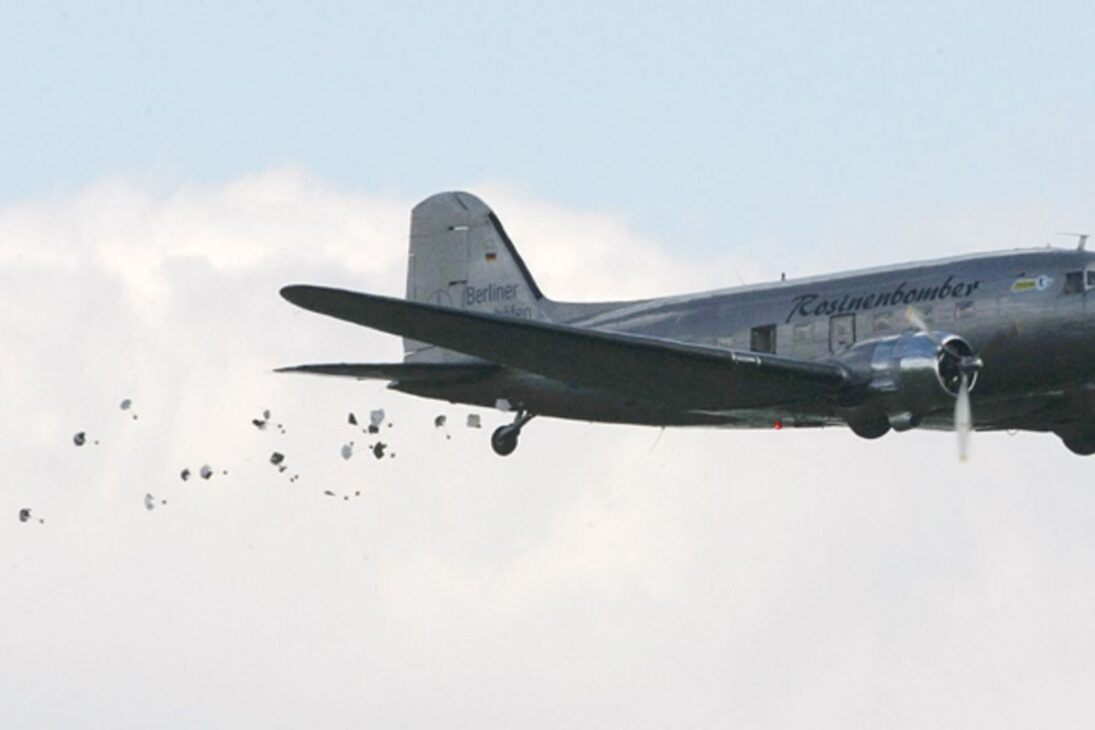
Amidst the military precision of the operation, a gesture of humanity became its most enduring symbol. American pilot Gail Halvorsen, touched upon seeing Berliner children watching the planes behind the airport fences, decided on his own to tie candy and chocolates to small parachutes made of handkerchiefs and drop them to them before landing.
The news spread, and soon other pilots joined the initiative, which became known as “Operation Little Vittles.” The “Rosinenbomber”, or candy bombers, became the image of hope and friendship in a time of extreme tension, humanizing the massive operation and strengthening the bonds between Berliners and the Allies.
In May 1949, realizing that his tactic had failed and that Western determination was unshakeable, the Soviet Union lifted the blockade. The airlift continued for a few more months to ensure the city had sufficient reserves. The operation was a logistical triumph that not only saved a city, but also demonstrated to the world that will and ingenuity could overcome brute force, setting the tone for the following decades of the Cold War.
Which element of the Berlin Airlift do you consider the most impressive: the pilots’ precision, the efficiency of ground maintenance, or the human impact of the ‘candy bombers’? Share your thoughts!







Seja o primeiro a reagir!