





 Portuguese
  English
  Spanish
  7 min of reading
  0 comments



The Changes to the Driver’s License Discussed in Congress Mix Cost Reduction, Digital Classes, Fewer Practical Requirements, and the Controversial Idea of Allowing 16-Year-Olds Behind the Wheel with Adult Supervision While Parliamentarians, Government, and Driving Schools Compete Over Which Model Can Expand Access Without Compromising Training, Jobs, and National Traffic Safety.
The changes to the driver’s license have returned to the center of the debate in Brasília with a rare combination of popular appeal, economic impact, and strong potential for controversy. On one side is the promise to make licensing cheaper and less bureaucratic; on the other, concerns grow about the practical effect of these changes on the quality of training for new drivers and traffic safety.
The discussion gained new weight with the establishment of a committee in the House of Representatives to review the package advocated by the federal government. In the same environment where the reduction of costs and the relaxation of requirements to obtain a license are being discussed, the proposal to allow 16-year-olds to drive in Brazil, as long as accompanied by a responsible adult, also emerged, further intensifying the debate over the future of licensing in the country.
What Is Really at Stake in the Changes to the Driver’s License
The debate over the changes to the driver’s license is not limited to a simple bureaucratic update. What is being discussed, in practice, is what the model for driver training in Brazil should be: a cheaper and more accessible system, with fewer formal steps, or a structure that preserves requirements considered essential by Congress and the driving school sector.
-
Spain surprises the world by erecting 62 artificial dunes, mixing sand with natural remains of posidonia, and causing the structure to lose only 1.4% of its volume in 1 year.

-
With 16 Bulava missiles, improvements in acoustic stealth, and a design focused on silent patrols, Russia’s nuclear submarine was born to ensure Moscow’s invisible retaliation and has become one of the pillars of its maritime strength.

-
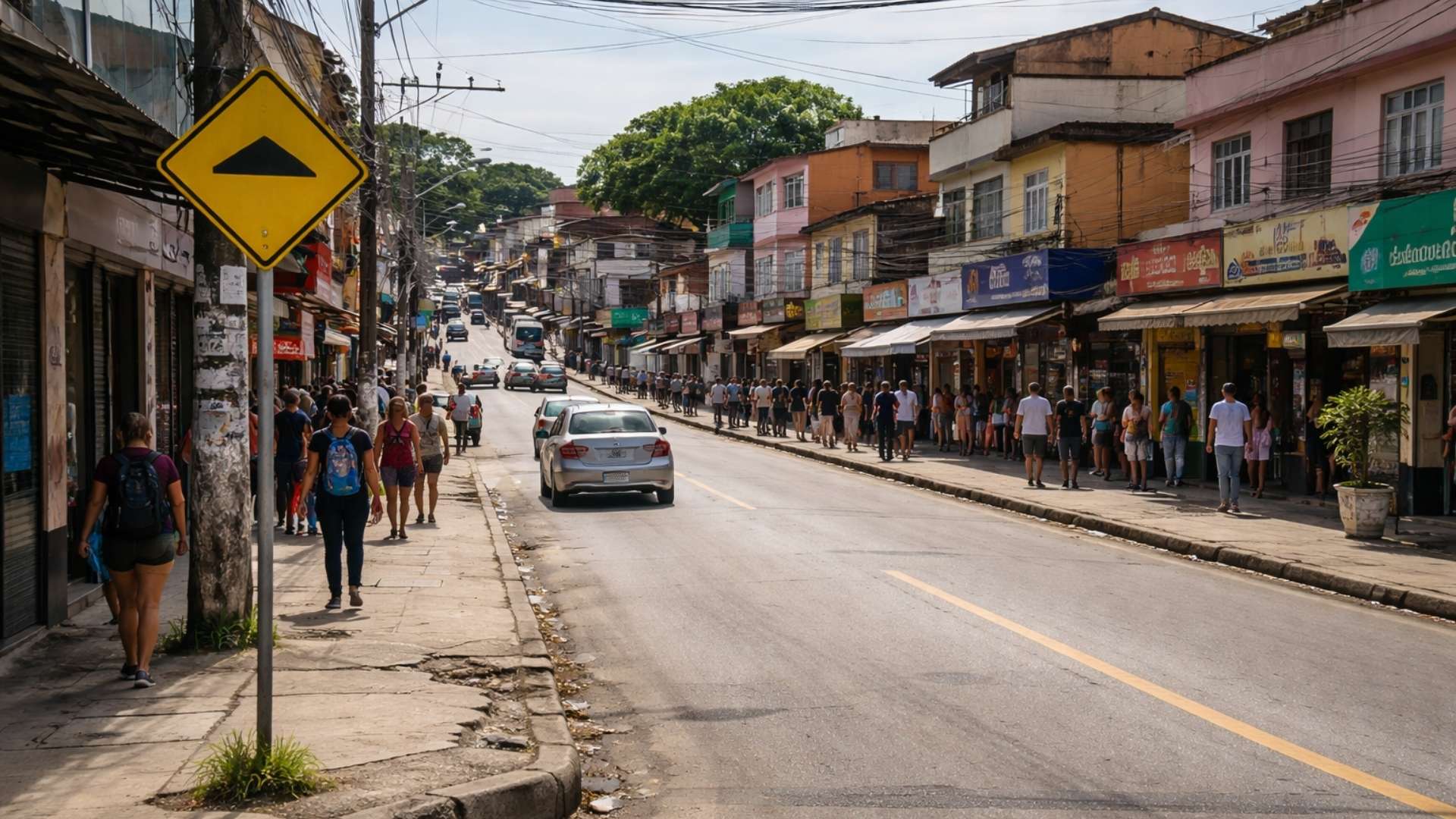
‘Populous’ city in Rio among the worst in Brazil in national ranking and exposes silent development crisis.
-
Couple buys house in the South Zone of São Paulo, opens a hidden door in the garage, and finds a secret wine cellar with dozens of old wines forgotten since the 1970s.


This is the central line of the clash because any cost reduction tends to be well-received by the public, but any reduction in requirements raises immediate doubts about technical preparedness.
The reaction from Congress came precisely in response to the package aimed at lowering the cost of obtaining a driver’s license. Among the points under review are free and digital theoretical classes, the elimination of the requirement for 20 hours of practical instruction reduced to a minimum of just 2 hours, and the establishment of the autonomous instructor, allowing the student to learn without directly depending on a driving school.
At its core, the discussion has ceased to be purely financial and has also become institutional because it affects the operating logic of an entire sector.
This scenario explains why Congress decided to open a specific front to review the proposals. Parliamentarians in favor of the review believe that the government is trying to accelerate the simplification of the process, but that this could produce effects that go beyond financial relief for those who need a license.
What is being analyzed, therefore, is not just how much the driver’s license will cost, but what type of driver will be trained in a model with fewer requirements and less mediation from driving schools.
Driver’s License at 16 Widens the Debate and Runs into the Constitution
The proposal to allow driving by 16-year-olds has made the changes to the driver’s license even more politically sensitive. The committee’s rapporteur, Deputy Áureo Ribeiro, argues that the debate involves coherence, reminding that young people can already vote at that age.
The initial idea under discussion proposes specific rules, such as the requirement for minors to be accompanied by a responsible adult while driving. This shows that the proposal does not emerge as an unrestricted release, but as a controlled and conditioned model.
Even so, the main obstacle lies not only in public opinion or resistance from the sector, but in legislation. The legal problem arises because the Constitution states that minors under 18 years are not criminally responsible.
In other words, they do not face criminal charges in the same way as adults do. This point completely changes the axis of the debate because any accident or traffic crime committed by a 16-year-old would not be treated under the same penal logic applied to adults.
Under the current system, those aged 16 or 17 are subject to the norms of special legislation under the Statute of the Child and Adolescent, not the Penal Code. This means that the proposal for driving for minors depends not only on political will or sectoral pressure.
It touches on a concrete constitutional barrier, making the subject more complex than it seems at first glance. The discussion is therefore not just about allowing or prohibiting, but about how to reconcile responsibility, oversight, punishment, and legal protection in a risk-laden environment like traffic.
The Clash Between Cheaper Access, Technical Training, and the Survival of Driving Schools
The changes to the driver’s license have also sparked a direct economic conflict. The government and some deputies advocate for deregulation and cost reduction as a way to expand access to licensing. The reasoning is straightforward: the license is expensive, and many people end up being excluded because they cannot pay for all the required steps today.
In this reasoning, reducing barriers would be a form of inclusion, especially for those who depend on the document to work or move with greater autonomy.
On the other side, the driving school sector argues that radical simplification could dismantle an entire chain of professional training. The estimate presented is that over 15,000 companies and 300,000 jobs are at risk if the new model moves forward without compensations or without preserving part of the current structure.
This argument shifts the debate beyond individual mobility as it begins to involve companies, instructors, formal jobs, and the maintenance of an economic activity spread across the country. This is not just about defending a market, but discussing what is lost when traditional training is hollowed out.
The strongest critique, however, is not limited to the economic impact. Parliamentarians who resist the new design argue that removing steps and weakening the role of driving schools could compromise the quality of traffic education.
It was in this context that statements emerged arguing that improving training cannot occur by closing schools or disqualifying the driver. The central point of this criticism is that reducing costs cannot mean less preparation, especially when the end result is someone taking the wheel of a vehicle on public roads.
What Could Happen Going Forward With the New Licensing Model
The political climate surrounding the changes to the driver’s license already indicates that the final report will hardly be purely technical. During the group’s establishment, there was strong pressure on the Ministry of Transportation, and the debate took on a broader tone of dispute among the government, Congress, and sector representatives. The president of the committee, Deputy Coronel Meira, even guided the mobilization of representatives from driving schools to pressure parliamentarians in the plenary. This reveals that the process will be marked by organized dispute and the direct interest of various groups.
At the same time, alternatives started to emerge to try to balance popular access and sector preservation. One of the suggestions presented was to allocate part of the revenue from traffic fines to driving schools to fund the Social Driver’s License targeted at low-income individuals registered in CadÚnico.
The proposal attempts to answer a crucial question in the debate: how to reduce the cost for citizens without destroying the structure that currently provides training? This type of solution indicates that Congress is seeking a point of equilibrium, rather than just a confrontation between maintaining everything as it is or changing everything at once.
The work plan has already been officially presented, and the final opinion is expected to be released within 45 days, before the election period. It is in this interval that the country will know whether the trend will be to follow a more aggressive path of simplification or to pursue a review that preserves an important part of the traditional model.
The result directly interests those who intend to obtain a license, those who work in the sector, and those who follow with concern the increase or decrease of requirements for training drivers. In the end, the decision will say a lot about the type of priority that Brazil wants to establish between access, cost, employment, and safety.
Between the Promise of Simplifying and the Risk of Over-Flexibility
The changes to the driver’s license condense a discussion that goes far beyond bureaucracy. The debate includes the cost of obtaining a license, the role of driving schools, minimum driver training standards, threatened jobs, legal responsibility, and even the possibility of 16-year-olds taking the wheel under specific conditions. It is precisely because it brings together so many interests at once that the topic gained momentum in Congress and is likely to mobilize intense opinions in the coming weeks.
The question that remains is not just whether the driver’s license should become cheaper, but how far Brazil can go in this reduction without weakening the preparation of those who will drive. And, in the case of 16-year-olds driving, the question becomes even more delicate: is the country ready to revisit this limit amid a system that is already discussing fewer classes, fewer requirements, and new forms of learning?
In the comments, it is worth discussing a concrete point: do you believe that the changes to the driver’s license should prioritize the cost of obtaining a license, the maintenance of traditional training, or a middle ground between the two? And does the proposal to allow 16-year-olds to drive, with adult supervision, seem like an advancement or an unnecessary risk?








Seja o primeiro a reagir!