





 Portuguese
  English
  Spanish
 5 min of reading
  3 comments


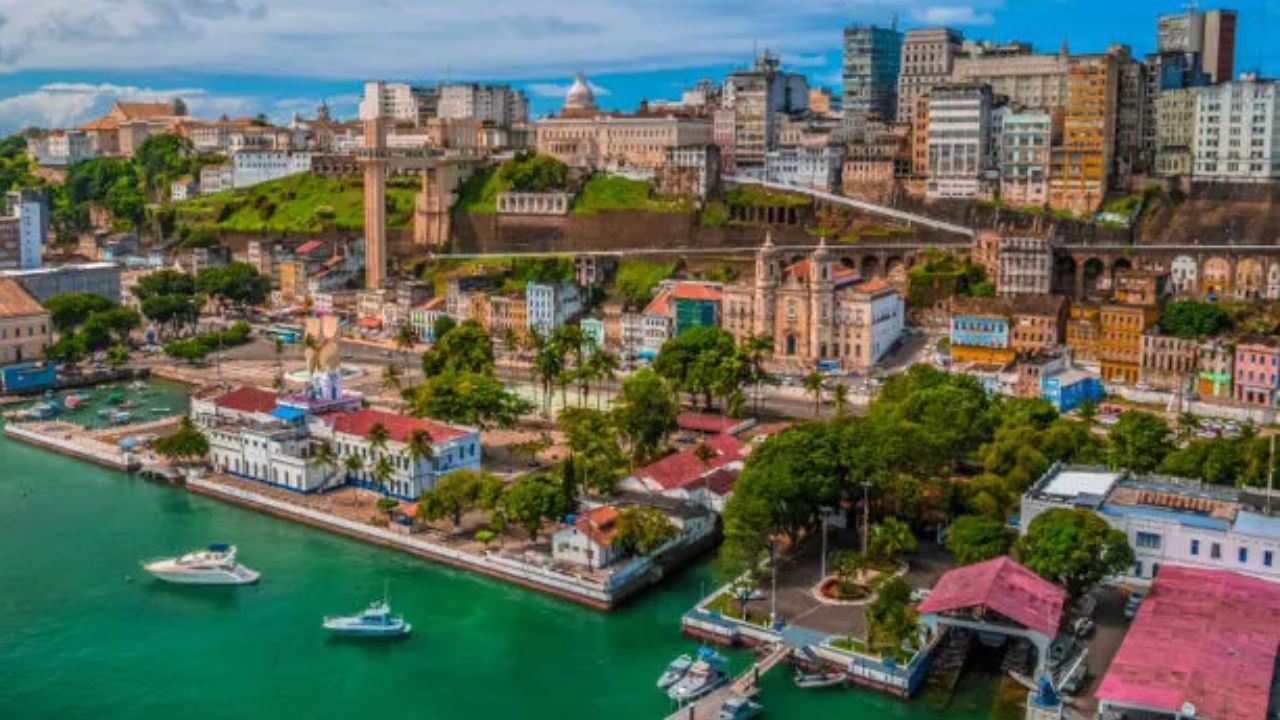


Discover The History of The City That Was The Center of Colonial Power, Houses The Largest Architectural Set In Latin America, and Became The Epicenter of Afro-Brazilian Identity.
Salvador, Bahia, is a city whose identity goes far beyond its stunning landscapes. Founded to be the seat of Portuguese power in the Americas, it was the first capital of Brazil, an administrative and economic center that shaped the course of the nation for over two centuries. As highlighted by the National Institute of Historical and Artistic Heritage (IPHAN), its strategic planning and economic importance established it as the most relevant city in the New World at its time, leaving a monumental legacy that can be seen and felt to this day.
This heritage, however, is inseparable from another, deeper and more resilient narrative. The colonial opulence of Salvador was built on the labor of millions of enslaved Africans, who made the city the largest port of the African diaspora in the Americas. It was in this context of oppression that a vibrant and powerful culture was born, transforming Salvador into the uncontested heart of Afro-Brazilian identity. Its historic center, recognized by UNESCO as a World Heritage Site, is not just a collection of mansions and churches, but the stage where this story of resistance and creation flourished.
The Empire’s Capital: Foundation and Colonial Power
The history of Salvador as a center of power begins on March 29, 1549, when Tomé de Souza, the first Governor-General, arrived with the mission of establishing a fortress city. The choice of Baía de Todos os Santos was not random: its strategic location and safe natural harbor were ideal for administering the territory and exporting sugar, the “white gold” that drove the empire’s economy. IPHAN emphasizes that, unlike other settlements, Salvador was designed to be the seat of power, with a clear division between the Upper City, the administrative and religious center, and the Lower City, the commercial and port area.
-
Friends have been building a small “town” for 30 years to grow old together, with compact houses, a common area, nature surrounding it, and a collective life project designed for friendship, coexistence, and simplicity.

-
This small town in Germany created its own currency 24 years ago, today it circulates millions per year, is accepted in over 300 stores, and the German government allowed all of this to happen under one condition.

-
Curitiba is shrinking and is expected to lose 97,000 residents by 2050, while inland cities in Paraná such as Sarandi, Araucária, and Toledo are experiencing accelerated growth that is changing the entire state’s map.

-
Tourists were poisoned on Everest in a million-dollar fraud scheme involving helicopters that diverted over $19 million and shocked international authorities.


This economic prosperity directly depended on the slave system. Salvador became the main entry port for enslaved Africans, a tragic epicenter of the transatlantic trade that permanently shaped its demographics. In 1763, after 214 years, the Portuguese crown transferred the capital to Rio de Janeiro, seeking to more closely control gold extraction in Minas Gerais. Paradoxically, the loss of political status and the resulting economic stagnation protected Salvador from major urban modernizations, which, according to IPHAN, was crucial for the preservation of its colonial architectural ensemble in an almost intact form.
An Open-Air Museum: The Architectural Legacy
At the heart of the Upper City, Pelourinho is the greatest symbol of Salvador’s architectural legacy. The name, which refers to the stone column used to publicly punish enslaved individuals, reveals the dark origin of the place. Over time, the space of punishment transformed into a vibrant cultural center. Today, its cobblestone streets and colorful mansions from the 17th and 18th centuries form the largest colonial ensemble in Latin America, a value recognized worldwide with the title of World Heritage Site by UNESCO, as validated by the National Institute of Historical and Artistic Heritage (IPHAN).
The wealth and contradictions of that time are engraved in the stone of its churches. The Church and Convent of São Francisco is the ultimate expression of power and opulence from the gold cycle, with its interior gilded with almost a ton of the precious metal. In sharp contrast, just a few meters away, the Church of Nossa Senhora do Rosário dos Pretos was built over a century through the work and resources of the black community, both enslaved and free. This temple does not symbolize the wealth of the empire, but the faith, organization, and resilience of a people who built their own sacred space, blending Catholicism with African influences.
The African Soul: The Ginga of Capoeira

The culture of Salvador is a culture of resistance, and capoeira is its most ingenious expression. Born as a form of fight and self-defense disguised as dance, it allowed the enslaved to train their bodies for combat without raising suspicion. After abolition, the practice was marginalized and criminalized, and its survival and legitimization in the 20th century owe much to two great Salvadoran masters. Sources detailing the lives of both masters explain their fundamental contributions to the art.
On one side, Mestre Bimba (Manoel dos Reis Machado) sought to legitimize capoeira before society. He created Capoeira Regional, a faster and more athletic style, systematizing its teaching and founding the first official academy in 1932. His initiative was crucial in taking capoeira out of clandestinity and turning it into the “only truly national sport.” On the other side, Mestre Pastinha (Vicente Ferreira Pastinha) acted as the guardian of tradition, dedicating himself to preserving Capoeira Angola, the oldest, philosophical, and ritualistic style. Pastinha’s vision protected the art’s ancestry, ensuring that its “mandinga” and essence did not get lost. Together, Bimba and Pastinha represent the duality between innovation and tradition that strengthened and projected capoeira to the world.
The Sound That Echoed Around The World: Olodum and Samba-Reggae
The most impactful musical revolution in Salvador in the 20th century began in Pelourinho, with Olodum. Founded in 1979, the group emerged not just as a carnival block but as an activism organization. The Cultural Foundation Palmares, linked to the Federal Government, highlights the role of Olodum as an entity of the black movement, which has been fighting against discrimination and promoting pride and Afro-Brazilian culture since its inception. Its colors, inspired by Pan-Africanism, and its name, which refers to the supreme God of Yoruba cosmology, already signaled its political vocation.
The great innovation came when percussion master Neguinho do Samba created samba-reggae, a rhythm that fused the base of Bahia’s samba de roda with the cadence of Jamaican reggae. It was an act of cultural reaffirmation that gave voice to the black community of Salvador and became a global phenomenon. The powerful sound of Olodum’s drums broke through borders, bringing the culture of the first capital of Brazil to the world and culminating in partnerships with artists such as Paul Simon and Michael Jackson. Thanks to this strength, the group was recognized as Intangible Cultural Heritage of Brazil, a milestone validated by the Cultural Foundation Palmares.
An Eternal Capital of Brazilian Culture
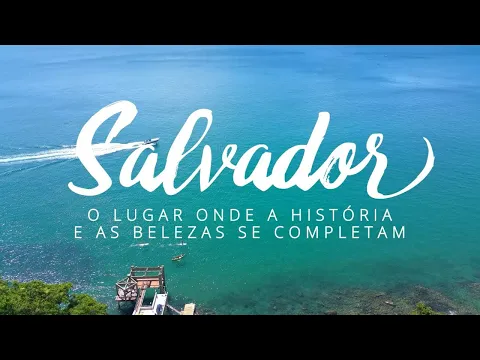
Although it lost the title of political capital in 1763, Salvador has never ceased to be the cultural and spiritual capital of Brazil. The city is a living testament to resilience, proving that culture is the most powerful tool for survival and affirmation. In the streets where their ancestors were oppressed, today people dance, play capoeira, and celebrate an identity that not only resisted but flourished and enriched an entire nation. Salvador is not just the first capital of Brazil; it is the eternal capital of the Afro-Brazilian soul.
Have you visited Salvador? What was your most memorable experience in the city? Share your story in the comments and tell us what connected you the most with Afro-Brazilian culture.








Ich habe kürzlich den Zahngold verkaufen Hannover ausprobiert und war sehr zufrieden mit dem gesamten Ablauf. Besonders beeindruckt hat mich die Goldverkauf Hannover und die freundliche, kompetente Beratung im Individuelle Anfertigungen. Alles verlief transparent, professionell und zu einem fairen Preis. Ich empfehle diesen Service jedem weiter, der Wert auf Qualität und Vertrauen legt.
I must say this article is extremely well written, insightful, and packed with valuable knowledge that shows the author’s deep expertise on the subject, and I truly appreciate the time and effort that has gone into creating such high-quality content because it is not only helpful but also inspiring for readers like me who are always looking for trustworthy resources online. Keep up the good work and write more. i am a follower.
I must say this article is extremely well written, insightful, and packed with valuable knowledge that shows the author’s deep expertise on the subject, and I truly appreciate the time and effort that has gone into creating such high-quality content because it is not only helpful but also inspiring for readers like me who are always looking for trustworthy resources online. Keep up the good work and write more. i am a follower.