





 Portuguese
  English
  Spanish
  5 min of reading
  0 comments


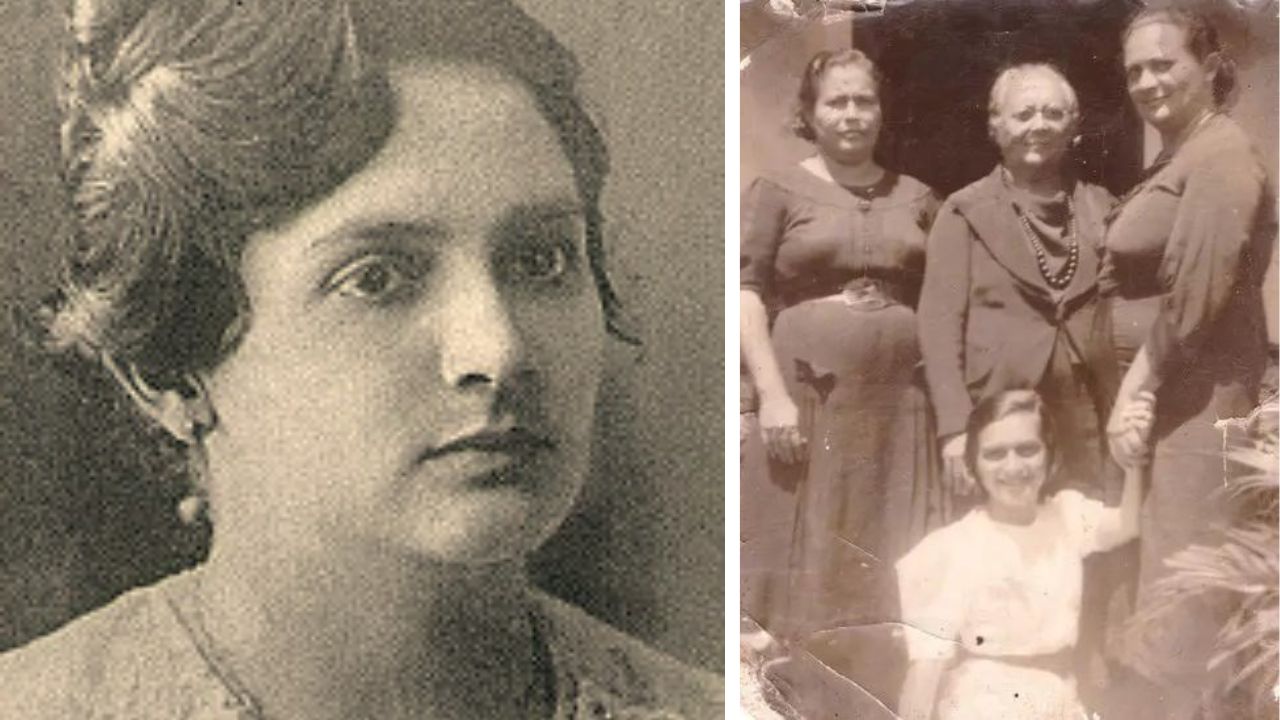
In 1928, in the municipality of Lajes, in the interior of Rio Grande do Norte, Alzira Soriano became the first woman elected mayor of Brazil, winning a municipal election even before the country recognized the right to vote for women, in an episode that resounded internationally
In 1928, the municipal election in Lajes, in the interior of Rio Grande do Norte, led Alzira Soriano, 32 years old, to the mayor’s office, before women’s suffrage in the country, with international repercussions and coverage in The New York Times, highlighting the political, legal, and social impacts of the election.
A Local Election That Gained International Repercussion
On September 8, 1928, a news article published on page 9 of The New York Times highlighted an unusual fact that occurred in Brazil. The newspaper reported Alzira Soriano’s victory in Lajes, a municipality in the interior of Rio Grande do Norte, in a context where women did not have the right to vote in the country.
The repercussion drew attention because the election took place four years before the enactment of the Electoral Code of 1932, which would establish women’s suffrage nationally during the government of Getúlio Vargas. The episode exposed a discrepancy between the existing federal legislation and a specific state initiative.
-
Friends have been building a small “town” for 30 years to grow old together, with compact houses, a common area, nature surrounding it, and a collective life project designed for friendship, coexistence, and simplicity.

-
This small town in Germany created its own currency 24 years ago, today it circulates millions per year, is accepted in over 300 stores, and the German government allowed all of this to happen under one condition.

-
Curitiba is shrinking and is expected to lose 97,000 residents by 2050, while inland cities in Paraná such as Sarandi, Araucária, and Toledo are experiencing accelerated growth that is changing the entire state’s map.

-
Tourists were poisoned on Everest in a million-dollar fraud scheme involving helicopters that diverted over $19 million and shocked international authorities.


According to political scientist and professor at the Federal University of São Paulo, Antônio Sérgio Rocha, the election represented an explicit challenge to the legal framework of the time. He defines the achievement as a feat in a period marked by intense misogyny and exclusion of women from politics.
The Legal Basis in Rio Grande do Norte and State Law 660
Alzira Soriano’s election was made possible by a state law that authorized women’s political participation in Rio Grande do Norte. State Law 660, dated October 25, 1927, allowed voting and being voted for without distinction of sex, according to records from the Regional Electoral Court of Rio Grande do Norte.
The then-governor José Augusto Bezerra de Medeiros justified the law’s sanction based on the Constitution of 1891. According to him, the constitutional text referred only to citizens, without establishing a distinction between men and women regarding the right to vote.
In the same year that the law came into effect, the teacher Celina Guimarães Viana, from Mossoró, requested her electoral title, becoming officially the first Brazilian female voter. This act consolidated the practical application of the state legislation in the local democratic process.

Personal Trajectory, Political Support, and Electoral Campaign
Luisa Alzira Teixeira Soriano came from a wealthy and traditional family in Jardim dos Angicos, then a district of Lajes. She married young to the Pernambuco prosecutor Thomaz Soriano, with whom she had three daughters. She became a widow at 22, after her husband died from Spanish flu.
After her widowhood, Alzira returned with her daughters to her parents’ house and began to manage the family farm. During this period, she became interested in politics through her father, an influential regional leader, an experience that broadened her contact with local arrangements.
The candidacy had the support of Governor Juvenal Lamartine, Bezerra de Medeiros’s successor, and the feminist leader Bertha Lutz, who visited Rio Grande do Norte in 1928. The political backing was decisive in the campaign.
Journalist Rudolfo Lago, Alzira’s great-grandson, states that she combined firmness and fearlessness, qualities necessary to manage a farm in the backcountry and confront the male political environment. He defines the election as a milestone in the political emancipation of women in Brazil and Latin America.
Social Resistance, Victory at the Polls, and Exercise of the Mandate
Despite its historical significance, the candidacy faced criticism and personal insults in a patriarchal society. According to the Dictionary of Women in Brazil, organized by Schuma Schumaher, opponents associated public women with prostitution and questioned women’s participation in politics.
Nominated by the Republican Party, Alzira Soriano did not back down in the face of pressure. She won the election with 60% of the valid votes, surpassing Sérvulo Pires Neto Galvão. After the defeat, the opponent abandoned politics and left the city, according to records from the time.
During her term, Alzira had to assert herself in an exclusively male political environment. Lago states that the political weight of the family contributed but emphasizes that her strong personality was decisive in earning respect and leading the municipal administration.
A symbolic image mentioned by the great-grandson shows the mayor on the day of her inauguration, January 1, 1929, surrounded by a cabinet composed only of men. The scene summarizes the social and institutional context faced by the newly elected manager.
Works, Resignation After 1930, and Return to Local Politics
The term was relatively short. After the Revolution of 1930, Alzira was invited to remain as municipal intervener by the federal government but chose to resign due to her disagreement with the political developments and Vargas’s government, ending her term prematurely.
Even brief, her government in Lajes was marked by concrete initiatives. These included the construction of schools, infrastructure works connecting the headquarters to the districts, and improvements in gas street lighting, according to local historical records.
After the country’s redemocratization in 1945, Alzira returned to political life. She was elected councilwoman in Lajes for three terms, maintaining active participation in the municipal legislature and consolidating her institutional trajectory over the decades.
Journalist and political scientist Deysi Cioccari defines Alzira as imposing in a time when women were restricted to domestic spaces. For her, the lack of knowledge about the mayor’s trajectory reveals the historical production of sexism in Brazilian political power.
The Legacy and Female Participation More Than 90 Years Later
More than 90 years after the pioneering election, female presence in charge of municipalities remains limited. Although women represent 52.5% of the Brazilian electorate, only 12.2% of the more than 5,500 municipalities elected female mayors in the first round of the 2020 elections, according to the Superior Electoral Court.
In 2016, the rate was 11.57%, indicating a small advancement. The data could still change after the second round in 57 cities, held on November 29. In Lajes, the elected mayor was Felipe Menezes (PP).
The municipality currently has 11,300 inhabitants, according to data from the Brazilian Institute of Geography and Statistics. The president of the TSE, Minister Luís Roberto Barroso, stated that the country is making progress, though at a slower pace than necessary in women’s inclusion.
According to Antônio Sérgio Rocha, the majoritarian system values the public persona of the candidate, making it difficult for women without extensive social capital and visibility to be elected. Cioccari adds that the underrepresentation affects the formulation of public policies aimed at women in municipalities.
Rudolfo Lago advocates for increasing the number of “Alziras” in the country. For him, female participation remains far below Brazilian social representation, in a current context he considers regressive regarding respect for diversity, keeping the historical relevance of the pioneer very much alive.










-

-

-

4 pessoas reagiram a isso.