





 Portuguese
  English
  Spanish
  5 min of reading
  16 comments


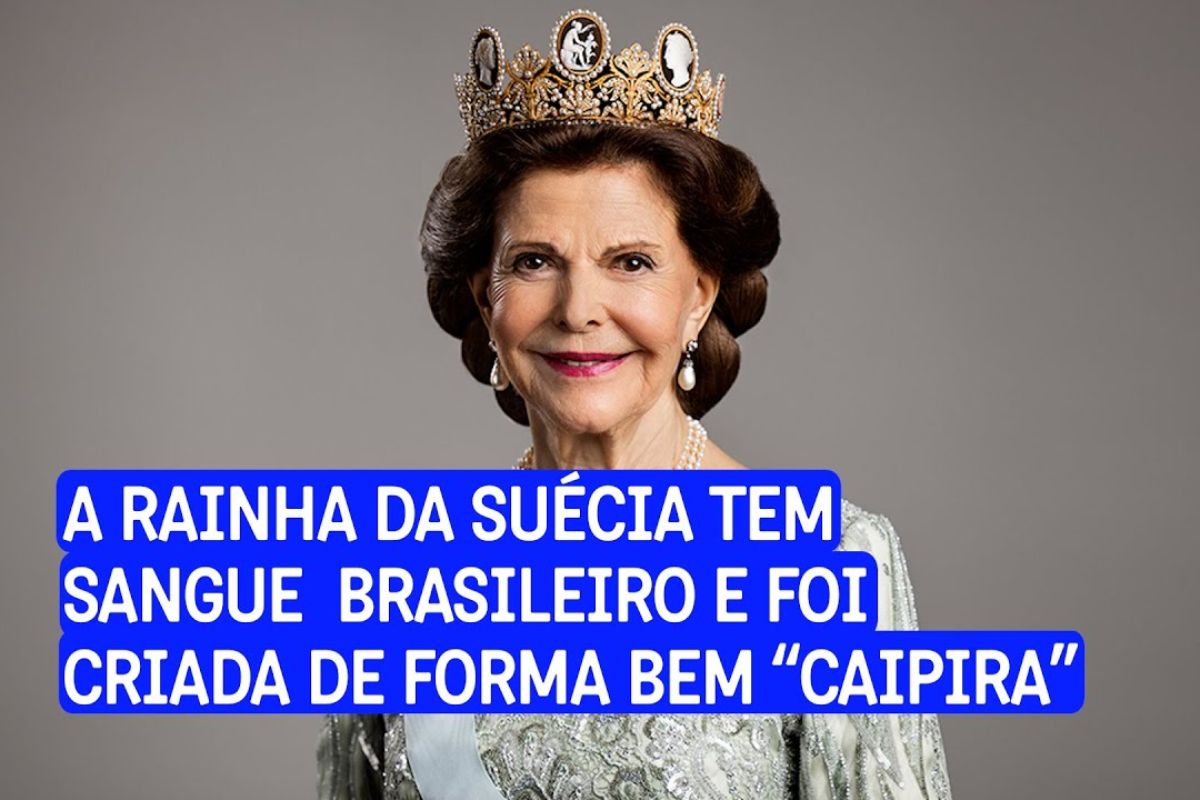


The Queen of Sweden Was Born in Germany, Spent Her Childhood on a Farm in the Interior of São Paulo, and Even Today Cultivates a Jabuticaba Tree in the Castle of Stockholm, Keeping Her Connection to Brazil Alive.
Few know that the Queen of Sweden has Brazilian blood and still holds vivid memories of a childhood spent between the countryside and the warmth of the interior of São Paulo. Before becoming one of the most respected monarchs in Europe, Silvia Renata Sommerlath lived a simple youth surrounded by cousins, nature, and customs that remain present in her routine.
Even decades after leaving the country, the monarch maintains an emotional connection with Brazil that goes beyond symbolism. Between royal commitments and humanitarian projects, she still speaks Portuguese fluently, insists on visiting the country, and even planted a jabuticaba tree in her castle, a gesture that encapsulates the affection and roots of someone who grew up under the Paulista sun.
The Brazilian Childhood of a Future Queen
Silvia Renata Sommerlath was born in 1943 in Germany, the daughter of a German father and a Brazilian mother.
-
New 100% clean fuel produced in Brazil could retire diesel.

-
Plastered walls become a trend and end up being the perfect choice for finishing; the secret of the 2 coats that prevent waste in painting.
-
With 333 meters and equivalent to a 20-story building: China launches a supertanker that transports 2 million barrels, has 540,000 m² of area, and saves $5 million per year.

-
Brazil becomes a beacon of hope for ending plastic waste by leading a global plan that could prevent millions of tons from entering the oceans.


When she was just three years old, the family moved to Brazil, where her father opened a branch of his company.
For ten years, they lived between São Paulo and a farm in the countryside, an environment that marked the childhood of the future queen.
In Silvia’s memories, Brazil is synonymous with affection and freedom.
She used to say that she had dozens of cousins and that her childhood was always a party, full of family gatherings and outdoor play.
It was in this setting of farming and community living that she formed her strongest emotional bond with the country.
Even after the family returned to Germany in 1957, Silvia never severed her ties with Brazil.
She keeps in touch with relatives, visits old friends, and, according to public statements, tries to return at least once a year.
The Meeting with the Prince and the Royal Wedding
The journey that led the Queen of Sweden to the throne began unexpectedly.
In 1972, during the Munich Olympics, Silvia met then Crown Prince Carl Gustaf.
The relationship evolved discreetly, and four years later, in 1976, the couple married, with Carl Gustaf already crowned as king.
The wedding ceremony was a landmark for Sweden.
During the gala ball, the group ABBA performed the song “Dancing Queen” for the first time, composed especially in honor of the new queen of Brazilian origin.
The gesture became one of the most symbolic moments in the recent history of the Swedish monarchy.
Since then, Silvia has acted as a central figure in the Royal House.
Mother of three children—Princess Victoria, Prince Carl Philip, and Princess Madeleine—she has earned recognition for uniting tradition and social sensitivity without abandoning the roots that hark back to her childhood in Brazil.
The Brazilian Roots in the Castle of Stockholm
Even living in one of the most traditional palaces in Europe, the Queen of Sweden keeps her Brazilian origins alive in both a literal and emotional sense.
In the backyard of the royal castle in Stockholm, she cultivates a jabuticaba tree brought from Brazil.
In interviews, Silvia often says that she is probably the only person outside the country to have a jabuticaba tree bearing fruit in Northern Europe.
The tree, according to her, is a symbol of love and connection to the land where she grew up.
“It’s my affection and love for Brazil, and I am happy when I see the little fruits grow,” she once declared.
Furthermore, whenever protocol allows, the queen includes Brazilian touches in official events, whether through music, cuisine, or cultural gatherings.
These small references show that her identity transcends borders and remains tied to the childhood she lived in São Paulo.
Dedication to Philanthropy and Social Legacy
The connection of Silvia, Queen of Sweden, with Brazil also manifests in her social work.
She is the founder of the World Childhood Foundation, created in 1999, with branches in several countries, including Brazil.
The institution acts in the protection of children and adolescents against exploitation and sexual violence, impacting more than three million people in the country.
The queen is directly involved in supervising projects and often visits Brazilian units whenever she comes to South America.
Her work is recognized internationally for combining empathy, efficiency, and personal experience, demonstrating how the feeling of belonging still connects her to her roots.
Between Three Cultures and One Identity


Silvia was born German, has Swedish heart, and Brazilian soul. In interviews, she claims to encompass the three nationalities within herself, respecting the traditions and customs of each.
This cultural blend, according to the queen herself, enables her to understand and appreciate different worldviews.
The way she conducts the monarchy is seen by analysts as a reflection of this balance between European discipline and Brazilian warmth.
Her story shows that roots do not fade over time, they only transform into bridges between cultures.
The story of the Queen of Sweden is that of a woman who carries Brazil within her, even thousands of kilometers away.
From the farm in the interior of São Paulo to the castle of Stockholm, she keeps alive the memory of the country that shaped her childhood and the sensitive gaze she brings to social causes.
And you? Did you imagine that the Queen of Sweden had Brazilian origins and cultivated jabuticabas in her castle? Tell us in the comments what surprised you the most about this connection between European royalty and Brazil.








Que Deus lhe abençoe e a conceda muitos anos de vida com esse amor e carisma para com o próximo. Exemplo.
Como ela é linda! Que orgulho para nós brasileiros ter alguém que nos represente com a alma! Muito obrigado Najestaxe!
A reportagem , já descreve tudo ; Prevalece a simplicidade. Mesmo sendo Vsa. Alteza , mantém o dom humanitário ( DEUS proteja a RAINHA).