





 Portuguese
  English
  Spanish
 4 min of reading
  1 comment


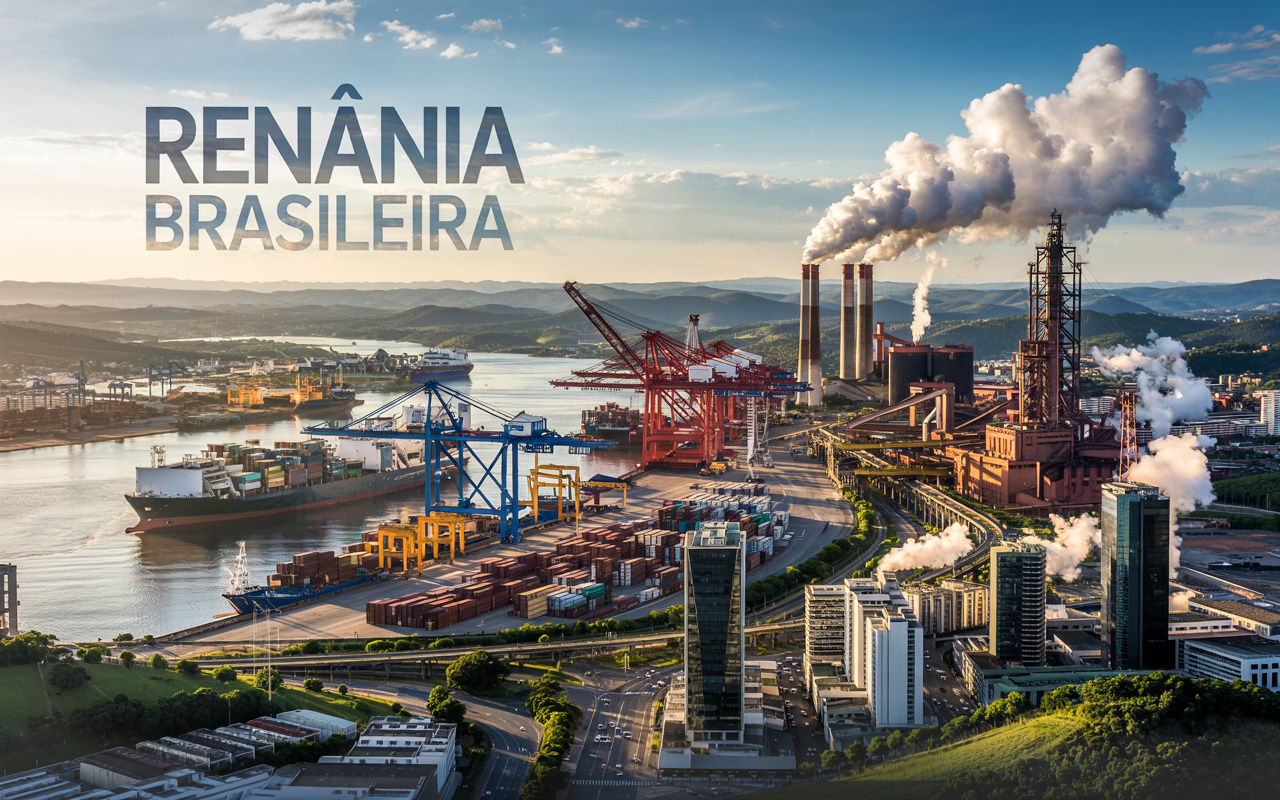


Caxias do Sul, RS, Is a National Highlight in Metallurgy, Productivity, and Industrial Exports. Discover the City Nicknamed the “Brazilian Rhineland” and Understand How It Became a Powerhouse in Southern Brazil.
In the heart of the Serra Gaúcha, amidst vineyards and cold mountains, there exists a city that boasts a little-known, yet absolutely deserved title: the “Brazilian Rhineland”. The nickname is not exaggerated — Caxias do Sul, in Rio Grande do Sul, has become one of the 10 most industrialized cities in Brazil, with outstanding prominence in heavy metallurgy, exports, and productivity. An economic powerhouse forged in steel, discipline, and hard work.
While other cities compete for tourist or financial spotlight, Caxias do Sul has quietly built a development model based on the production and industrial transformation of high complexity, which today supports thousands of jobs, billion-dollar exports, and an entrepreneurial culture that echoes the profile of German cities in the Rhine region — hence the analogy with the Rhineland, the cradle of heavy industry in Europe.
How Caxias do Sul Became a Heavyweight Industrial Hub
With just over 530,000 inhabitants, Caxias do Sul occupies an disproportionately high position in the national industry ranking. Recent data from CNI and IBGE place the municipality among the 10 largest industrial GDPs in the country, alongside capitals like São Paulo, Curitiba, and Belo Horizonte — which is surprising for a medium-sized city.
-
Church from 1888 becomes a mansion of over 330 m² in Canada after a renovation of R$ 3.4 million and is eventually sold for nearly R$ 4.3 million.
-
How an innovative city combines high technology, well-being, and sustainability to become the largest reference in clean energy on the planet.
-
Couple buys 1846 church in ruins for R$ 660,000, invests R$ 3.2 million in renovations, transforms it into a millionaire mansion, and even preserved a historic cemetery with over 300 graves.
-
He started running at 66 years old, broke records at 82, and is now a subject of study for having a metabolic age comparable to that of a 20-year-old, in a case that is intriguing scientists and inspiring the world.

The secret lies in its vocation for transformation industry, particularly in the metal-mechanical, automotive, furniture, and agricultural sectors. Companies like Randon, Marcopolo, Agrale, and Guerra originated or are headquartered in the municipality, consolidating a highly integrated ecosystem, from foundries to final products with global added value.


This highly productive environment has also generated a parallel supply chain of suppliers, research centers, and technical schools — transforming Caxias do Sul into a true hub for technology applied to industry. It is one of the few places in Brazil where you can find everything from precision machining to the development of autonomous vehicles, all within a 50 km radius.
Heavy Metallurgy: The Backbone of the Gaucho Rhineland
If there is one sector that best defines the industrial strength of Caxias do Sul, it is heavy metallurgy. The municipality is responsible for a considerable share of national production of chassis, road implements, bodies, and metal structures, with a focus on exports that reach from Latin America to the Middle East.
Randon Implementos, for example, is one of the largest manufacturers of trailers and semitrailers in the world. Marcopolo, also based in Caxias, dominates the bus market and exports to dozens of countries. Together, these companies and their suppliers form an industrial belt that directly employs over 130,000 people in the city and surrounding areas.

Moreover, Caxias do Sul is the city with the highest density of metallurgical companies per capita in Brazil, according to data from FIERGS. It is an ecosystem that breathes steel, welding, engineering, and automation — and it has survived economic crises with impressive resilience.
Exports That Sustain the South of the Country
The industrial strength of Caxias is reflected in impressive numbers in the exports of Rio Grande do Sul. In 2023, the state surpassed US$ 20 billion in total exports, with Caxias do Sul accounting for a significant share, especially in industrialized products such as vehicles, parts, mechanical components, and agricultural equipment.
It is an exception within the Brazilian scenario, which remains heavily dependent on the export of primary commodities. While soy, iron ore, and oil dominate the national trade balance, Caxias do Sul exports added value, technical knowledge, and applied engineering — something that few Brazilian municipalities can do consistently.
This high-value-added export model is part of what explains the title of Brazilian Rhineland: a city that, like the industrial regions of Germany, has managed to transform skilled labor and a productive culture into a global powerhouse.
Productivity and Human Capital: The Invisible Gear
Another factor that sustains the success of the industry in Caxias do Sul is the high productivity of the local workforce. Stemming from a culture with strong Italian and German roots, the region values technical work, discipline, and ongoing education.
The city hosts excellent technical and technological institutions like IFRS, UCS (University of Caxias do Sul), and innovation centers like the Hélice Institute. Companies invest heavily in internal training, and the metal-mechanical sector has robust programs for training young apprentices and specialized engineers.
As a result, the productivity of the industry in Caxias do Sul exceeds the national average by up to 40% in some segments, according to data from Sebrae-RS. It is an invisible gear that drives billions and sustains one of the most resilient models of regional growth in the country.
The City That Learned to Grow Without Losing Its Identity
A rare and admirable point in the case of Caxias do Sul is that industrial advancement has not erased the cultural roots of the city. On the contrary: development coexists with family-owned wineries, traditional festivals, cultural centers, and a strong appreciation of the mountain identity.
Events like the Grape Festival celebrate regional pride and immigrant heritage, while modern industrial parks continue to expand. This balance between tradition and innovation is part of the formula that differentiates Caxias from many other Brazilian industrial hubs — and reinforces the sense of belonging among the local population.






Só falta o Hitler. A notícia é **** no cerne.