





 Português
  Inglês
  Espanhol
  3 min de leitura
  0 comentários



The Technology Used by Petrobras in the Pre-Salt Oil Field, Which Increases Oil Extraction and Stores Carbon Dioxide on the Seafloor, Is an Example of Innovation with Dual Benefits
The idea of using carbon dioxide (CO2) to “revive” an oil field seems counterintuitive, but it is one of the most important technologies in the current energy industry. Called CCUS-EOR, it involves capturing CO2 and injecting it into mature reservoirs to increase oil production while simultaneously storing the gas underground, helping to combat global warming.
In this area, Petrobras has become a world leader. The company dominates the application of the technology in the challenging pre-salt fields, transforming a problem (the CO2 naturally present in gas) into a solution that increases efficiency and drastically reduces the environmental impact of its production.
How Does the Technology That Injects CO2 to Extract More Oil Work?
When an oil field ages, a lot of oil gets trapped in the rocks of the reservoir. The Enhanced Oil Recovery (EOR) technology with CO2 addresses this problem. Carbon dioxide is compressed and injected into the reservoir.
-
The world’s first octopus farm wants to open in the Canary Islands and is already provoking an international reaction: the plan aims to produce 3,000 tons per year.

-
Drought may be creating stronger superbugs in the soil and helping antibiotic resistance reach hospitals, warns a study highlighting a problem that could grow alongside extreme weather.

-
The biggest scam in history: Napoleon’s France deceived the United States by selling them a territory that was Spanish.

-
Why is the Danakil Desert so dangerous? It has unstable terrain and how extreme temperatures and toxic gases turn the region into one of the most hostile environments on Earth.


There, it acts like a solvent, mixing with the oil and reducing its viscosity. This makes the oil “thinner” and easier to move through the rock pores, pushing it toward the production wells. At the same time, the injected CO2 is permanently stored underground in a process known as geological sequestration.
Petrobras’ Leadership, Record Reinjection Numbers in the Pre-Salt in 2024
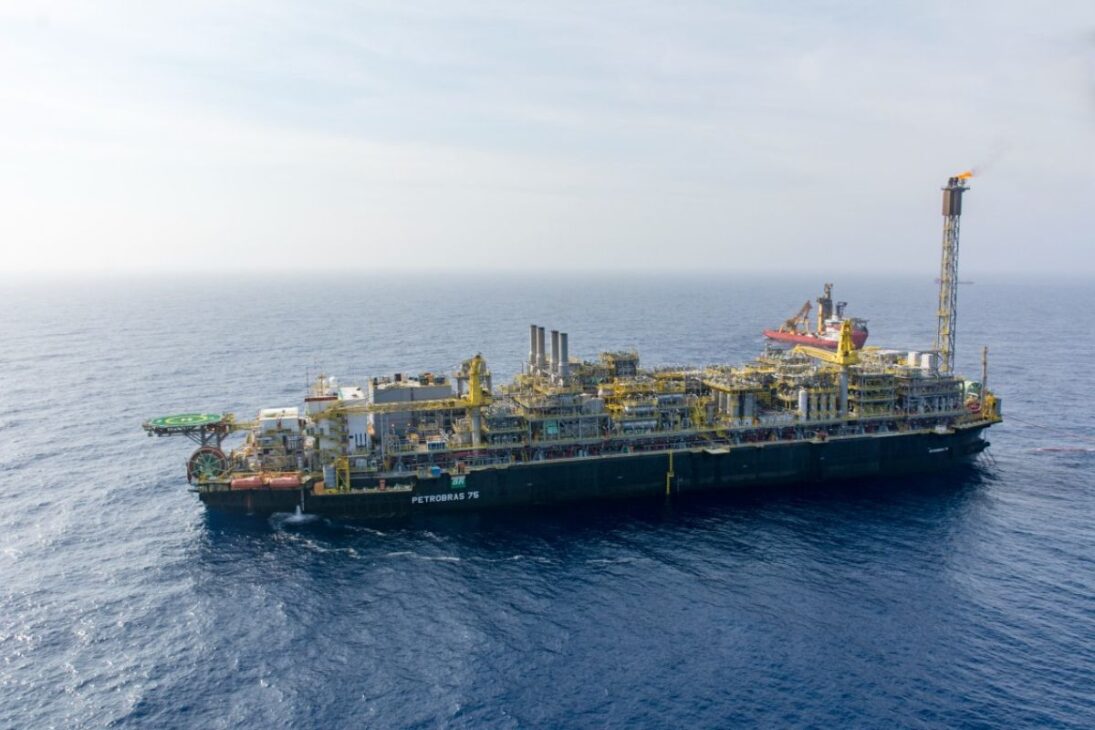
Petrobras is a pioneer and global leader in the application of this technology in oil fields. In 2024, the company set a record by reinjecting 14.2 million tons of CO2 into the pre-salt reservoirs. This volume represents more than a quarter (28%) of all carbon capture capacity in operation worldwide.
Currently, between 22 and 23 floating production storage and offloading units (FPSOs) from Petrobras in the pre-salt are equipped with CCUS systems. The company’s goal is to achieve a total of 80 million tons of reinjected CO2 by the end of 2025.
The Dual Benefit, More Oil with 70% Fewer Emissions than the Average
The injection of CO2 in the pre-salt oil field yields a double result. First, it increases oil recovery by up to 20%, extending the lifespan of the fields and maximizing the utilization of reserves.
Second, it reduces environmental impact. Since the CO2 that would be emitted is reused and stored, the oil produced in the pre-salt has an emissions intensity 70% lower than the global average. Petrobras refers to this product as a “low carbon barrel,” an important differentiator in the global market.
Climate Solution or Greenwashing? The Debate Around Carbon Capture in the Oil Field
Despite the benefits in the oil field, carbon capture technology is a “hot topic” and subject to debate. In online forums like r/energy, many question its high cost compared to investment in renewable energies.
There are also accusations of “greenwashing”, the practice of using green marketing to cover up negative environmental impacts. Critics argue that the technology can serve as an excuse to prolong the use of fossil fuels. In Petrobras’ case, however, reinjection is a technical necessity inherent to the pre-salt production process, which naturally contains high concentrations of CO2.
Petrobras’ Plans for 2025 and the Hi-SEP Technology


Looking to the future, Petrobras plans to invest US$ 16.3 billion in low-carbon initiatives over the next five years. This includes the installation of 15 new FPSOs by 2030, most of which will have integrated CCUS technology.
Innovation does not stop. The company is developing the Hi-SEP technology, a system that will allow CO2 to be separated from gas directly on the seafloor, even before reaching the platform. This will further increase efficiency and reduce the carbon footprint of operations in the oil field, consolidating Brazil’s position as a benchmark in producing more sustainable energy.








-

Uma pessoa reagiu a isso.