





 Português
  Inglês
  Espanhol
  4 min de leitura
  4 comentários


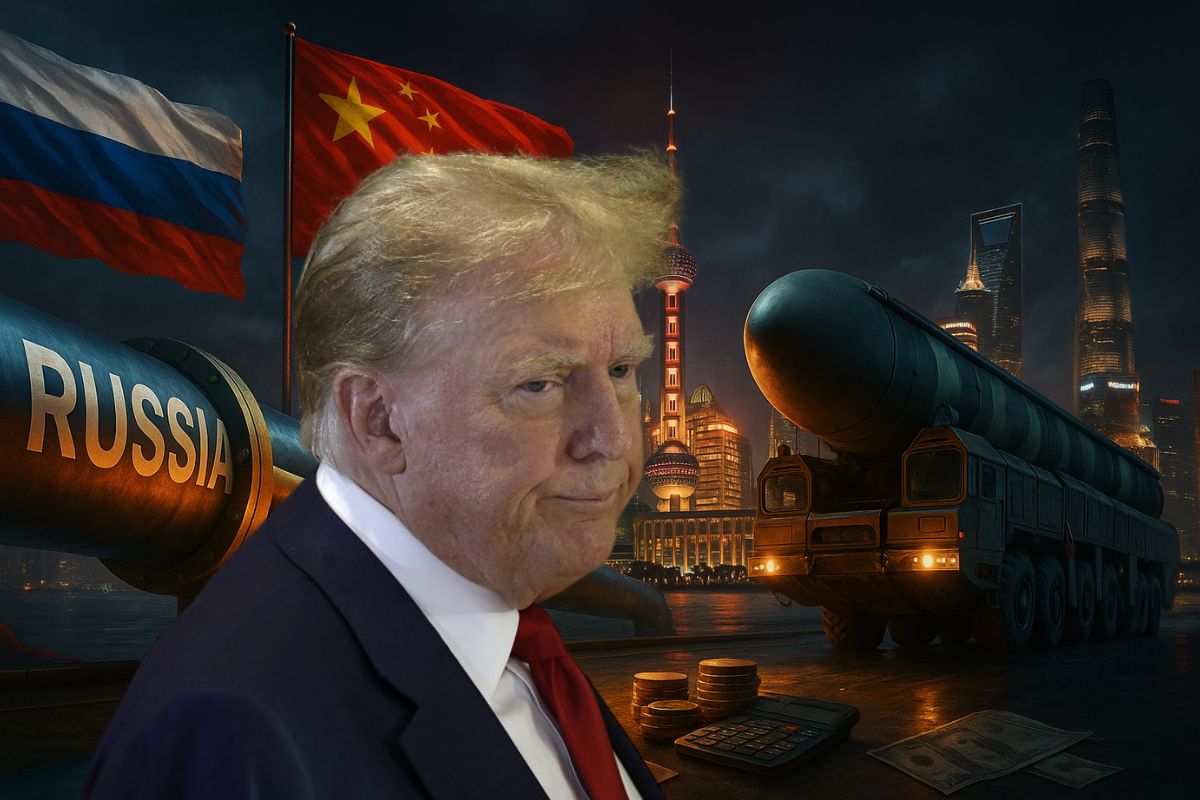


The Meeting in China Combined Military Parade and Concrete Advancements: Display of Nuclear Missile, Announcement of Russia–China Gas Pipeline, and Criticism of Dollar Dominance
The meeting in China was not just a celebration parade. According to former UN weapons inspector, Scott Ritter, the meeting brought together nuclear energy and deterrence on the same stage, with the symbolic signing of the Power of Siberia 2 gas pipeline and the presentation of an intercontinental ballistic missile in front of world leaders. For analysts like Andrei Martanov and Garland Nixon, the message was clear: Putin, Xi, and allies demonstrated strategic coordination while the West watches its influence wane.
The material indicates that the image of Putin, Xi Jinping, and Kim Jong-un walking side by side in China was deliberate. It was not an isolated gesture, but rather a political and military message to the United States, showcased during the 80th anniversary parade of victory over Japan in World War II.
Who Participated in the Meeting in China?
According to Scott Ritter, the meeting in China reinforced the Shanghai Cooperation Organization (SCO) as a hub of Eurasian security and military coordination.
-
Drought may be creating stronger superbugs in the soil and helping antibiotic resistance reach hospitals, warns a study highlighting a problem that could grow alongside extreme weather.

-
The biggest scam in history: Napoleon’s France deceived the United States by selling them a territory that was Spanish.
-
Why is the Danakil Desert so dangerous? It has unstable terrain and how extreme temperatures and toxic gases turn the region into one of the most hostile environments on Earth.

-
With a height of 221 meters and a capacity for trillions of liters, Hoover Dam still holds a trick that makes water defy logic.
Besides Russia and China, the forum included leaders from other countries in the bloc, including India. The joint presence of Putin, Xi, and Kim was seen as a calculated gesture of unity in the face of Western pressures.
For analysts, the SCO has already surpassed its diplomatic role, becoming an instrument of military and energy integration, capable of sustaining long-term contracts and new economic alliances.
How Far Has the Russia–China Gas Pipeline Advanced?
One of the key points emphasized in the meeting in China was the announcement that the Power of Siberia 2 gas pipeline would be “signed” and inevitable.
According to the discussants, when Russia and China publicly present this type of project, it means the obstacles have already been overcome.
The gas pipeline would become an energy landmark for decades, ensuring a continuous supply of Russian gas to the Chinese market.
This signal reinforces the contrast with Europe, where political mistrust has made large energy projects unfeasible since the Nord Stream explosion.
In the Eurasian bloc, analysts assert, energy cooperation is seen as a symbol of strategic stability.
Where Does Chinese Nuclear Deterrence Come In?
Another highlight of the meeting in China was the display of a Chinese intercontinental missile, identified as DF-5C, capable of carrying 12 independent nuclear warheads.
Analysts stated that 20 of these systems in service would represent up to 240 targets in the United States, a clear demonstration of retaliatory capability.
The parade also mentioned the DF-41, a solid-fuel missile kept in silos, associated with hundreds of launchers.
For Scott Ritter, this display was a deterrent message, not an attack, in line with China’s no-first-use nuclear policy.
The aim would be to prevent any Western calculations regarding the use of tactical nuclear weapons against China.
Why Was the Dollar Targeted for Criticism?
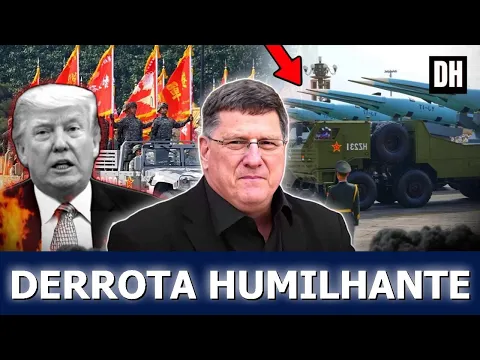

In the analysts’ view, the meeting in China also had financial dimensions.
It was stated that after this meeting, “the dollar is dead”, indicating the creation of alternative trade mechanisms.
This is not about a single BRICS currency, but rather a multilateral conversion system between national currencies (yuan, ruble, rupee), allowing transactions without relying on the dollarized system.
This change, according to Garland Nixon, indicates that multipolarity is not just military or energy-related, but also financial, with a direct impact on American hegemony.
Experts state that the meeting in China should be understood as part of a long-term process, in which Russia and China align defense, energy, and finance on the same board.
The military parade and economic announcements were symbolic messages, but they reflect real transformations in the global power balance.
For Scott Ritter, if the U.S. does not renew arms control treaties like New START, the world could experience a new arms race.
At the same time, the consolidation of the gas pipeline and the multilateral arrangements reinforce the trend towards a multipolar world, where companies and governments will need to adapt to new rules of the game.
And you, do you believe that the meeting in China represents merely a symbolic gesture or the beginning of a structural change in international relations? How might this impact Brazil and the West in the coming years? Share your opinion in the comments — we want to hear from those closely following this scenario.








Estado Unidos com essa política de sanções perde confiança e aliados
A China não ataca ninguém, são comerciantes, como sempre foram, desde antes de se ouvir falar em Estados Unidos, Alemanha e Inglaterra, dentre outros que pensam ser os donos do mundo. A china, segue, desde confuncio, os princípios morais e, desde Suntizum, a arte da guerra, onde, a vitória, não depende do fazer força, mas tão somente, mostrar a força
Ásia especial da China