





 Portuguese
  English
  Spanish
  3 min of reading
  0 comments



New Ultramodern Transport System at Guarulhos International Airport Will Reduce Travel Time to Just 6 Minutes, Eliminating Buses and Connecting Terminals to CPTM with 100% Brazilian Technology and Zero Emissions!
If you have ever needed to take a flight at Guarulhos International Airport, you probably know how tiring and time-consuming the journey between the CPTM station and the terminals can be. Well, this reality is about to change – and for real! A new innovative transport system will transform this connection, reducing travel time to just 6 minutes. Yes, you read that right!
With a multimillion-dollar investment, this novelty is not just a simple upgrade, but a revolution in urban mobility. The so-called People Mover promises a much faster, comfortable, and sustainable experience, placing Brazil at the forefront of innovation in public transport.
People Mover: How Does This Brazilian Innovation Work?

The main difference of this new system is the use of aeromobile technology, entirely Brazilian, which operates very differently from conventional trains. Instead of using motors in the cars, the People Mover works with pneumatic propulsion – essentially, it is pushed by air! This means a lighter, more efficient, and much more sustainable mode of transport.
-
Abandoned house for 15 years disappears in the woods, shocks owner with unrecognizable scenery and is reborn in an intense transformation after almost 90 hours of work in just 10 days.

-
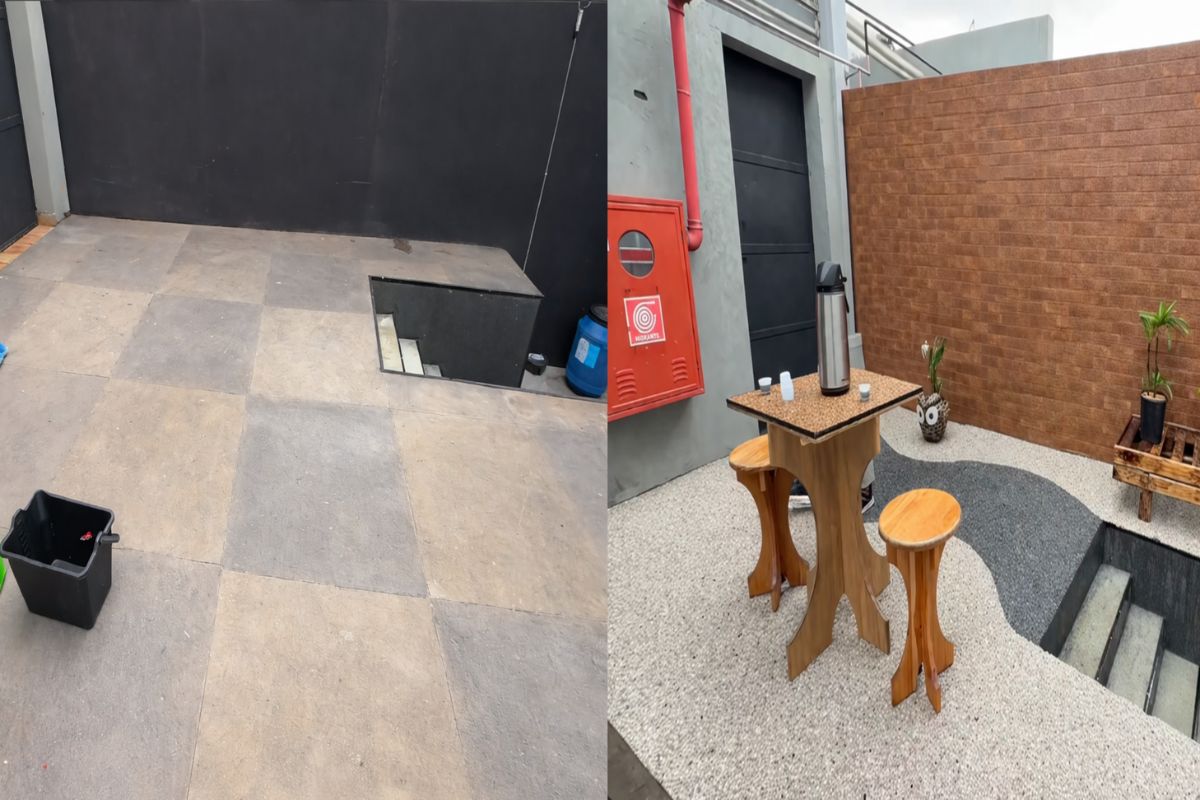
In just three hours, a natural stone floor transforms the entrance of the house with an organic effect, immediate drainage, and a sophisticated non-slip finish that doesn’t puddle water, dries quickly, and impresses with the final result.
-
‘Interlocking brick’ made of earth arrives in the construction industry with cost reductions of up to 40% on the project.

-
Espírito Santo will receive the largest engineering project in its history with the duplication of BR 262, which will have 50 viaducts, 28 bridges, and 2-kilometer tunnels cutting through the most challenging mountainous region of the entire state.


And guess what: the system will have the capacity to transport 2,000 passengers per hour in each direction, operating in a fully automated manner, without the need for human operators. In other words, less chance of error and a much safer and more reliable operation for Guarulhos International Airport.
Goodbye, Buses! More Comfort and Efficiency for Passengers
Currently, those who need to go from the CPTM station to the airport terminals face a journey of 15 to 20 minutes by bus. Not to mention the delays, traffic, and overcrowding… But with the People Mover, this journey will be done in just 6 minutes. That is, a reduction by half in travel time.
And it’s not just about speed! The vehicles have been designed with passenger comfort in mind:
Air conditioning
Onboard Wi-Fi
Real-time information panels
Total accessibility
The idea is for the experience to be quick, efficient, and pleasant, without the hassle of waiting for a crowded bus.
Sustainability and Cutting-Edge Technology
In addition to improving mobility, the People Mover at Guarulhos also brings a positive environmental impact. The system has zero emissions of pollutants, helping to reduce the airport’s carbon footprint and making transport more ecological.
Another interesting detail is that the structure of the People Mover was fully planned to be integrated into the urban environment, without causing a major visual impact. The beams and pillars are prefabricated, which speeds up construction and reduces disturbances around the airport.
The Impact on Guarulhos International Airport and Brazil
This novelty benefits not only passengers – it also boosts the local economy. With more efficient transportation, the airport has everything to attract more tourists, more business, and more investments.
And if we compare with other systems in the world, the People Mover at Guarulhos stands out. While the AirTrain at JFK Airport in New York has a length of 13 km and uses a conventional system, the Brazilian project bets on much more modern and sustainable technology.
The SkyTrain at Shanghai Airport in China also connects terminals, but does not have the same direct integration with the city’s public transport. In other words, the Brazilian model goes further, ensuring much more efficient connectivity.
When Will It Be Ready? What’s Left for the Inauguration?
Well, like any major project, this initiative faced some challenges along the way. Since 2022, the engineering team has been working to ensure that everything operates without impacting airport operations. And despite some delays and investigations by ANAC regarding the timeline, the government of São Paulo confirmed that the inauguration is scheduled for March 2025.
At the moment, the system is undergoing rigorous testing – it has already run over 100 km in simulated operations, adjusting every detail to ensure everything is perfect when it opens to the public.










-

Uma pessoa reagiu a isso.