





 Portuguese
  English
  Spanish
  3 min of reading
  19 comments


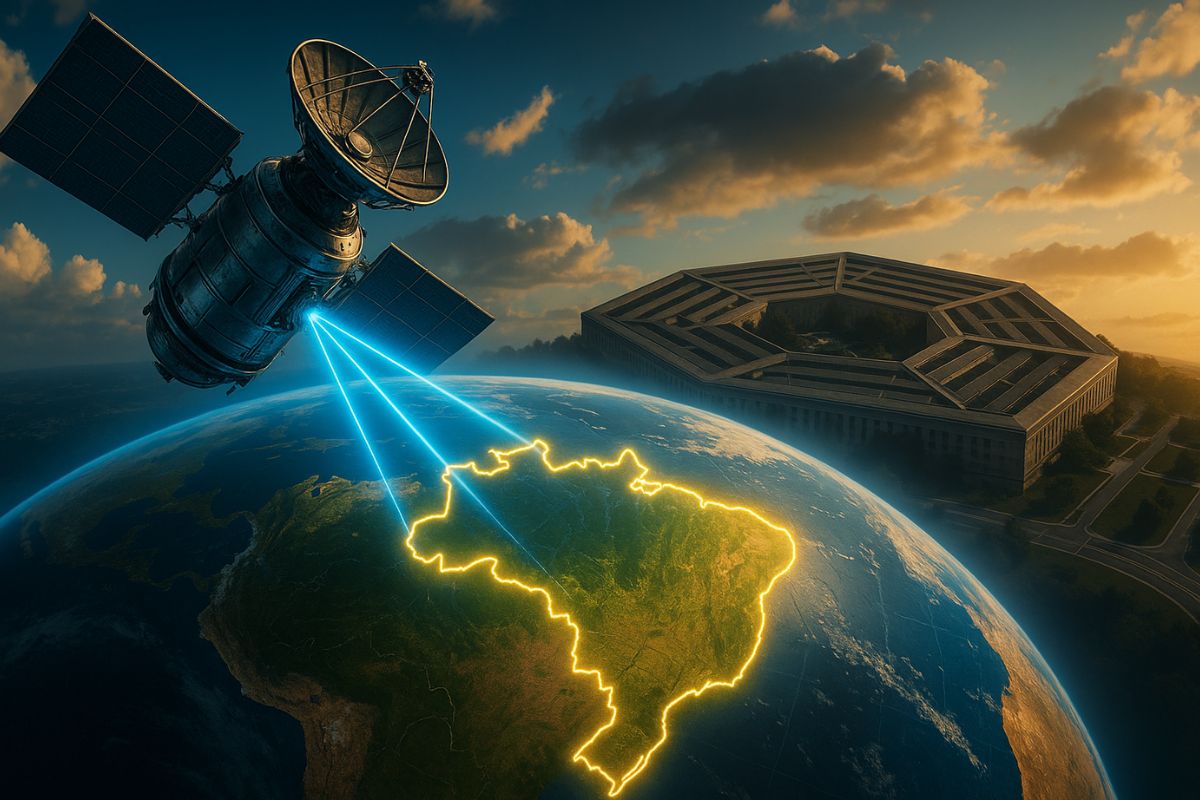


The Sovereignty of GPS: Can Brazil Be Excluded From the Global System? Atila Iamarino Explains How Technology Dependence Raises Questions About the Sovereignty of GPS and the Geopolitical Risks for Brazil
The debate about the sovereignty of GPS has gained traction in light of a scenario where technology has ceased to be merely military and has become indispensable for civil and economic life. From cargo transportation to the synchronization of banking systems, through mobility apps and even military operations, satellite location is today an invisible pillar of the modern world.
But what would happen if, for political reasons, the United States — which controls the system — decided to restrict access for countries like Brazil? This possibility, although remote, raises questions about technological dependence and strategic autonomy.
GPS as Global Infrastructure
Created in the 1970s during the Cold War, GPS was born as an American military project. Over time, it was opened for civil use and became essential infrastructure for billions of people. Today, its precision guides everything from commercial aircraft to harvesters in the field and high-frequency operations in the financial market.
-
Brazilian city bets on the business environment to generate jobs and attract investments in the energy sector — secretary reveals strategy at Macaé Energy 2026.

-
50 viaducts, 4 tunnels, 28 bridges, and 40 kilometers of bike paths: BR-262 in Espírito Santo will receive 8.6 billion reais for the largest engineering project in the state’s history, inspired by the Immigrant Highway in São Paulo.

-
Brazil produces too much clean energy and doesn’t know what to do with it: over 20% of solar and wind capacity was wasted in 2025 while investors flee and 509 renewable generation projects were abandoned in the last year.

-
Piauí will produce a new fuel that replaces diesel without needing to change anything in the truck’s engine and reduces pollutant gas emissions by half: truck drivers from all over the Northeast are already celebrating the news that will arrive later this decade.

According to Atila Iamarino, the sovereignty of GPS is a topic that goes beyond navigation. This is because the system not only points out geographic coordinates: it provides the global time standard used to validate digital transactions, synchronize electric power networks, and enable the operation of basic services such as mobile phone and internet.
Is the Risk of Exclusion Real?
In practice, blocking a country’s access to GPS would be a geopolitical and economic act of significant impact. For Brazil to be excluded, the U.S. would need to change the emission of satellite signals or create restricted zones, which would affect not only Brazilians, but also neighboring countries and multinational companies operating in the region.
Moreover, this measure would have the opposite effect of what is desired: it would accelerate the adoption of alternative systems already available, such as Galileo (Europe), Beidou (China), and Glonass (Russia), which today rival in precision and reliability. In other words, giving up GPS would mean losing technological and strategic prominence.
The Real Problem: Sabotage and Interference
Experts point out that the most immediate risk is not the deliberate exclusion of countries, but rather local signal sabotage, a practice already recorded in conflict zones such as Ukraine and the Middle East. Interferences can undermine the accuracy of aircraft routes, mislead ships with false coordinates, and even disrupt the functionality of urban transportation apps.
In Brazil, isolated instances of GPS failures at airports, such as in Guarulhos, have raised suspicions of external interference. This demonstrates how the sovereignty of GPS is vulnerable to targeted attacks, even if the global system remains active.
Paths to Brazilian Autonomy
The discussion about technological sovereignty gains strength in a context of multipolarity. If relying solely on the U.S. brings risks, investing in the combined use of multiple satellite systems may be the safest way out. Today, modern smartphones already capture signals from GPS, Galileo, Beidou, and Glonass, reducing dependence on a single provider.
Furthermore, there is a growing debate about developing national complementary positioning infrastructures, especially for strategic sectors such as agriculture, defense, and telecommunications. Ensuring technological resilience may be the key for Brazil not to become hostage to international disputes.
In the end, the issue is not just technological, but political. The sovereignty of GPS exposes the fragility of a highly connected world, yet controlled by a few powers. For Brazil, the challenge lies in balancing international cooperation with strategic autonomy, avoiding that a potential political crisis affects vital services.
And you, do you believe that Brazil should invest in its own alternatives to reduce dependence on American GPS or do you trust that international cooperation will prevent this risk? Share your opinion in the comments — we want to hear from those who live this reality in practice.








Devemos lutar para termos independência tecnológica em todos os setores
Se não fossemos tão pendurados nos EUA não correriamos nenhum risco .Cadê nossa capacidade desenvolver algo?
No dia que tivermos educação, saúde e saneamento básico universais e de qualidade, poderemos começar a pensar em termos um sistema GPS nosso, por enquanto é utopia para **** dormir.