





 Portuguese
  English
  Spanish
  6 min of reading
  0 comments


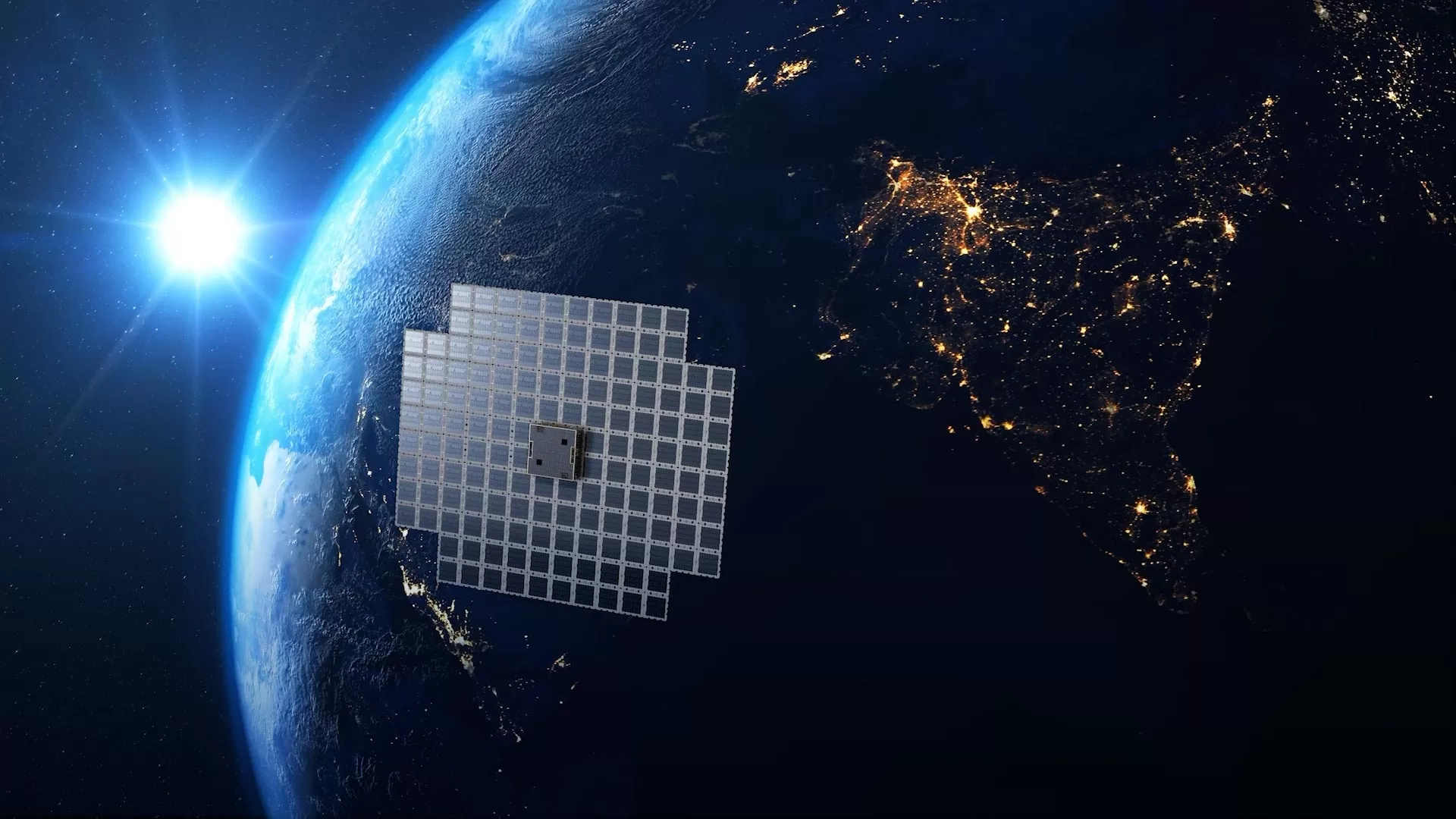
With a Constellation of Satellites in Low Orbit, AST SpaceMobile Wants to End Dependency on Antennas and Bring 4G and 5G Internet to Any Common Cell Phone in the World – Even in Remote and Isolated Areas.
Imagine being in the middle of the Amazon, on a rural road in the interior of Piauí, or navigating the Atlantic without a cell tower nearby — and still being able to access the internet on your cell phone, without depending on Wi-Fi, without changing your SIM card, and without installing anything. It seems exaggerated, but it is happening. The company responsible for this technology that challenges everything we know about telecommunications is an American company called AST SpaceMobile, valued at around R$ 10 billion (US$ 2 billion). The proposal is simple to understand but complex to execute: satellite internet using satellites to send 4G and 5G signals directly to common smartphones.
Yes, you read that right. We’re not talking about satellite internet like Starlink, which requires antennas, cables, and specific equipment. The idea here is to connect directly from space using the same SIM card from your current cell phone — even without the carrier’s signal.
The company has already made real calls using this system and promises global coverage by 2026. The project could forever change internet access in remote communities, rural areas, and hard-to-reach regions, especially in developing countries like Brazil.
-
While the world looks at oil, the war with Iran is already disrupting helium supply from Qatar, affecting car and iPhone chips, threatening AI expansion, and putting pressure on aluminum packaging at the highest value in four years.

-
Global warming will expose a treasure hidden under the ice of Antarctica and may spark an international dispute over gold and valuable minerals.

-
A street vendor from Praia Grande built a robot made of scrap from scooters and washing machines that pulls his popcorn cart on the beach, emits sounds, and interacts with customers, becoming an attraction on the coast of São Paulo.

-
The specifications of the Xiaomi 18 Pro Max have been leaked, and the highlight is a dual 200 MP camera with a new 22-nanometer technology that promises to consume less energy and capture details in shadows and bright areas using LOFIC HDR.

The Company That Wants to Take Down Cell Towers with Satellite Internet
AST SpaceMobile is based in Texas, USA, and was founded by entrepreneur Abel Avellan, a veteran of the space industry. The company’s proposal is bold: to create the world’s first mobile internet network based entirely in space, with high-capacity satellites operating in low Earth orbit (LEO).

The difference compared to companies like Starlink, Kuiper (from Amazon), or OneWeb is that AST’s satellites are specifically built to communicate with regular cell phones. This means that no new equipment will be necessary, just the phone you already have in your pocket.
The promise is of global and continuous coverage, capable of reaching areas where even telecommunications drones do not reach today.
How Does This Technology Work?
The AST satellites, called BlueBird, have gigantic antennas with areas of up to 64 square meters. When operational, they function as floating cell towers, covering vast areas of the Earth’s surface with 4G or 5G signals.
They operate at a low altitude (about 700 km from Earth), which reduces communication latency and allows for better connectivity. The cell phone detects the satellite as if it were a terrestrial tower, without requiring any adaptation.
In other words: you could be in a dense forest, at sea, or in the northeastern backlands and still have a signal on your cell phone — as long as you are in the satellite’s path. The expectation is that, with dozens or hundreds of these satellites in orbit, coverage will become continuous.
The First Cell Call Made Directly from Space
In April 2023, AST SpaceMobile made history by conducting the world’s first voice call using a common cell phone connected directly to a satellite. The test was done with a Samsung Galaxy S22, without modifications.
The call took place between two continents: Texas (USA) and Japan, using the BlueWalker 3 satellite — the company’s most advanced prototype to date.
And it didn’t stop there: the company also tested 4G data transmission and, more recently, began the first tests of 5G signal via satellite. The quality of the signal still depends on the positioning of the satellites, but the initial tests were considered successful.
Why Satellite Internet Technology Could Be Revolutionary in Brazil
Few countries would benefit from this type of technology as much as Brazil. Data from Anatel indicates that over 3,000 Brazilian localities still live in areas referred to as “shadows,” where the carriers’ signals are nonexistent or extremely weak.
This problem is especially common in:
- Amazônia and riverside regions
- Rural communities in the Midwest and Northeast
- Small cities with mountainous terrain
- Remote coastal areas
- Railways and remote roads
AST SpaceMobile could solve these challenges without the need to build towers, antennas, or cabling — which would reduce costs and deployment time.
Moreover, the satellite signal could serve as a contingency plan in natural disasters, blackouts, floods, or accidents that down local infrastructure.
How Much Will AST SpaceMobile’s Satellite Internet Cost?
The company has not yet disclosed how much the service will cost for end consumers, but the plan is to operate in partnership with existing carriers, such as Vivo, Claro, TIM, Vodafone, AT&T, and others.
This means that instead of selling plans directly to the public, AST will allow carriers to offer hybrid packages with integrated terrestrial and space coverage.
In urban areas, the satellite internet could be used as automatic backup, activated when the tower signal drops. In rural and remote areas, it would be the only viable source of internet — with speeds comparable to 4G and even 5G.
What is the Company’s Plan?
AST aims to launch a constellation of over 100 BlueBird satellites by 2026, covering all continents. Upcoming launches are being prepared with the support of SpaceX and other space partners.
The company has already received investments of over US$ 1 billion and has signal supply contracts with several carriers. There are also movements to operate in Latin America, with explicit interest in the Brazilian market.
On paper, the company’s model is extremely profitable: it does not need to build physical networks, just launch satellites and sell signals to carriers — who then sell plans to end consumers.
What is the Risk for Traditional Carriers?
If AST’s technology proves reliable, the role of cell towers could weaken in many regions. This could directly affect the business models of current carriers, who invest billions in terrestrial infrastructure.
In developing countries, the cost of bringing internet to remote communities is prohibitive. AST could become a cheaper, faster, and more scalable alternative — which worries the giants of the industry.
On the other hand, the carriers themselves could benefit, providing signal where they previously couldn’t, without having to invest in expansion.
Competition in Space: Starlink, Kuiper, and Lynk
Although AST’s proposal is pioneering in connecting with common cell phones, it is not alone in this race. Starlink (from SpaceX) already offers satellite internet but requires its own terminal. Amazon Kuiper wants to do the same.
Another direct competitor is Lynk Global, which is also testing direct signals to cell phones, but is still in an earlier stage.
What sets AST apart is the progress of real tests and the agreements already closed with global carriers — along with its focus on commercial use with common cell phones, without adapters or apps.
AST SpaceMobile could be the next leap in the history of mobile internet. If it delivers on its promises, the company will not only connect billions of people who are currently excluded from the digital world but could also reshape the future of telecommunications.
With a simple cell phone SIM card, you could be online wherever you want — directly from space, without needing Wi-Fi, without depending on physical infrastructure, and without hassle.
Brazil, with its vast territory and unequal access to the internet, has everything to be one of the countries most transformed by this new era of spatial connectivity.








Seja o primeiro a reagir!