





 Portuguese
  English
  Spanish
  3 min of reading
  0 comments



Energy-Free Refrigerator; Discover How the Zeer Pot Uses Simple Principles of Evaporation to Keep Food Cool Without Consuming Electric Power.
In regions where access to electricity is limited or non-existent, keeping food fresh has always been a challenge. However, there is a clever, economical solution based on simple physical principles: the Zeer pot, also known as “clay refrigerator” or “evaporative cooler”.
Origin and Concept of the Energy-Free Refrigerator
The Zeer pot has very ancient origins. Civilizations from Ancient Egypt and Mesopotamia already used similar systems to preserve food.
The modern model was rediscovered and popularized by Mohammed Bah Abba, a professor from Nigeria, in the 1990s. His proposal was to offer a low-cost and efficient solution for small farmers to preserve their produce.
-
The lost continent beneath Europe: separated from North Africa about 240 million years ago, comparable in size to Greenland, Greater Adria was crushed over 40 million years and left geological marks from the Alps to the Balkans.

-
A cold front advances through the South this Saturday and reaches the Southeast on Easter Sunday with heavy rain and a drop in temperature, while the North and Northeast face the risk of storms and flooding throughout the holiday.

-
Brazil is about to inaugurate the largest maritime surveillance system in its history, with radars, infrared cameras, and autonomous sensors installed on Ilha Grande to monitor the entire Brazilian coast in real time.

-
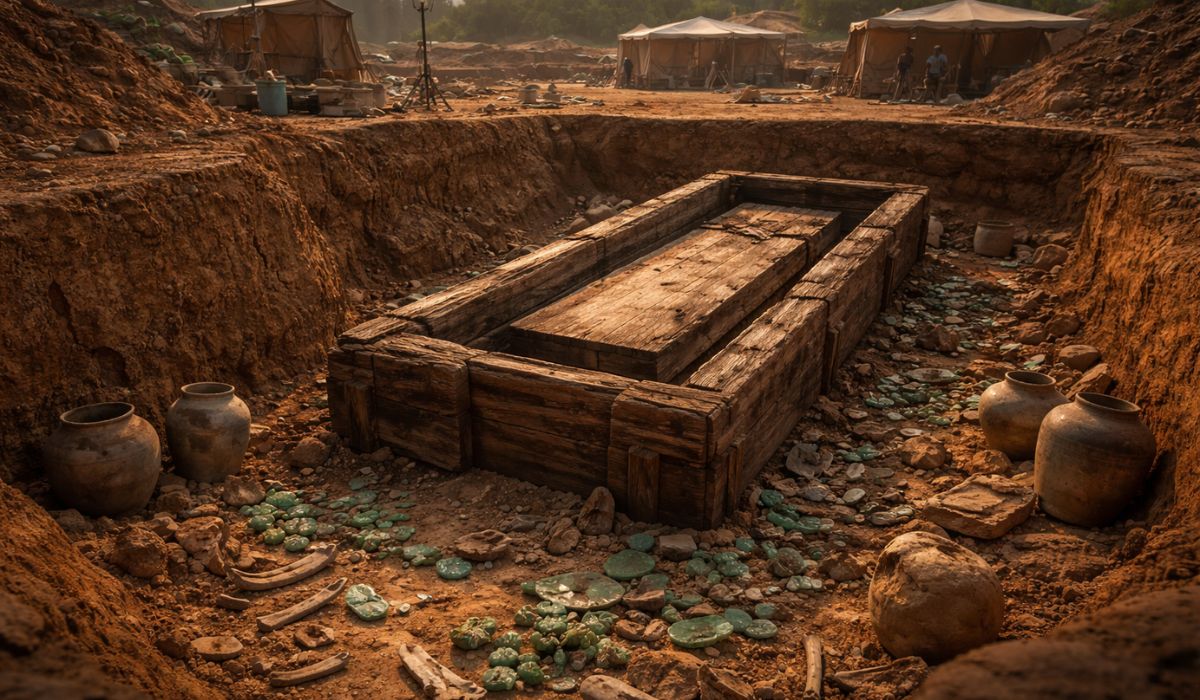
Archaeologists discover in China a 5,000-year-old tomb with over 350 artifacts, nearly 200 jades, and signs of intentional destruction, in a discovery that could be the gateway to a lost prehistoric kingdom.

The operation of the Zeer pot is based on the principle of evaporative cooling. There are no electrical parts, motors, or circuits. Just two clay pots, sand, and water.
How It Is Built
Assembly is straightforward and can be done with materials easily found in rural communities:
Two clay pots of different sizes are used. The smaller one is placed inside the larger one, leaving a space between them.
This intermediate space is filled with damp sand. Finally, the assembly is covered with a wet cloth.
The water from the sand slowly evaporates into the environment. This evaporation process removes heat from the inside of the smaller pot, cooling it. Thus, the food stored inside remains fresh for several days or weeks, depending on the weather and humidity.
The Secret of Evaporation
The efficiency of the Zeer pot depends on the local climate. In hot and dry regions, where the evaporation rate is high, cooling is more effective.
As water evaporates, it absorbs heat from the system itself. This lowers the temperature inside the smaller pot, creating a cool and moist environment ideal for fruits, vegetables, dairy products, and even medicines.
In some situations, the Zeer pot can maintain internal temperatures around 15 °C, even when external temperatures exceed 35 °C. This difference is enough to extend the shelf life of many foods that would spoil within a few days without refrigeration.
Social and Economic Benefits
The social impact of the Zeer pot is significant. In rural communities in Africa, Asia, and the Middle East, where electricity is scarce or unstable, it allows families to store food for longer periods. This reduces waste and increases food security.
Small-scale farmers also benefit, as they can sell their products in better condition and with less urgency. This helps household income and supplies local markets.
Moreover, the construction cost of the Zeer pot is very low. With local materials and community labor, anyone can produce and maintain their own cooling system. There are also no recurring electricity costs or complex maintenance.
Despite its advantages, the Zeer pot is not suitable for all types of food. Meats and fish, for example, require lower temperatures for safe preservation.
Another challenge is the humid environment, which can promote mold growth in some cases.
Additionally, in regions with high humidity, the evaporation rate decreases, reducing the system’s efficiency. Even so, it remains a useful solution in many dry and hot climates.
The Zeer pot demonstrates how traditional knowledge and basic principles of physics can solve modern problems.
Without requiring complex technology, it offers a sustainable, economical, and easily accessible alternative for millions of people. In times of seeking ecological solutions, the old clay pot continues to be a lesson in creativity and simplicity.




-

Uma pessoa reagiu a isso.