





 Portuguese
  English
  Spanish
  3 min of reading
  0 comments


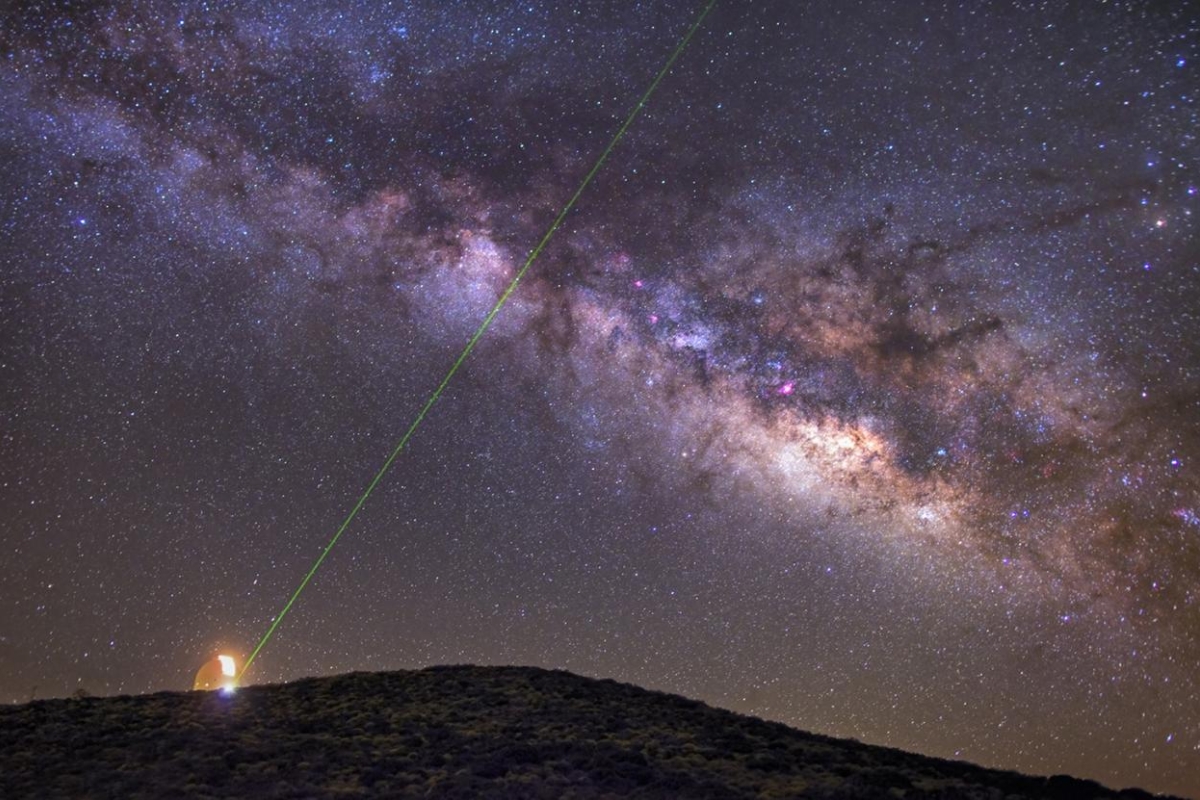
The Connection to 350,836,992 Kilometers Opens the Way for Faster Transmissions and Could Enable High-Definition Video Transmission over Long Distances
NASA has managed to establish communication with a spacecraft traveling through deep space and received a signal coming from 350,836,992 kilometers.
This achievement falls under the scope of the Psyche mission, launched on October 13, 2023, and reinforces the evolution of optical communications used in space exploration.
The advancement is important because it increases the capacity to send more data in less time, something essential for increasingly distant and complex missions.
-
French “ghost” submarine lost in World War II reappears after more than 80 years on the seabed near the coast of Spain.

-
A simple stitch in wood with nylon thread can reduce adhesives, speed up production, and make sheets up to 4 times stronger and 14 times more difficult to break.

-
The gigantic steel shell built to contain Chernobyl for a century has been pierced by a drone, exposing a critical system and creating a hole that could cost over 500 million euros to repair.

-
Brazilian Navy reaches a new level by taking over an airport with a 1,600-meter runway used by 1,800 military personnel and autonomous attack drone testing.

What Happened and Why It Got Attention
The new milestone was achieved within the Deep Space Optical Communications experiment, aimed at testing information exchange via laser.
In just over two years, space communication technology has advanced and achieved a new record for sending and receiving data over extreme distances.
The distance recorded is also noteworthy as it represents more than double the separation cited between Earth and the planet Mars, highlighting the scale of the challenge.
How Laser Communication Works in Space

The system operates with laser signals sent between ground stations and the spacecraft, in both directions.
Data is encoded in near-infrared light, which operates at a much higher frequency than conventional radio waves.
This feature allows for large volumes of information to be concentrated in each transmission, enhancing performance potential in interplanetary missions.
Where the Data Was Received and How It Was Decoded
The signal reception took place at the Palomar Mountain Observatory, located in San Diego, in the state of California.
The decoding involved the use of the near-infrared light itself, applied as a basis for transporting information more efficiently.
In practice, this helps to enhance the clarity and quantity of data that can be sent over long distances, with less dependence on the limits of radio.
What the DSOC Experiment Represents for Future Missions
The Deep Space Optical Communications Experiment, known as DSOC, concludes a two-year testing cycle.
The proposal is to transform the way communication with spacecraft occurs, paving the way for more intensive data exchange in future missions.
Laser technology allows transmission speeds between 10 and 100 times greater than the radio frequency systems currently used in interplanetary missions.
The Practical Result in Speed and What It Enables
In the first months of the mission, when the Psyche spacecraft was about 33 million miles from Earth, the system achieved 267 megabits per second.
This level of performance is comparable to a home broadband internet connection, demonstrating the leap in capacity in space scenarios.
The goal includes the possibility of transmitting high-definition videos, as Sean Duffy highlighted: “if investing in laser space communication technologies with the aim of transmitting high-definition videos.”
Communication at 350,836,992 kilometers shows that laser technology can already maintain stability and data volume even at gigantic distances.
With the Psyche mission and the DSOC, the trend is for future spacecraft to send more information at greater speed, supporting science, navigation, and operations in deep space.








-

-

5 pessoas reagiram a isso.