





 Portuguese
  English
  Spanish
  5 min of reading
  7 comments


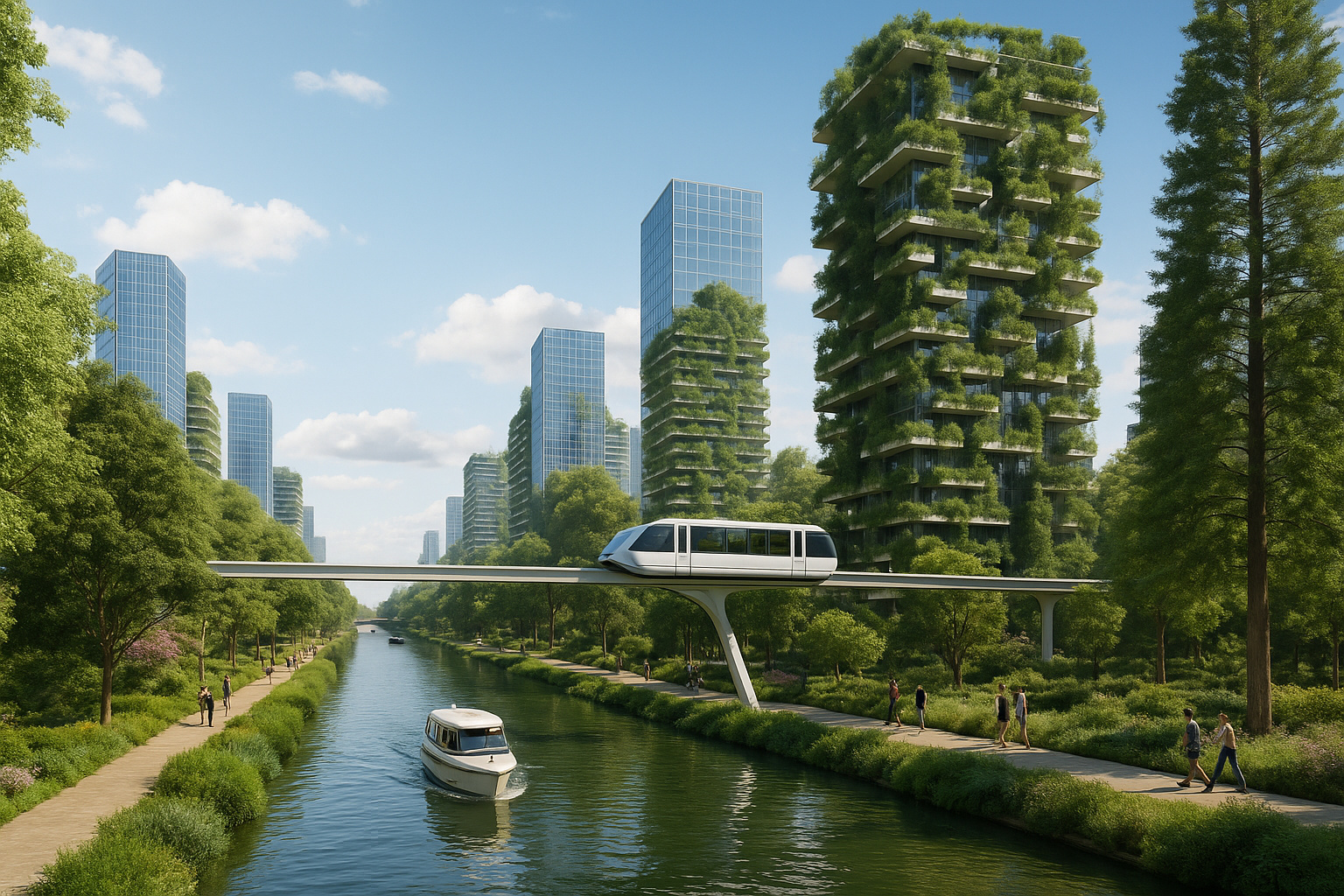


The Latin America’s Megaproject “The Line” Advances Quickly and Surprises the World with 7.5 Million Plants, Solar Panels, and the Boldest Green Architecture Ever Built.
Imagine entering a city where nature is not a supporting character, but the protagonist. A smart city that breathes along with the planet, runs on clean energy, and offers urban mobility that seems straight out of a futuristic movie. This new “The Line of Latin America” is emerging just 100 km from Cancún, in a region where technology and forest become inseparable neighbors.
The project is under accelerated construction and promises to place Mexico at the center of discussions about sustainable development. With delivery expected in 2026, the mega venture stands as one of the most ambitious urban experiments of the 21st century.
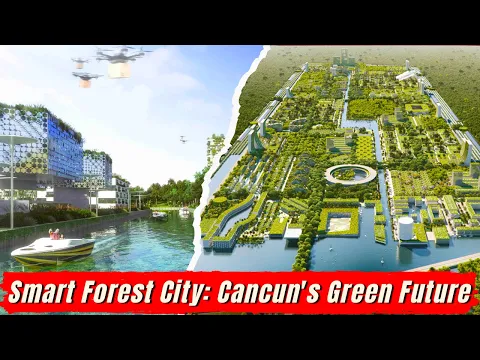

The Forest City is Reborn in the Era of Sustainable Construction
The initiative was designed by Italian architect Stefano Boeri, known for his vertical forests and projects that blend ecological infrastructure with advanced urbanism. He explained to ArchDaily that the idea is to revive the spirit of the ancient Maya forest cities and bring this concept into the future.
-
Tourists were poisoned on Everest in a million-dollar fraud scheme involving helicopters that diverted over $19 million and shocked international authorities.

-
Hidden beneath the dense forest of the Sierra Nevada, Betoma emerges in a neighbor of Brazil as the greatest archaeological discovery of the century, revealing a colossal ancestral city covering over 18 km², with 8,334 stone structures and the potential to rewrite the history of South American civilizations.

-
Goodbye iron: new technology from Xiaomi promises to revolutionize the way we iron clothes with 500 kPa steam, continuous flow of 120 g/min, heating in 65 seconds, and six smart modes for different fabrics.

-
Rio Pardo, the most mysterious city in Rio Grande do Sul: untouched Pampas castle, the missing treasure of the Devil Boy, bride’s saint, invisible tunnels, and a 200-year curse today.

We are not talking about a few scattered trees: there are 7.5 million plants, including 260 thousand trees of 400 different species, all spread across 557 hectares.
This volume of vegetation is equivalent to restoring about 400 hectares of green life to the environment. Practically, this represents 2.3 trees per inhabitant, a number that places the project among the largest urban reforestation experiments on the planet.
According to Boeri himself, “our goal is to create a truly sustainable city model, integrating biodiversity into people’s daily lives.”
The United Nations, in studies published by the UN Environment Programme, reinforces that green structures of this type reduce temperature, filter pollutants, and strengthen climate resilience.
No wonder, the Mexican city is expected to absorb 116 thousand tons of CO₂ per year and store another 5,800 tons, creating a large urban lung reminiscent of reference projects in Asia and Europe.
Clean Energy in Every Corner: A Solar Circle That Powers the City
The energy heart of the project is a massive ring of solar panels that encircles the entire urban area. In this system, every building, square, and public street is powered by renewable electricity, eliminating dependence on fossil fuels.
The proposal follows recommendations from the World Resources Institute on low-carbon cities, which can reduce global emissions by up to 20% by 2050 if they adopt similar systems.
Waste management also follows a circular logic. All waste will be reused, recycled, or reintegrated in some way into the production chain, forming a closed consumption cycle. According to environmental engineer Maria Lopez, in an interview with GreenBiz, “we are creating an ecosystem where every resource is valued.”
The city will also feature irrigated agricultural areas around the urban perimeter. The production will be sufficient to supply the local population, reducing transport, costs, and emissions—something aligned with various recommendations from the IPCC, which encourages short supply chains.
Water as a Protagonist: Desalination and Navigable Canals
To meet water demand, the project will have an advanced desalination tower responsible for capturing seawater, treating it, and distributing it to the city. Subsequently, a system of navigable canals will carry this water to neighborhoods and agricultural fields.
Beyond its practical function, the canals form an aesthetic network that connects residents and creates new circulation points. Aquatic gardens spread throughout the region will act as natural barriers against floods— a solution supported by UN studies that highlight green infrastructure as essential for tropical cities threatened by extreme events.
Future Urban Mobility: From MIC to Electric Boats
When it comes to urban mobility, the project bets heavily on Mobility in Chain (MIC), a system designed to eliminate traffic jams and reduce emissions. Traditional cars are only allowed within the city limits. Inside, transportation will be done via electric boats, speedboats, and small sustainable vehicles.
Specialist from the National Autonomous University of Mexico (UNAM), Carlos Mendez, explained in an interview that “we want people to move cleanly and efficiently, without polluting.” This follows trends adopted in major metropolitan areas and discussed in research centers dedicated to green transportation.
A Global Hub of Scientific and Technological Innovation
Besides all the green infrastructure, the city is also being established as an international hub of innovation. Universities, laboratories, and technology startups are expected to settle in the complex. According to the chancellor Ana Torres, in an interview with Times Higher Education, “it’s a unique opportunity for young scientists to collaborate on projects that can change the world.”
The expectation is that the location will generate studies in clean energy, biodiversity, regenerative agriculture, smart cities, and urban mobility, creating a global impact similar to that observed in hubs like Singapore and Shenzhen.
Why This City “The Line of Latin America” Matters?
In a scenario where extreme climate events are multiplying and cities face record heat, floods, and poor air quality, initiatives like this show that it is possible to build a more balanced relationship between urbanization and nature. The project brings Mexico closer to the global debate on cities of the future and reinforces trends shown by recent research from WRI, which indicates that sustainable urban areas can radically transform the lives of millions of people in the coming decades.
The Mexican forest city, therefore, is not just a monumental construction. It is an open-air laboratory where architecture, science, technology, and the environment blend to redesign how humanity can live in the 21st century.
Did you like the idea? Do you think cities like this can truly become the standard in the future? Leave your comment or share this article to join the conversation.








Desde quando México é America do Sul?
É geografia estadunidense é 🤔
E apenas o primeiro, e outros virão depois
Só pra rico, o mundo do futuro, cidades de ricos e de pobres bem definidas
É um sonho impossível, o pobre já tem alergia a árvore e grama desde sempre. Agora a arquitetura minimalista fez o rico tbm ganhar alergia a árvore frondosa, só gostam de palmeira e árvore anã. Bota pobre ou rico numa cidade com muita árvore e grama e em 2 anos eles já derrubaram tudo e enfiaram concreto encima. E no terceiro ano já estarão reclamando do calor infernal que a cidade virou
Pobre não conserva nada