





 Portuguese
  English
  Spanish
  4 min of reading
  0 comments


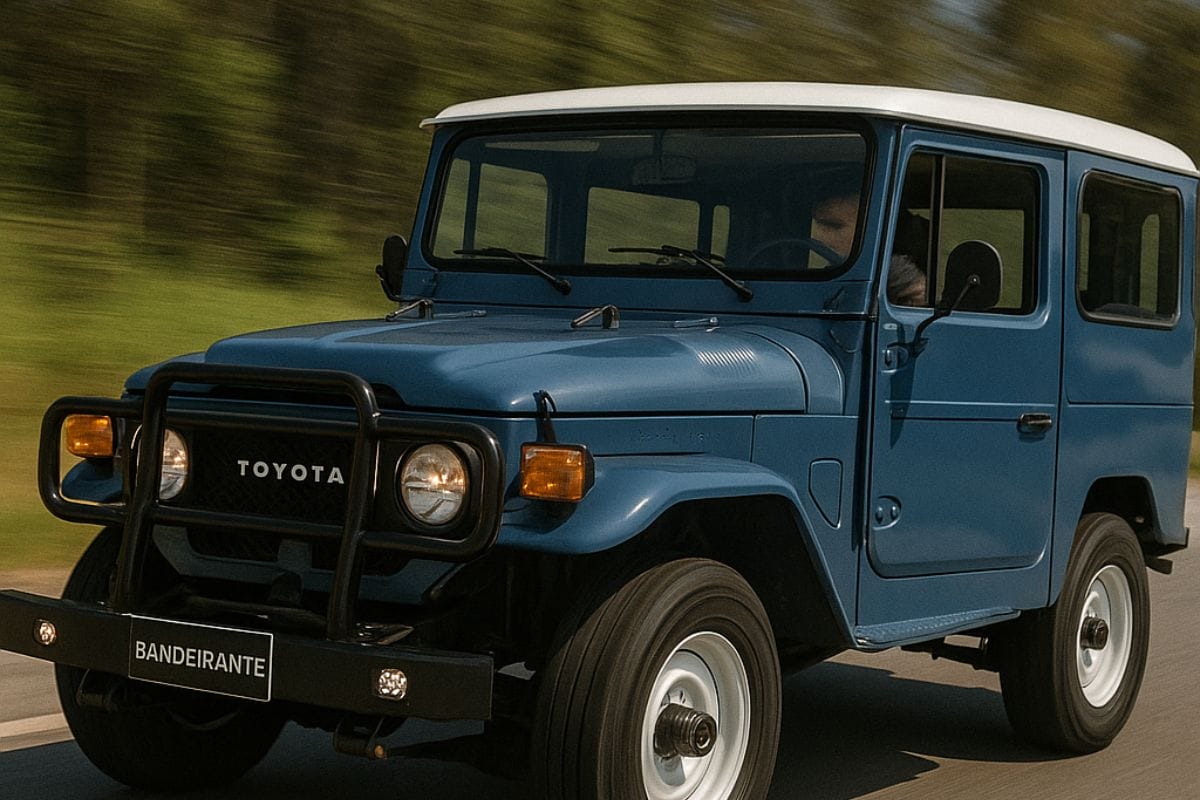
The Toyota Bandeirante in Brazil Left an Indelible Mark on the Automotive Industry and on the Culture of the Country. Understand Its Rise, the Reason for Its Discontinuation, and the Legacy That This Robust Vehicle Built Over Decades.
The Toyota Bandeirante is more than just a utility vehicle; it has solidified itself as an icon in Brazil. With almost four decades of national production, it became synonymous with robustness and reliability, traversing the most challenging terrains in the country and building a lasting cultural impact.
This article explores the trajectory of the Toyota Bandeirante in Brazil, from its arrival as the Land Cruiser to the end of its production and the legacy that persists to this day.
The Toyota Bandeirante in Brazil, a Symbol of Robustness
The Toyota Bandeirante in Brazil transcended its primary function, becoming a pillar of the national automotive industry. Its remarkable longevity in the market was due to its adaptation to Brazil’s specific needs, such as the demand for durability in tough terrains and the appreciation for mechanical simplicity. During certain periods, the strong demand led to waiting lists, reinforcing its effectiveness in a particular niche.
-
A 250cc motorcycle that can reach 560 km with a 14-liter tank, features disc brakes on both wheels and is among the most well-known in Brazil.
-
Man finds over 200 rare cars abandoned on a lot and tries to do the impossible in 8 hours with a surprise at the end.
-
An irregular parking case gains attention after a Mercedes Classe A was removed in such a strange way that it even raised doubts about damage to the car.

-
Costing R$ 16,000, the new Yamaha features a 125 cc hybrid engine with electric assistance, delivers 8.3 hp, includes ABS, optimized fuel consumption, Y-Connect connectivity, 25 liters of storage space, and a surprising 4-year warranty in the urban segment.

From Land Cruiser to Bandeirante: The Birth of a National Legend
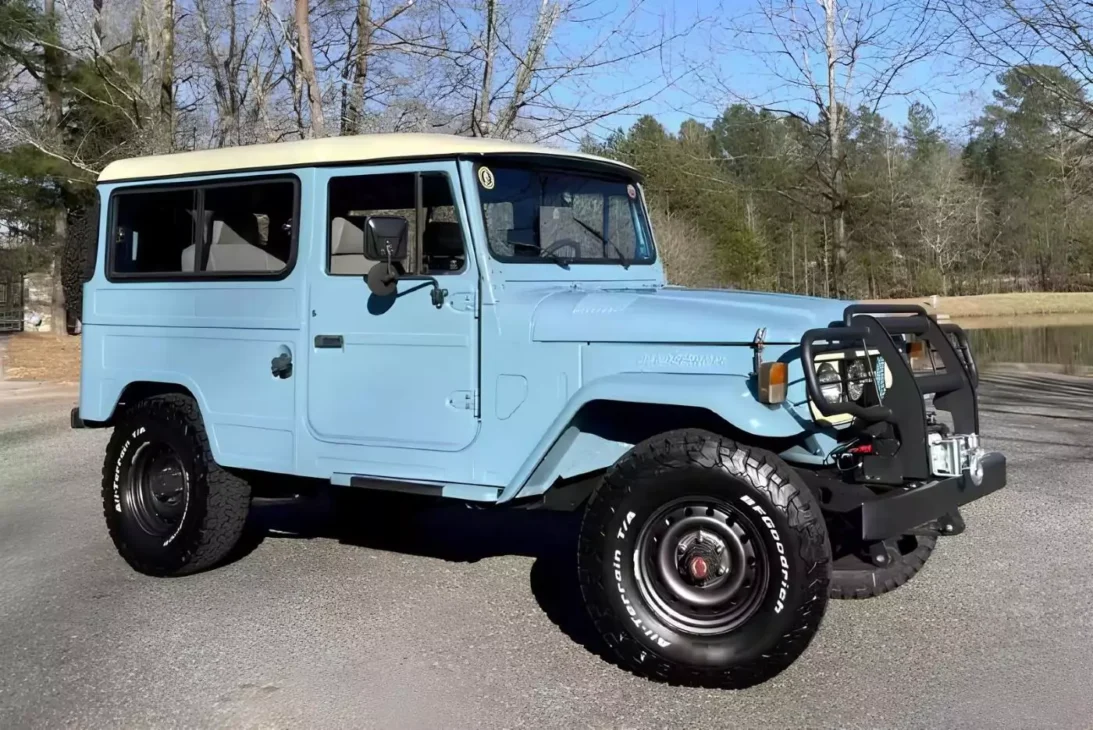
The story of the Toyota Bandeirante in Brazil began in the 1950s with the importation of the Land Cruiser FJ-251. In 1958, Toyota do Brasil took over the operation, assembling the Land Cruiser in CKD format at its recently inaugurated factory in São Bernardo do Campo (SP) – the first Toyota plant outside Japan.
The effective nationalization occurred in May 1962, when the vehicle was renamed “Toyota Bandeirante.” A crucial strategic decision was the replacement of the original gasoline-powered Toyota engine with the Mercedes-Benz OM-324 diesel engine still in 1962. This engine, nicknamed “Britadeira,” provided the torque, durability, and fuel economy that the Brazilian market demanded. In the early years, the body was produced by Brasinca, and the lineup diversified with options for steel roofs and the pickup version.
Decades of Strength: The Evolution and Consolidation of the Toyota Bandeirante in Brazil
Between the 1970s and 1990s, the Toyota Bandeirante in Brazil established its reputation for strength. In 1973, the Mercedes-Benz OM-324 engine was replaced by the OM-314 (85 hp), and in 1989 (or early 1990), by the OM-364 (90 hp). In 1994, Toyota introduced its own engine, the Toyota 14B diesel (96 hp). This change divided opinions, with many preferring the torque and perceived durability of the Mercedes engines.
The driving experience was rugged, with a four-speed gearbox (initially with only 3rd and 4th synchronized), drum brakes without power assistance for many years (front discs introduced only in the mid-90s), play in the steering, and engine vibration. The leaf spring suspension prioritized durability. The functional design underwent few changes, with square headlights starting in 1989 being one of the most notable visual updates. The versatility of the platform allowed for versions like short and long jeeps, single cab pickups, and the iconic double cab pickup (with four doors starting in 1999), a Brazilian particularity.
The End of the Line: Why Did the Toyota Bandeirante in Brazil Cease Production in 2001?
Production of the Toyota Bandeirante in Brazil was officially halted on November 28, 2001, after 104,621 units were assembled. The main reason was the inability of the old design to meet the new and stricter Brazilian emissions standards (Proconve), which would take effect from 2002.
Other factors contributed to its discontinuation: the overall obsolescence of the design in terms of comfort and technology, competition from more modern imported vehicles (such as the Land Rover Defender) after market opening in the 90s, and a possible strategic decision by Toyota to focus on higher volume models with more modern technology, such as the Corolla (produced in Brazil since 1998) and the Hilux.
A Lasting Legacy: The Toyota Bandeirante After the End of Production
Even after 2001, the legacy of the Toyota Bandeirante in Brazil remains strong. Many units, especially those with Mercedes-Benz engines, continue to operate in agribusiness, mining, and remote areas, honoring its reputation as “indestructible.” The Military Police of Paraná, for example, utilized the model in its fleet.
At the same time, The Toyota Bandeirante has been experiencing growing appreciation as a collector’s item. Well-preserved specimens reach significant values in the national and international markets, especially in the United States. Foreign collectors value the robustness, design of the FJ40, and the exclusive Brazilian versions with Mercedes engines. The absence of snow and salt on Brazilian roads has contributed to better preservation of the bodies compared to models from other countries. The last unit produced, number 104,621, a blue BJ50LV Jeep, was preserved by Toyota itself and is displayed in its collection at the factory in Sorocaba (SP), with rare options like air conditioning and radio.
The Fate of the Pioneer Factory and the Absence of a Direct Successor


The historic factory in São Bernardo do Campo, birthplace of the Toyota Bandeirante in Brazil, ceased vehicle production with the end of the Bandeirante in 2001, transitioning to parts manufacturing. Two decades later, Toyota announced the definitive closure of the plant, with operations transferred to more modern facilities in the interior of São Paulo between 2022 and 2023.
Although the modern Toyota Land Cruiser 2024/2025 (LC250) captures the robust spirit of the classics, experts consider the chances of a “new Bandeirante” being released in Brazil to be almost nil, primarily due to the high importation cost, which would position it in a luxury segment. Thus, the pioneering spirit of the Toyota Bandeirante in Brazil remains a valuable historical memory, without a direct successor in the current market.








Seja o primeiro a reagir!