





 Portuguese
  English
  Spanish
  4 min of reading
  9 comments


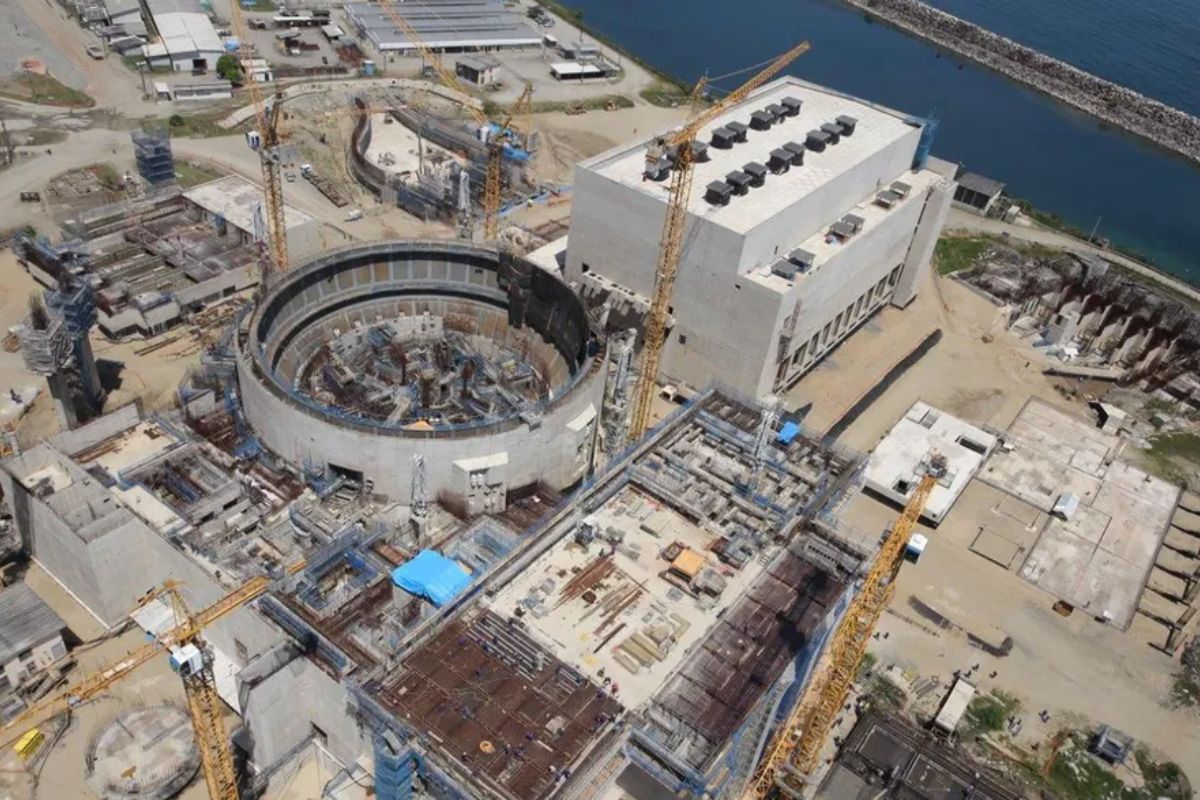


Conceived During the Military Dictatorship and Paralyzed by Crises, Corruption, and Legal Disputes, the Angra 3 Nuclear Power Plant Has Dragged On for Four Decades Without Ever Generating a Watt of Energy, Becoming a Symbol of Waste in Brazil.
On the Coast of Angra dos Reis (RJ), a concrete monument stands, representing one of the largest and most controversial infrastructure projects in Brazil’s history. The Angra 3 Nuclear Power Plant, a project that has already consumed over R$ 20 billion of public funds, has been stalled for decades and has become a true “white elephant” atomic project.
The saga of the plant is marked by a series of false starts and a trail of astronomical costs. Today, in 2025, the project faces its greatest paradox: a study by BNDES shows that an additional R$ 23 billion is needed to complete it, while the cost to abandon it is R$ 21 billion. This minimal difference has paralyzed the government, leaving the future of Angra 3 in a limbo that is costly for the country.
The Brazil-Germany Nuclear Agreement of 1975
The story of the Angra 3 Nuclear Power Plant began on June 27, 1975, when the Brazilian military government signed a monumental agreement with then-West Germany. The pact provided for the construction of eight nuclear reactors and, more importantly, the complete transfer of fuel cycle technology. It was a demonstration of geopolitical strength and ambition.
-
With more than 635,000 doctors, Brazil sees competition increasing in large cities, and recent graduates are competing for shifts at an accelerated pace while the countryside still faces shortages.

-
The world’s first octopus farm wants to open in the Canary Islands and is already provoking an international reaction: the plan aims to produce 3,000 tons per year.

-
Drought may be creating stronger superbugs in the soil and helping antibiotic resistance reach hospitals, warns a study highlighting a problem that could grow alongside extreme weather.

-
The biggest scam in history: Napoleon’s France deceived the United States by selling them a territory that was Spanish.


Based on this agreement, the works for Angra 3 officially began in 1984. However, ambition collided with reality. Just two years later, in 1986, the project was suspended. A combination of economic crisis, the country’s redemocratization, and international pressure against the Brazilian nuclear program halted construction, leaving its concrete skeleton as a monument to waste for over 20 years.
How Much Has Angra 3 Cost and How Much Will It Still Cost?
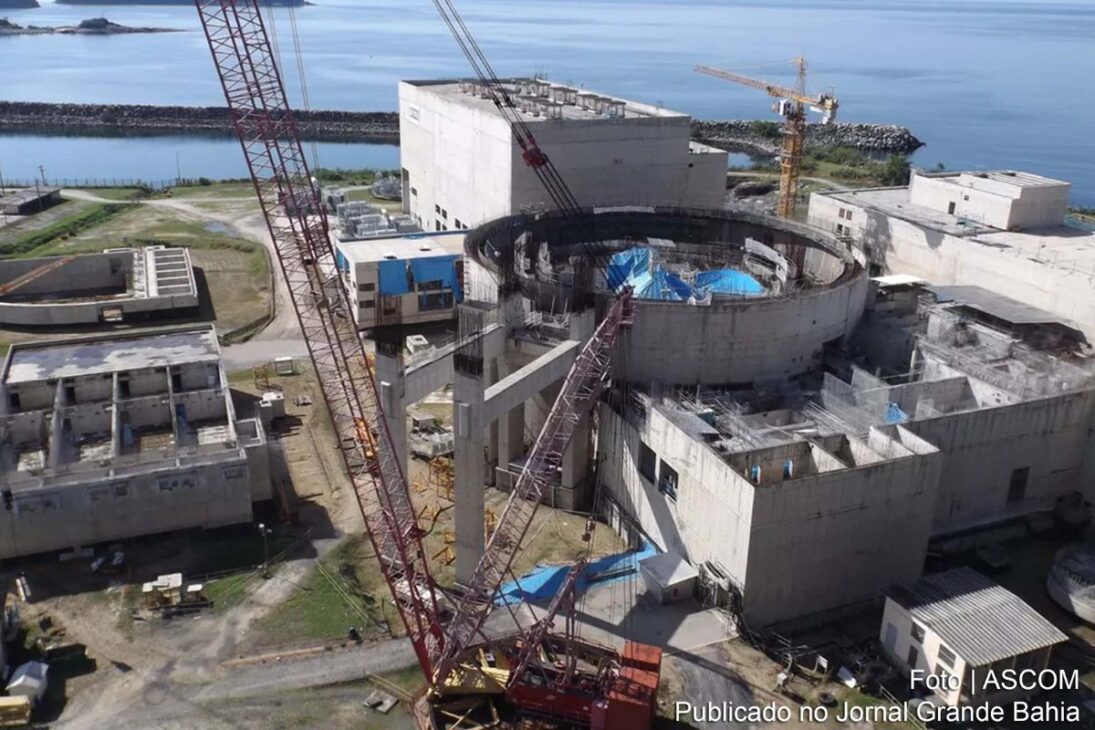
The financial analysis of Angra 3 reveals a bottomless pit. It is estimated that over R$ 20 billion have already been invested in the project. But the most alarming cost is that of paralysis: maintaining the structure and stored equipment costs R$ 1 billion per year to public coffers.
The dilemma was crystallized by the recent BNDES study. The need to invest an additional R$ 23 billion to finish the plant, against a cost of R$ 21 billion to abandon it, has created an impasse. Economically, giving up would be the cheaper and less risky option. Politically, however, admitting the loss of billions and decades of investment is a difficult decision. This paradox, known as the “sunk cost fallacy,” keeps the project alive, even though its viability is questionable.
The Shadow of Operation Car Wash: Corruption and Mismanagement at Eletronuclear
The resumption of works in the 21st century was marked by a new scandal. In 2015, Operation Car Wash revealed a scheme of bribery in the contracts for the construction of Angra 3. The investigations led to the arrest of then-president of Eletronuclear, Vice Admiral Othon Luiz Pinheiro da Silva, accused of receiving R$ 4.5 million in bribes from contractors.
The corruption scheme, which involved the top brass of the state-owned company, was the trigger for another long stoppage of works, which at the time were already 65% completed. The scandal not only halted physical progress but also destroyed public trust in the project, which came to be seen as a symbol of corruption in the country.
A 1970s Project in the 21st Century
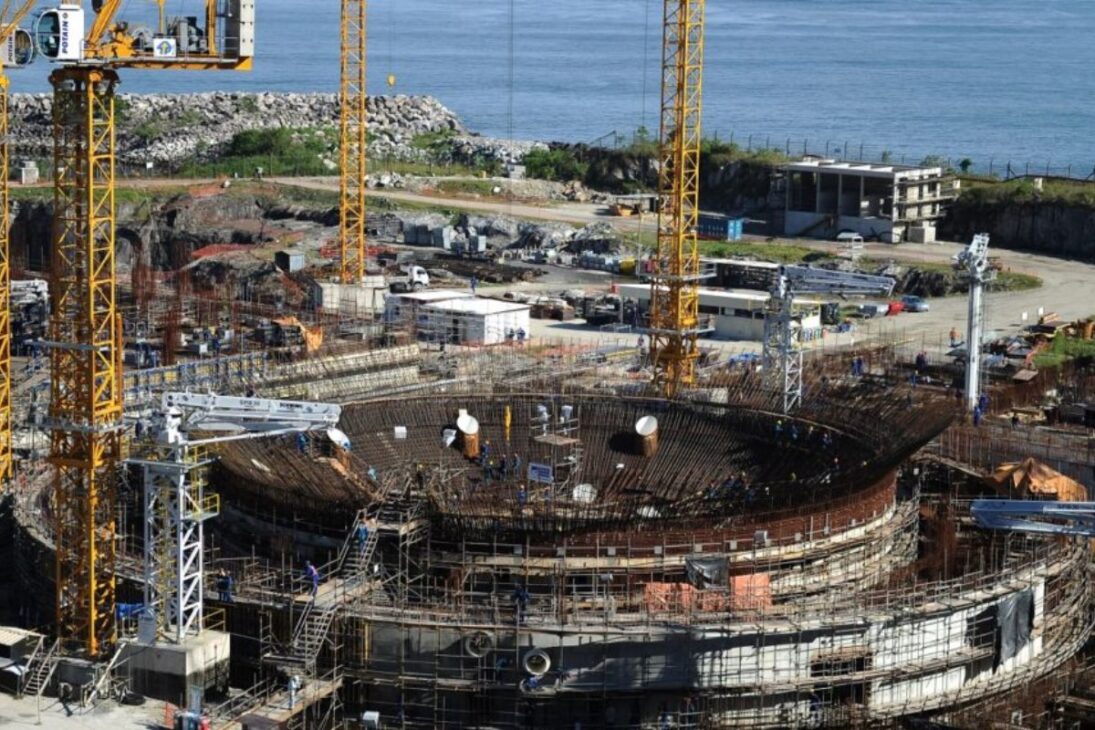
One of the biggest problems of the Angra 3 Nuclear Power Plant is its age. The heart of the plant is a reactor of German Siemens/KWU technology, whose design was conceived in the 1970s. Essentially, Angra 3 is a “twin sister” of Angra 2.
This technological obsolescence is a major concern. Experts point out that an identical plant in Germany, which served as a reference for the Brazilian project, was decommissioned due to safety issues related to its outdated design. Although Eletronuclear claims to have made upgrades, the fundamental architecture of the reactor remains the same, trapping Brazil in outdated technology.
The Burden to the Consumer and the Future of the Angra 3 Nuclear Power Plant
The debate about completing Angra 3 boils down to a cost that will be borne by consumers. The BNDES study projects that the energy generated by the plant would cost R$ 653 per megawatt-hour (MWh), more than three times the price of wind or solar energy, contracted in recent auctions.
The Federal Court of Accounts (TCU) has been even more direct. The agency estimates that completing the plant could represent an extra cost of R$ 43 billion on the electricity bills of all Brazilians throughout its useful life. The final decision rests with the National Energy Policy Council (CNPE), which has delayed a definition. Meanwhile, the atomic white elephant continues to consume R$ 1 billion per year, a costly and lasting symbol of inefficiency and the decision-making paralysis of the Brazilian state.






Pelo menos dessa vez a culpa não é dos javalis, apontados pelo agronegócio como os vilões das lavouras. Enquanto isso, a Câmara dos Deputados aumenta de 513 para 531 o número de deputados federais (assessores, combustivel, penduricalhos, etc). Voces não se sentem felizes quando pagam seus impostos, sabendo que estão contribuindo para tudo isso daí?
É UM PONTO DE CORRUPÇÃO ESPLENDOROSO! MUITOS POLITICOS, CONCLUIRAM DOUTORADO E PHd EM CORRUPÇÃO NESSA USINA. PONTO SEMELHANTE É A REFINARIA ABREU E LIMA EM PERNAMBUCO. NÃO ACABA NUNCA! COMO DRAGÕES, FAZEM O DINHEIRO DOS CONTRIBUINTES VIRAR PÓ E ENCHE OS BOLSOS DOS PATIFES!
Dragões soltam fogo pela boca. Daí o dinheiro dos contribuintes vira fumaça, não vira pó… o que dá na mesma!
Nada a se espantar como qualquer coisa mal planejada e executada do Brasil. Mesma coisa do famoso submarino nuclear que está em construcao desde 1985……..quem paga Sao os otarios dos brasileiros