





 Portuguese
  English
  Spanish
  5 min of reading
  0 comments


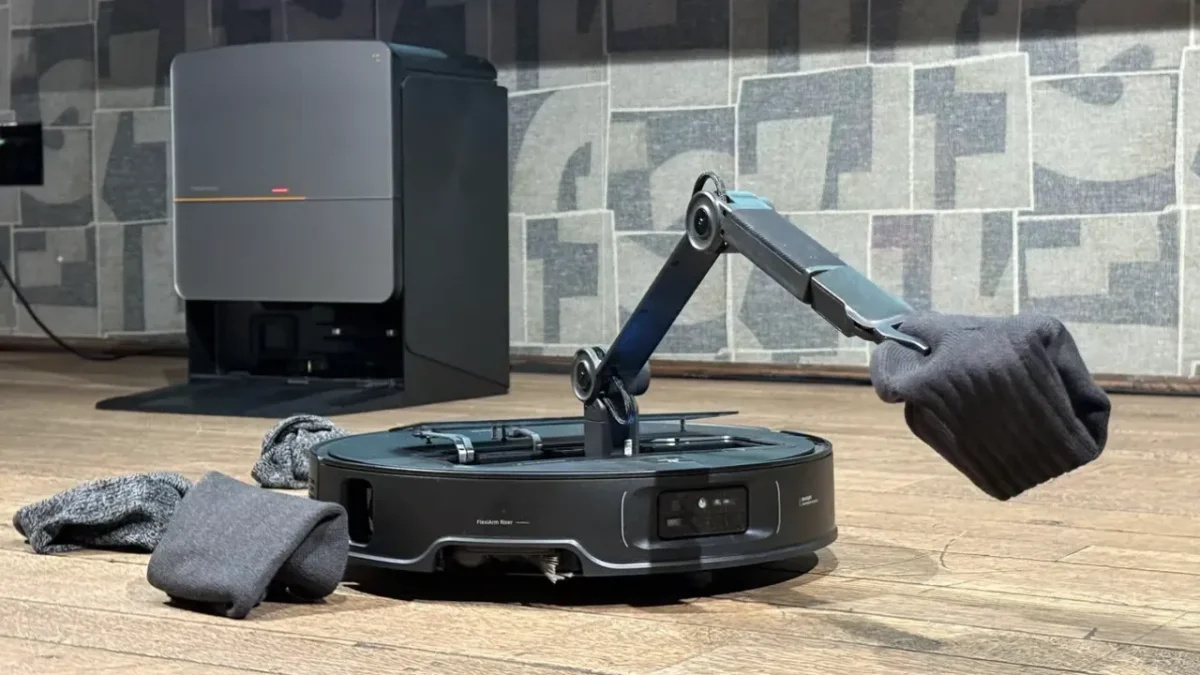
Robot vacuum with a mechanical arm removes objects from the floor and cleans by itself, marking a new phase of home automation with artificial intelligence.
In 2025, the Chinese manufacturer Roborock introduced the Saros Z70 model to the international market, a robot vacuum that introduces a structural change in home automation by incorporating a physical manipulation system into the cleaning process. The launch was announced on the company’s official pages, which describe the equipment as the first mass-produced robot vacuum with a foldable five-axis mechanical arm, named OmniGrip, officially launched in January 2025.
The most impactful feature of the equipment is the presence of a five-axis articulated mechanical arm capable of identifying, grabbing, and removing objects from the floor before continuing the cleaning, eliminating one of the biggest limitations of traditional robot vacuums, which have always depended on previously organized environments to operate efficiently.
According to the official product page of Roborock, the Saros Z70 was developed to detect objects it can lift, move them out of the way, and then return to clean previously blocked areas, as well as recognize and reorganize lightweight household items with the support of artificial intelligence.
-
Geographers redefine the Brazilian relief and confirm the presence of mountains in 14 states with a new system that changes historical criteria and alters the way the territory is classified.

-
At a depth of 3,800 meters in the Atlantic, scientists have discovered a “lost city” with white towers up to 60 meters tall that has been active for over 120,000 years without relying on volcanoes.

-
Rare phenomenon intrigues science: video captures extremely rare square waves on Lake Michigan and geometric pattern near Indiana impresses.

-
A nutritionist reveals that the real villain of your breakfast is not butter or eggs, but rather the excess of white bread, cookies, and refined sugar that you consume every day without realizing the damage it causes.


The device emerges at a time when appliances are no longer passive tools and begin to incorporate sensors, algorithms, and decision-making capabilities, expanding the concept of a smart home to a level closer to real automation. Roborock itself frames the model as a new stage of domestic robots, combining autonomous navigation, visual recognition, AI personalization, and physical interaction with the environment in a single device.
Integrated mechanical arm changes the logic of domestic cleaning
The traditional operation of robot vacuums has always been based on obstacle avoidance. When encountering an object, the system recalculates the route and simply avoids that area, which reduces cleaning efficiency and requires constant human intervention to clear the environment.
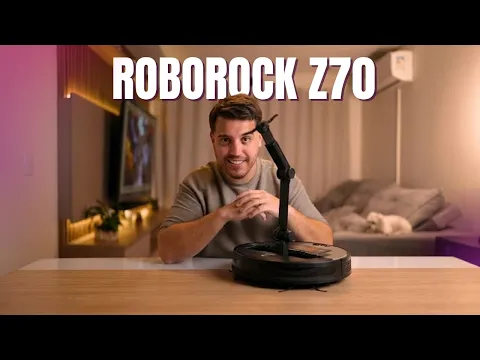

In the case of the Saros Z70, this logic is inverted. The equipment begins to act directly on the problem by incorporating a foldable robotic arm with five axes of movement, capable of performing physical actions in the domestic environment. This capability transforms the robot from a reactive system into an active agent, which not only adapts to the environment but modifies it to fulfill its function.
In practice, common objects like clothing, small toys, or cables cease to be permanent barriers. The robot can identify them, assess their manipulability, and remove them from the path, allowing the cleaning to be completed more thoroughly.
Computer vision allows detailed recognition of the environment
For this level of automation to be possible, the Saros Z70 uses an advanced computer vision system combined with depth sensors and real-time spatial analysis. The robot not only detects the presence of an obstacle but interprets what it is, its position, and its relationship with the surrounding space.
This interpretative capability allows it to differentiate manipulable objects from fixed or sensitive items, ensuring that the system operates safely and accurately. Recognition is not limited to shape but involves visual patterns and expected behavior of each type of item, indicating the use of artificial intelligence models trained for the domestic environment.
This type of technology represents a direct adaptation of systems used in autonomous vehicles and industrial robotics, now miniaturized and applied for everyday use.
Embedded artificial intelligence enables autonomous decision-making
The presence of sensors and computer vision would be insufficient without a system capable of processing this information and making real-time decisions. The Saros Z70 incorporates embedded artificial intelligence that continuously analyzes the environment and determines the best action to be taken.

The robot evaluates whether to avoid, remove, or ignore an obstacle based on criteria such as size, position, and impact on the cleaning route, executing these decisions without the need for human intervention. This level of autonomy drastically reduces user dependency and brings the operation of the equipment closer to advanced robotic systems.
Furthermore, the real-time adaptability allows the robot to operate in dynamic environments, where objects may appear or change position during the cleaning process.
Intelligent navigation and mapping enhance operational efficiency
The Saros Z70 also incorporates advanced navigation technologies, using sensors to map the environment with a high level of detail. This mapping allows the robot to identify rooms, fixed obstacles, and ideal routes, ensuring complete area coverage.
The integration of intelligent navigation and physical manipulation results in a more efficient system, capable of reaching areas that would previously be ignored. This reduces cleaning failures and improves the overall performance of the equipment.
The robot can also adapt its routes based on changes in the environment, maintaining efficiency even under variable conditions.
Evolution of smart appliances and market impact
The introduction of a robot vacuum with a mechanical arm represents a significant evolution in the appliance sector. Historically, these devices operated based on predefined functions and had little adaptability.
With the incorporation of artificial intelligence and physical manipulation capabilities, appliances begin to operate more like autonomous systems, expanding their functions and reducing the need for human intervention.
This movement aligns with a broader trend in the market, where manufacturers seek to transform household devices into intelligent platforms capable of interpreting context and executing complex tasks.
Technical limitations and challenges of the Saros Z70
Despite the advancement, the technology still faces challenges. The manipulation of objects in a domestic environment requires a high level of precision and reliability, especially in unpredictable scenarios.
The need to avoid damage to objects, ensure safety, and maintain operational efficiency places high demands on sensors, algorithms, and mechanical systems. Additionally, the production cost tends to be higher, which may impact the product’s accessibility in the short term.
Another relevant factor is the need for constant software updates, as the system relies on continuous learning to handle different types of objects and environments.
Domestic cleaning enters the era of active robotics
The launch of the Saros Z70 marks a turning point in the evolution of appliances, introducing the capability for physical interaction with the environment as part of the cleaning process.
By combining artificial intelligence, computer vision, and a functional mechanical arm, the robot vacuum ceases to be just an automated device and begins to operate as an autonomous robotic system within the home.
This advancement indicates that the next generation of appliances will be defined not only by automation but by the ability to interpret, decide, and act on the environment, significantly expanding the role of technology in daily domestic life.







Seja o primeiro a reagir!