





 Portuguese
  English
  Spanish
  4 min of reading
  1 comment





How Popular Narrative Simplifies Centuries of Extraction, Smuggling, Internal Circulation, and Imperial Integration, Showing That A Relevant Part of Brazil’s Gold Financed Works, Trade, and People Right Here, Far From A Simple Idea of Total Plunder
As Professor Marcelo Andrade explains, Brazil’s gold is often remembered as wealth drained away, but the history is more complex than the slogan contrasting “exploration” with “restitution.” Between legal and illegal routes, the metal circulated as currency, paid taxes, funded the administrative machine, and financed churches, villages, and roads in colonial territory.
At the same time, the integration of Brazil into the Portuguese Empire produced flows of people, positions, and assets that do not fit into binary labels. Instead of a chapter of absolute depletion, the gold cycle reveals networks of exchanges, frauds, investments, and population settlement that shaped cities and landscapes we recognize today.
The Myth That Simplifies A Complex History
For Professor Marcelo, the formula “Portugal took everything” serves as an emotional shortcut, but does not address the essential: who extracted it, how much circulated, where it was spent, and why a significant part of Brazil’s gold did not leave the territory.
-
Plastered walls become a trend and end up being the perfect choice for finishing; the secret of the 2 coats that prevent waste in painting.

-
With 333 meters and equivalent to a 20-story building: China launches a supertanker that transports 2 million barrels, has 540,000 m² of area, and saves $5 million per year.

-
Brazil becomes a beacon of hope for ending plastic waste by leading a global plan that could prevent millions of tons from entering the oceans.

-
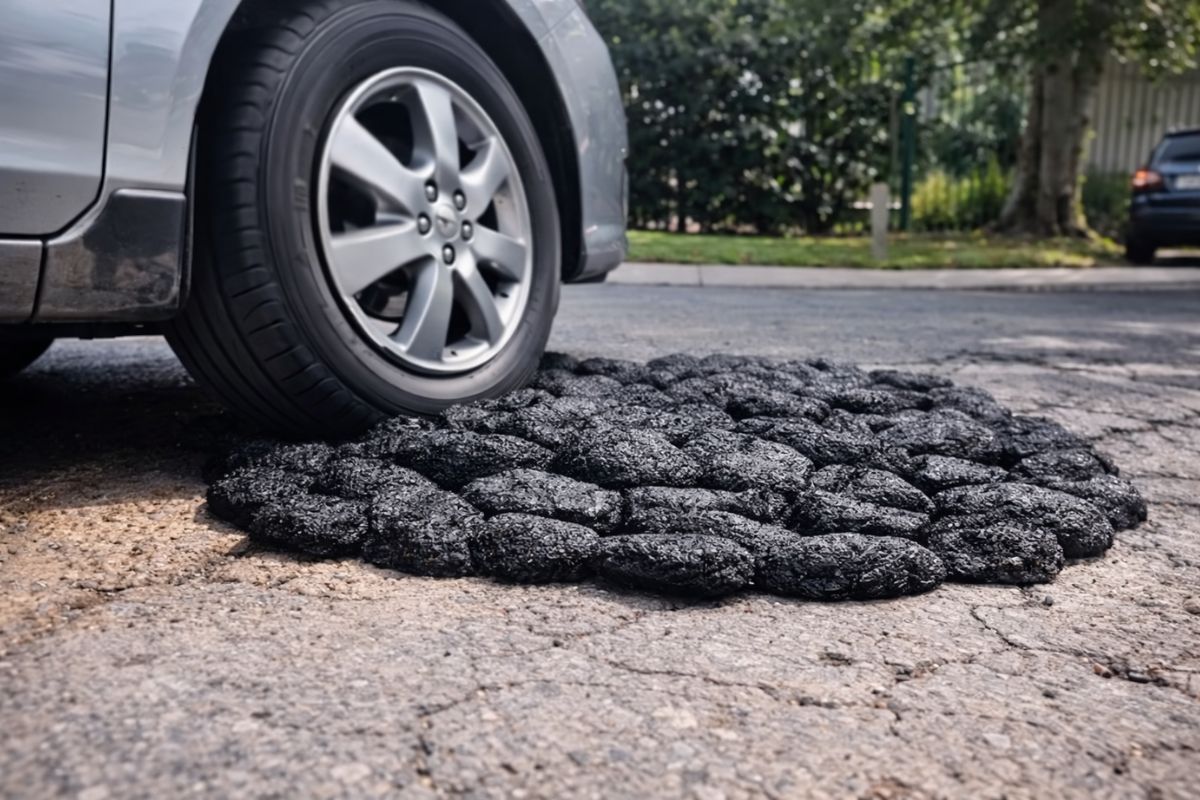
The low-cost solution called PatchPal, invented in South Africa to fix potholes in minutes, does not crack and prevents water from entering, becoming more compact with each car that drives over it, revolutionizing road repairs that governments have forgotten.

The answer lies in the coexistence between official collection and everyday diversions, in an environment where the metal was also a means of payment.
By reducing history to a unidirectional “theft,” we lose the understanding that gold operated as a local economic gear.
It structured markets, supplied administration, and propelled material works that continue to sustain tourism, memory, and income today.
Historical estimates frequently cited for the colonial period indicate large volumes sent to Europe, but they also recognize statistical losses due to underreporting, smuggling, and internal circulation.
This underworld of powdered gold, barter, and the purchase of goods beyond the reach of oversight was part of everyday life.
The comparison with modern extraction helps to frame the central argument: current technology has shown that reserves were not “drained” during the colonial period, and that contemporary productive scale reaches significant volumes in shorter timeframes.
This does not “absolve” the past, but demonstrates that the narrative of total exhaustion does not hold up.
Taxes, Mint Houses, and Local Uses of the Metal
To stem the fiscal bleeding, the Crown created mint houses and imposed the fifth, a tax of 20 percent.
Part of this gold financed the very state presence in Brazil, paying employees and services that operated in the territory.
The remainder circulated in the local economy, paying for imports, erecting temples, bridges, and urban equipment.
This metal that kept “circulating” here helped build cities that are now heritage sites and visited, with architecture that reflects aesthetic affinities between Brazil and Portugal.
It is not about negating transfers to the metropolis, but recognizing that the local economic circuit was alive and relevant.
The gold rush brought bureaucrats, prospectors, merchants, and landowners who not only exploited but settled, married, and formed families, integrating into the population.
Imperial integration meant circulation of people and positions between Brazil, Portugal, and other possessions, which undermines the notion of impermeable borders before 1822.
Likewise, indigenous people, blacks, and mestizos appear in the records of orders and positions, in a social mosaic more complex than the caricature of “colonizers arriving, taking, and leaving.”
The story of gold is also the story of those who remained.
Comparisons That Distort The Contemporary Debate
The temptation to explain the present through the “lost gold” ignores the current weight of tax collection and the modern fiscal structure.
Linking Brazil’s backwardness to a supposed total plunder simplifies variables and diverts focus from recent political and economic choices, which are more influential on income, productivity, and public services.
The very idea of “restitution” of gold, viewed through the logic of an integrated empire, does not find a coherent operational parallel.
It would be like slices of a federated country, upon separating, demanding “back” raw materials exploited while integrating the same legal order.
When the topic becomes a rallying cry, we lose the opportunity to discuss resource management, effective oversight, transparency, and the social return of contemporary mining.
Speaking about Brazil’s gold with historical precision does not deny injustices, it separates myth from economic mechanism to shed light on today’s decisions.
By reframing the trajectory of the metal, the country can replace inherited blame with concrete policies on reserves, licensing, productive chains, and environmental protection, connecting past, present, and future with fewer slogans and more results.
Brazil’s gold is less a tale of theft and more a portrait of circulation, disputes, and permanences, where a significant part of the value stayed, circulated, and built right here.
Understanding this does not absolve anyone, but corrects the focus on what matters now: governance, development, and quality of spending.
Do you see the story of Brazil’s gold more as plunder, as internal circulation, or as a mix of both? In your city, do works and heritage from the gold cycle still generate income and tourism? What current policies would you adopt for today’s mining to leave tangible benefits for the local population? We want to hear real experiences and practical arguments in the comments.






Existem textos simples sobre algo e existem verdadeiras exposições sobre um determinado tema. Poucos capazes de “virar a página. Mormente de um mito que serve de muleta para justificar mazelas correntes. Este é um deles. 👏🏻👏🏻👏🏻