





 Portuguese
  English
  Spanish
  5 min of reading
  0 comments


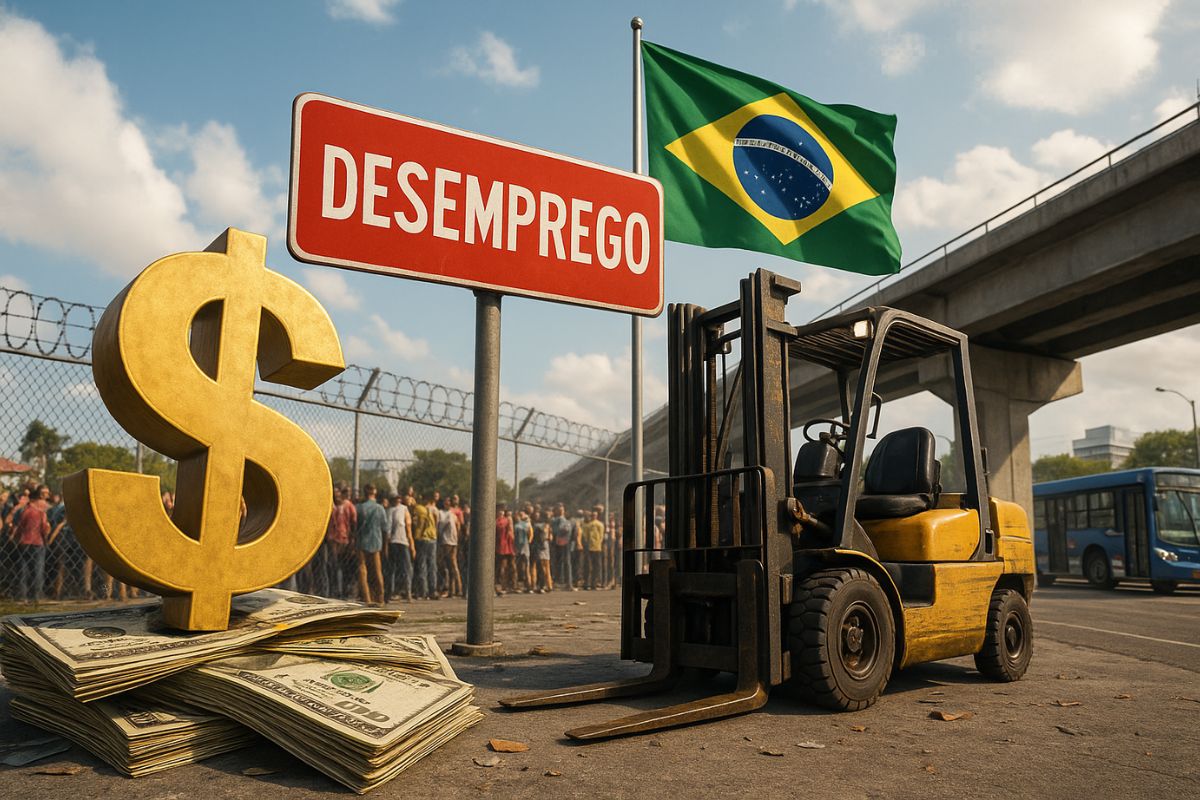
Commercial Isolation, Low Confidence, and Poor Choices Help to Explain Why Brazilian Productivity Has Not Moved for 40 Years
The Brazilian productivity has been stuck at the same level for decades. This diagnosis is not new, nor is it simple. Manager Ruy Alves from Kinea Investimentos argues that the problem is structural: we grew when the world was disintegrated and lost momentum when the global economy integrated. In his view, without external competition, clear rules, and trust among agents, the country began to accumulate frictions that translate into costs, slowness, and stagnant wages.
This set of constraints cannot be solved merely with short-term solutions. Ruy Alves reminds us that, outside of the agriculture sector, Brazilian productivity has hardly progressed for about 40 years. The result has a cascading effect: less investment, fewer quality jobs, and a cycle of distrust that drives away innovation. Addressing the issue requires realism, statistics on the table, and a pact for integration, meritocracy, and micro-reforms that work in practice.
What Is Holding Back Brazilian Productivity
The first piece of the puzzle is how Brazil has related to international trade.
-
A new Brazilian shopping center worth R$ 400 million will be built in an area equivalent to more than 4 football fields, featuring 90 stores, 5 cinemas, a supermarket, a college, and parking for 1,700 cars, potentially generating 3,000 jobs.

-
Larger than entire cities in Brazil: BYD is building a 4.6 km² complex in Bahia with a capacity for 600,000 vehicles per year, but the discovery of 163 workers in conditions analogous to slavery has shaken the entire project.

-
With an investment of R$ 612 million, a capacity to process 1.2 million liters of milk per day, Piracanjuba inaugurates a mega cheese factory that increases national production, reduces dependence on imports, and repositions Brazil on the global dairy map.

-
Brazilian city gains industrial hub for 85 companies that is equivalent to 55 football fields.


According to Ruy Alves, we prospered during historical windows of global disintegration and fell behind when competition intensified.
The country relied on prolonged protection, market reserves, and technical barriers that reduced competitive pressure.
Without external challenges, Brazilian productivity loses incentives to improve processes, adopt technology, and seek efficiency.
Another point is the hidden cost of daily frictions. Poor roads, expensive logistics, bureaucracy that consumes time, a huge tax litigation backlog, and inadequate worker training create a permanent “toll.”
Each accumulated friction undermines margins, raises the final product cost, and flattens real wages. In practice, companies spend energy surviving the system, not competing globally.
Low Confidence, Fragile Institutions, and Expensive Credit
Productivity also depends on trust. Ruy Alves draws attention to an uncomfortable fact: the low level of interpersonal trust in Brazil.
Without trust, there is no cheap credit, simple contracts, or sustained growth. Investors demand more guarantees, banks raise interest rates, and entrepreneurs delay projects.
This vicious circle inhibits productive risk and pushes the economy toward defensive activities.
Predictable institutions are another pillar. Clear property rights, legal security, and stable regulation serve as “institutional infrastructure.”
When the rules change mid-game, Brazilian productivity foots the bill: capital stays out, innovation waits, and the machine operates below potential.
The Exceptions That Worked: Agriculture, Multinationals, and Aviation
There are islands of excellence. Ruy Alves highlights that the agricultural sector has grown about 3% per year for three to four decades, anchored in applied science and technology transfer.
The case of Embraer also illustrates a pathway: high-level technical training, international cooperation, and focus on global niches.
When competition is global and the standards are high, Brazilian productivity shows up.
Another revealing data point cited by Ruy Alves is that companies with foreign capital that report to the Central Bank employ a very small portion of the workforce while accounting for a disproportionate part of GDP.
Where there is governance, goals, and international competition, the machinery performs better. The question is not whether Brazil can do it, but how to scale these practices.
Microstructures That Make a Difference Day to Day
Productivity cannot be resolved solely with a macro package. Ruy Alves reinforces the thesis of efficient “microstructures”: simple incentive designs, autonomous technical agencies, digital processes that cut steps, credible deadlines, and periodic evaluations.
Small course corrections, when combined, unlock hours of work per day and multiply results yearly.
On the factory floor and in the office, this means standardizing routines, measuring performance, continuous training, and integrating technology that reduces rework.
When a company identifies the bottleneck and removes it, Brazilian productivity rises where it truly matters: at the task level, shift, and quarter.
Education, Meritocracy, and Competition: The Triad of Change
Transformation requires three vectors. The first is applied education, with full literacy, functional mathematics, and technical training connected to real demand.
Without a solid foundation, Brazilian productivity remains a promise, not a delivery. The second is meritocracy, with competitions, goals, and promotions that reward results, both in the public and private sectors.
The third is competition, through gradual opening, well-designed agreements, and easing barriers that exchange protection for productivity.
Ruy Alves insists that exporting means competing in the “world championship” every day.
Those who sell abroad need to be truly good because the global customer does not forgive delays, defects, or prices outside the market. It is this pressure that drives processes, quality, and management upward.
What Is the Cost of Ignoring the Problem
Ignoring Brazilian productivity incurs high interest. Fewer quality formal jobs, stagnant wages, talent flight, timid investment, and a slow-growing economy even in favorable cycles.
It is an invisible cost in the short term but devastating in the long run. With every year of delay, the gap to peers widens.
On the other hand, the compounded gain of productivity is powerful. Half a percentage point more per year, over a decade, changes the average salary, reduces inequality, and creates fiscal space without raising taxes.
This is the kind of silent transformation that shows up in paychecks and competitiveness at the neighborhood, city, and national level.
What to Do Now, Practically
Objective steps aligned with Ruy Alves’ vision
1. Remove micro frictions: licenses and registrations with deadlines and positive silence, unified tax guides, integrated digital service.
2. Tie goals to incentives: management contracts, performance bonuses, independent audits.
3. Open with criteria: timeline for reducing barriers with safeguards, requiring productivity and qualification countermeasures.
4. Train for real demand: regional technical tracks, rapid certifications, and continuous updates at work.
5. Measure and publish: access, deadline, cost, and quality indicators by agency and sector, with a public quarterly ranking.
Strong statements work because they are true: “productivity is the salary of the future” and “trust is infrastructure.” Without both, there is no shortcut.
Brazilian productivity will not take off by decree. It appears when we open the window to compete, simplify what hinders, train better, and measure daily.
Ruy Alves, manager at Kinea Investimentos, warns that we already know where it works: in agriculture, in multinationals operating under global discipline, and in sectors forced to compete. The challenge is to spread these practices to the rest of the economy, without self-deception.
And you, who live this firsthand, what hinders your productivity the most today: bureaucracy, logistics, taxes, lack of qualified people, or rules that change mid-game. What specific change in your sector would free up more results in the next 12 months? Do you agree with Ruy Alves’ reading on trust and competition? Leave your account in the comments with a concrete example from your daily life. It is from this factory floor that the reforms that truly last come.








Seja o primeiro a reagir!