





 Portuguese
  English
  Spanish
  5 min of reading
  0 comments


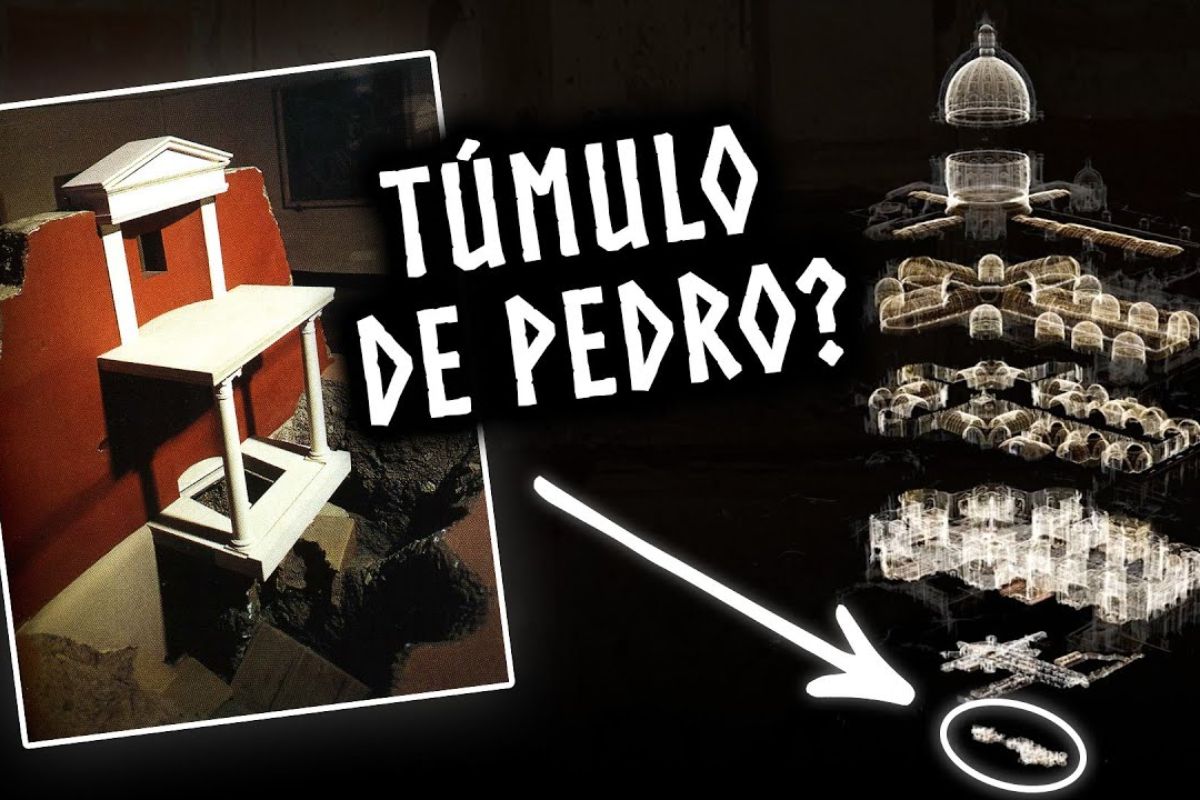
Under the Majestic St. Peter’s Basilica, Layers of History Reveal a Pagan Necropolis, an Ancient Basilica, and the Controversial Site of Peter’s Tomb. Explore the Subterranean Structures of the Vatican.
St. Peter’s Basilica, one of the world’s most iconic landmarks, is just the most visible layer of a much deeper historical complex. Its foundations rest upon an earlier basilica built by Emperor Constantine, which in turn was constructed over an even older necropolis, a true “city of the dead” that pre-dates Christianity. These subterranean structures of the Vatican hold centuries of history.
The central axis of this superposition of buildings is, according to an ancient tradition, the tomb of the Apostle Peter. This journey through the underground layers seeks to examine the evidence and debates surrounding this claim, delving into the deepest parts of Vatican history.
The Vatican Before the Basilica: From Unsanitary Field to Necropolis and Imperial Circus
To understand the subterranean structures of the Vatican, we need to go back to the 8th century B.C. At that time, the area now known as the Vatican was not part of the city of Rome, being part of a larger region called Ager Vaticanus (Vatican Field), on the other side of the Tiber River. The origin of the name “Vatican” is uncertain, possibly linked to prophets (vates), an Etruscan term, or an ancient local god. The Roman historian Tacitus, in the 1st century A.D., described the districts of the Vatican as unwholesome and pestilential lands, and other sources mentioned its infertility.
-
A forgotten cord on the floor of a basement in Vienna leads a plumber to a box containing 30 kilograms of gold with Mozart’s face, hidden before World War II. The treasure, worth 2.3 million euros, was just centimeters away from a worker who ignored the sign a day earlier.
-
A couple buys an old chalet, breaks the kitchen floor for renovation, and finds over a thousand coins of gold and silver hidden since the English Civil War over 4 centuries ago.
-
Rigid bags with their days numbered: new trend prioritizes comfort in 2026.
-
YouTuber creates an excavator equipped with a giant 4.5-meter sword to challenge his brother to a rematch, and the invention quickly goes viral on social media.

Due to these characteristics, and the Roman prohibition against burying the dead within the city (Law of the Twelve Tables, c. 450 B.C.), the Vatican area, traversed by Via Cornelia, became a location for burials. Over time, a vast necropolis, with tombs and mausoleums of the rich and poor, established itself there. Another important structure in ancient Vatican was the Circus of Nero, originally built by Emperor Caligula around 40 A.D. for chariot races and later used by Nero for public spectacles, including executions. According to some traditions, Apostle Peter was one of the victims executed in the Circus of Nero, or in its vicinity.
The First Sacred Layer: The Constantinopolitan Basilica Above the Supposed Apostolic Tomb
Ancient traditions are crucial for understanding the subterranean structures of the Vatican. The New Testament already suggests Peter’s martyrdom, and later sources, such as Origen of Alexandria (c. 230 A.D.) and the “Acts of Peter” (end of the 2nd century), recount his crucifixion in Rome, upside down at his own request. The version that Nero was Peter’s executor solidified over time, and the Vatican was pointed out as the location of his burial. Bishop Eusebius of Caesarea (4th century), citing the presbyter Gaius (early 3rd century), mentions “trophies of the apostles” – memorials or tombs – of Peter in the Vatican and of Paul on the Via Ostiense.
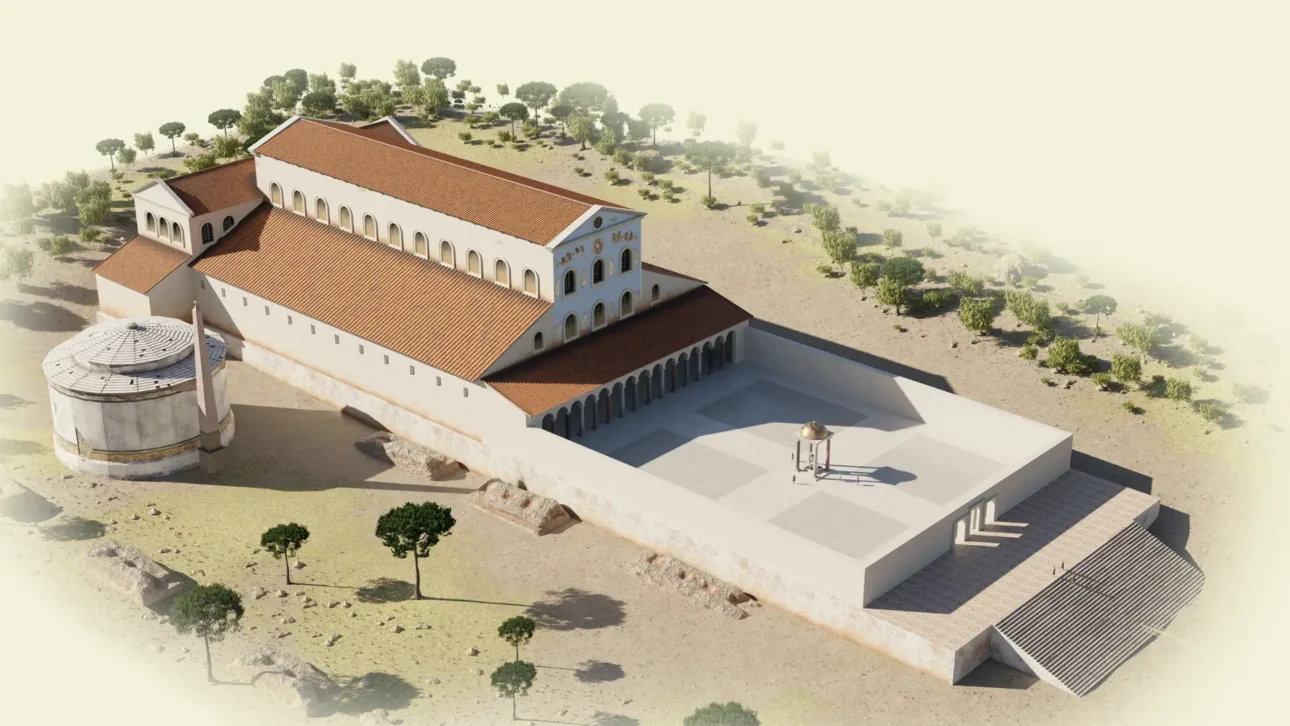
Based on this strong tradition, when Emperor Constantine decided to promote Christianity in the 4th century, he ordered the construction of a large basilica in honor of Peter, precisely in the Vatican. The traditional site of the tomb lay on a steep slope, part of the necropolis. For the construction, the Vatican hill was cut away and the adjacent valley filled in, creating a gigantic platform. Impressively, a large part of the necropolis was preserved under this fill, remaining virtually intact beneath the floor of the old St. Peter’s Basilica, inaugurated around 326 A.D.
The New Basilica and Its Historical Foundations
The ancient Constantinopolitan basilica, one of the first major subterranean structures of the Vatican to be covered, was visited by pilgrims for over a thousand years. However, in the early Renaissance, Pope Nicholas V (1447) considered reforms due to accumulated wear. It was Pope Julius II, in 1506, who made the radical decision to demolish the old basilica and build a new, much larger and more magnificent one, in the Renaissance style.
This new basilica, the one we know today, took over 120 years to complete, being consecrated in 1626. Artists such as Michelangelo, Bramante, and Raphael contributed to its magnificence. It’s crucial to note that, during the construction of the old basilica, Constantine’s builders discovered a structure identified as the “trophy of Peter” mentioned by Gaius. This memorial niche, nearly 3 meters tall, became the central axis of the Constantinopolitan basilica, with the main altar built over it. The Renaissance architects of the new basilica also preserved this centrality, aligning the new main altar with the trophy, which today lies beneath Bernini’s famous bronze baldachin.
The Archaeological Search for Peter’s Tomb in the Subterranean Structures of the Vatican
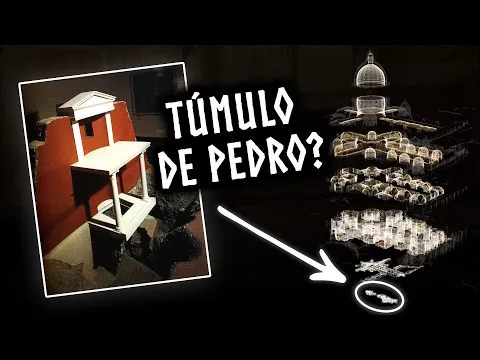

In 1942, during preparations for the tomb of Pope Pius XI in the Vatican grottos, the ancient Roman necropolis was rediscovered. Under the supervision of Pope Pius XII, archaeologists spent a decade excavating this level of the subterranean structures of the Vatican. Among the discoveries, bone fragments were found in a cavity near the “trophy of Peter”.
In the 1960s, these bones were examined by an anthropologist, who concluded they belonged to a single individual: a robust man who died between 60 and 70 years old. This description could match the expected profile of Peter. Additionally, the analysis indicated that the bones were originally covered with purple fabric with gold threads, suggesting veneration. Another supporting argument is the claim by archaeologist Margherita Guarducci that she found, on walls near the trophy, the Greek inscription “Petros eni” (Peter is here), possibly from the 2nd century.
What Is Really Known About Peter’s Mortal Remains?
Despite the seemingly strong evidence, there are significant counterarguments. The reading of the inscription “Petros eni” is not consensual among scholars, with many, including archaeologist Antonio Ferrua (a participant in the original excavations), expressing skepticism. The materials are fragile, and the interpretation remains uncertain. Even if the inscription is authentic, it would only prove that someone, at some point, believed that Peter was there.
A second problem lies with the provenance of the bone fragments. The initial analysis of the bones found in the 1940s indicated remains from several people and animals. The specific bones analyzed in the 1960s, which formed the profile of the “robust man,” came from a box kept by a Vatican official, who claimed to have received them from another official who would have removed them from the original site. This doubtful chain of custody diminishes the archaeological weight of the evidence. Even if the bones were definitively proven to be from the site and fit the described profile, it would not prove to be Peter.
By the late 1960s, Pope Paul VI stated that Peter’s mortal remains had been “convincingly identified,” but the Catholic Church does not define this as dogma. What archaeology unequivocally confirms about the subterranean structures of the Vatican is that early Christians believed that Peter was buried there. Whether they were correct remains a matter of faith rather than irrefutable scientific proof. Regardless, the “trophy of Gaius” in the ancient necropolis served as the fundamental axis for the construction of one of the most important monuments of Christendom.









Seja o primeiro a reagir!