





 Português
  Inglês
  Espanhol
  4 min de leitura
  9 comentários


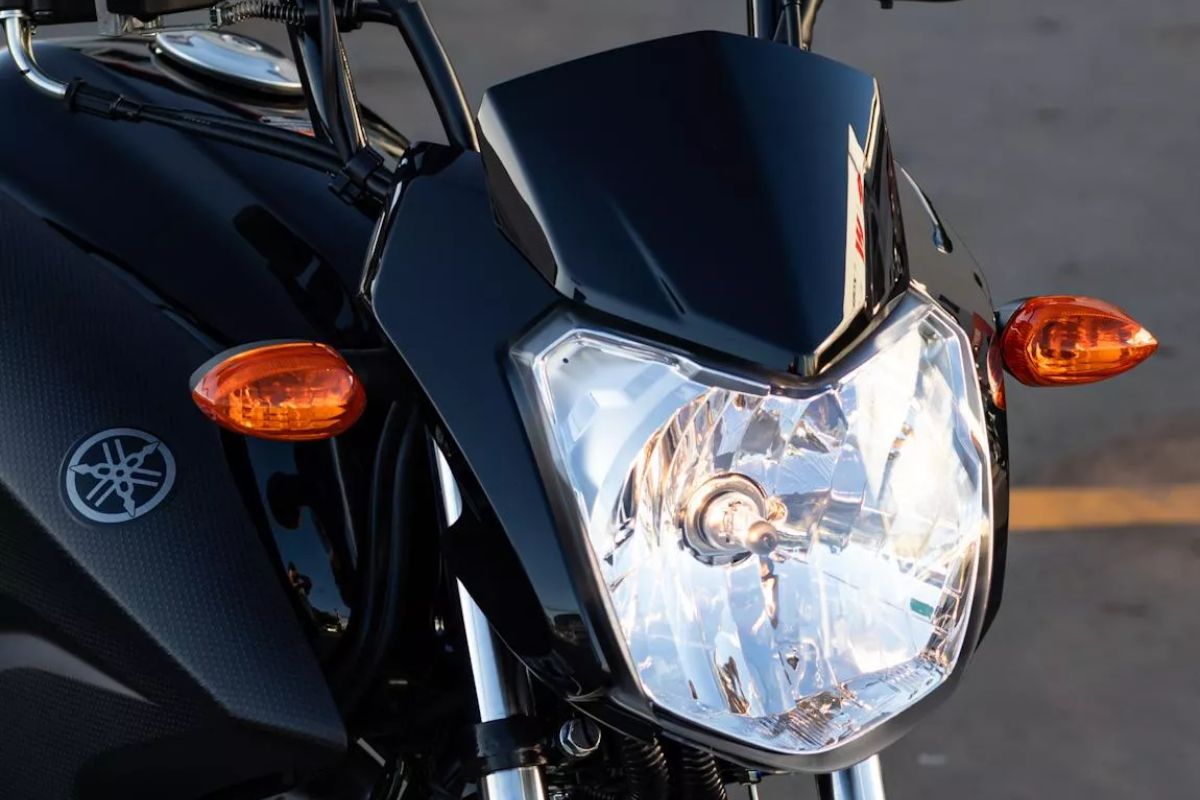


Launched in 2000, Yamaha’s first popular 4-stroke motorcycle in Brazil came with modern design and electric start to face the market leader.
At the beginning of the new millennium, the Brazilian motorcycle market had one synonym: Honda CG. For decades, it reigned almost alone. Then, in March 2000, a competitor arrived to change the game. The Yamaha YBR 125 was not just another launch; it was the first major challenge to CG’s sovereignty, offering a real alternative for the consumer.
With a more modern design, superior engine and features like electric start and disc brake, the Yamaha YBR 125 proved to be a worthy competitor. Its combination of innovation, comfort, and a reliability that became legendary achieved what seemed impossible: forced a new era of competition and evolution in the most important motorcycle segment in Brazil.
The Scenario Before 2000: Honda CG’s Absolute Reign in Brazil
To understand the impact of the Yamaha YBR 125, it is necessary to remember how the market was before it. Since it began production in Manaus in 1976, the Honda CG 125 was more than just a motorcycle; it was the standard vehicle of the country. With its reputation for robustness, mechanical simplicity, and an extensive network of dealerships, the CG dominated the market uncontested.
-
The world’s first octopus farm wants to open in the Canary Islands and is already provoking an international reaction: the plan aims to produce 3,000 tons per year.

-
Drought may be creating stronger superbugs in the soil and helping antibiotic resistance reach hospitals, warns a study highlighting a problem that could grow alongside extreme weather.

-
The biggest scam in history: Napoleon’s France deceived the United States by selling them a territory that was Spanish.

-
Why is the Danakil Desert so dangerous? It has unstable terrain and how extreme temperatures and toxic gases turn the region into one of the most hostile environments on Earth.


Its OHV engine, although old, was known to be indestructible. Honda was also a pioneer in launching the world’s first alcohol-powered motorcycle in 1981. This dominance, however, led to a certain stagnation. The evolutions of the CG were gradual, focused on cost and reliability but not on modernity or design. The market was ready for something new.
March 2000: The Differentiators That Made the Yamaha YBR 125 a Real Threat

The launch of the Yamaha YBR 125 was a strategic move. Aware that it could not compete in volume, Yamaha focused on CG’s weak points: design and technology.
Design and Style: while the CG was conservative, the YBR had a European-inspired design, with a sculpted tank and a sportier look. It was a bike that combined work and leisure.
Technology and Convenience: this was the decisive differentiator. Yamaha offered the YBR 125 in three versions, with the most complete (ED) featuring electric start and front disc brake. At the time, the top-of-the-line CG Titan still used drum brakes, an inferior technology, especially in the rain.
Superior Engine: the heart of the YBR was an OHC engine (overhead camshaft). The CG used an OHV engine (cam in the block). In practice, the YBR’s engine was more modern, vibrated less, and had a smoother and refined operation.
The YBR 125 Against the CG 125 Titan on Paper
Putting the two models side by side, the engineering philosophies become clear. Although both had the same power of 12.5 hp, the Yamaha YBR 125 delivered that power at a lower RPM.
The biggest difference was in torque, responsible for the feeling of “pull”. The YBR offered 1.19 kgf.m at 6,500 rpm, while the CG delivered 1.00 kgf.m at 7,500 rpm. This made the YBR more agile and comfortable in traffic, requiring fewer gear shifts. Coupled with the disc brake and suspension with greater travel, the YBR offered a technically superior package in safety and comfort.
Reliability, Economy, and the Chronic Problems of the YBR
The true test of a motorcycle happens in daily use. Owners of the Yamaha YBR 125 quickly established its reputation. The most commonly used word to describe it is “reliability”. Reports of motorcycles with over 100,000 km without serious mechanical issues are common. Economy is also a pillar, with average consumption rates varying between 30 and 40 km/l.
However, the motorcycle was not perfect. The main criticism was the difficulties and costs of finding parts, especially in small towns, an area where Honda’s immense network always had the advantage. Additionally, its performance was modest, being a strictly urban motorcycle. Over time, some chronic issues, such as play in the crown bearing and cable breaks, were identified.
How the Yamaha YBR 125 Changed the Market Forever


Although it never sold more than the CG, the impact of the Yamaha YBR 125 was transformative. In just two years, Yamaha doubled its market share in Brazil, forcing Honda to react and accelerate the modernization of its own CG.
The YBR’s greatest victory was conceptual. It proved that a utilitarian motorcycle could be reliable, economical, and at the same time have modern design and technology. It gave Brazilian consumers something they didn’t have: a real choice. By doing so, the Yamaha YBR 125 inaugurated a new era of competition that raised the standard for all popular motorcycles in the country, a legacy that benefits motorcyclists to this day.







Tenho uma ybr e 2003.
Saiu da loja e até hoje foi só satisfação.
tenho uma ybr 2005 até hoje estou com ela já se passaram 20 anos
o conforto nem se fala moto silenciosa nunca me deu broblemas
Minha primeira moto também foi uma Ybr 2005 zerada. Moto sem igual. Macia confortável econômica. Em matéria de Maciez conforto e economia a Honda nunca vai superar a Yamaha. Até 42 km litro ela fazia. Foi por 8 anos meu chodo. Aquele azul impecável. Hoje tenho uma fazer 2008 e olha também azul. Pra mim Yamaha é sinônimo de confiabilidade.
Eu tenho uma ybr pra mim, não existe moto melhor que dá Yamaha.