





 Portuguese
  English
  Spanish
  4 min of reading
  0 comments


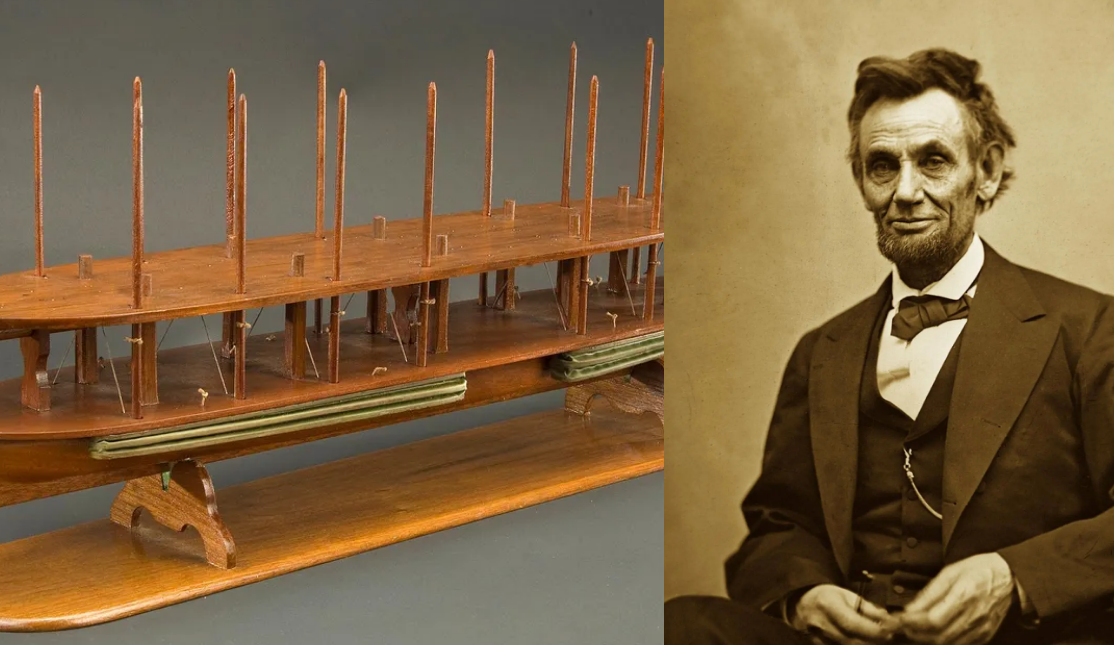
Abraham Lincoln Is The Only American President With A Patent Related To A Device To Help Vessels Cross Sandbars, Highlighting His Inventive Spirit.
When hearing the name Abraham Lincoln, it’s natural to think of his role as president during the American Civil War, his fight for the abolition of slavery, or his tragic death. However, few know that Lincoln holds a unique distinction: he is the only president of the United States to have a patent registered in his name.
Before becoming the 16th president, Lincoln showed a deep interest in mechanical innovations, which led him to create a device to assist river boats to overcome sandbars.
A Surprising Invention From The President Of The United States
On May 22, 1849, patent no. 6,469 was granted to Abraham Lincoln. It described a mechanism for “Propelling Vessels Over Sandbars.”
-
End of the stove: new technology from Xiaomi promises to retire the old stove with a smart pot that prepares up to 16 servings in 24 minutes and has 10 automatic levels controlled by an app.

-
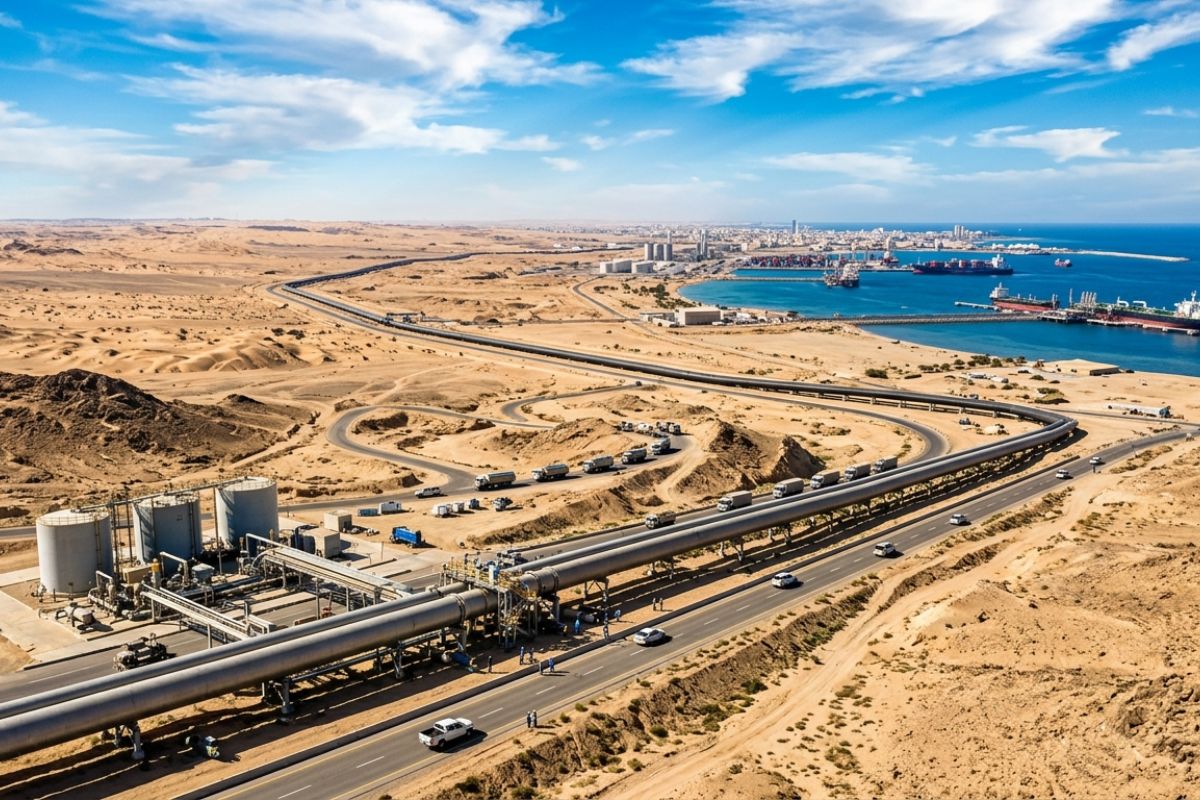
If Ormuz closes, the world freezes: the 1,200 km Saudi Petroline transports oil from the Gulf to the Red Sea, operates near 7 million barrels/day, and becomes a geopolitical weapon in the crisis with the US.
-
Scientists restore seagrass meadows in the open sea.

-
Scientists find about 1 million giant live eggs hatching in an active underwater volcano, discover a natural furnace on the ocean floor, and reveal one of the most unlikely nurseries ever seen in the ocean.

The idea stemmed from practical experiences. As a young man, Lincoln navigated the Mississippi River and the Great Lakes, transporting people and goods. During these travels, he faced situations where boats got stuck on sandbars — a common and dangerous problem at the time.
The patented system consisted of inflatable bellows made of “India rubber cloth or other suitable waterproof fabric.” These bellows would be positioned along the hull of the boat and inflated to lift the vessel enough to overcome underwater obstacles. An ingenious process that, despite never being produced, highlights Lincoln’s inventive side.
The Importance Of Abraham Lincoln’s Patent
Lincoln’s patent is more than a simple technical document. According to Paul Johnston, curator of maritime history at the National Museum of American History (NMAH), the wooden model that Lincoln presented to the Patent Office is one of the six most valuable pieces in the museum’s collection. This is due to both Lincoln’s historical significance and the rarity of his patent.
Lincoln had a clear vision of the role of technological innovation. He believed that patent law “adds the fuel of interest to the fire of genius.”
His enthusiasm for the subject was not limited to words. During his time in the Illinois legislature, Lincoln vigorously advocated for the development of water transportation and canal construction.
Details Of The Model And Mysteries
Although the model of the device is an important part of history, it brings some mysteries. William H. Herndon, Lincoln’s partner in his law office, described Lincoln carving the model in wood and speaking enthusiastically about how it would revolutionize navigation. However, there are indications that the final model may have been made by a specialist in Washington.
Johnston points out an interesting detail: the name “Abram Lincoln” is engraved on the piece. Lincoln, known for correctly spelling his name as “Abraham,” would hardly make such a mistake.
This fact raises the possibility that the model was commissioned. The question remains: could this detail indicate that Lincoln was not the direct author of the model?
Another mystery involves the patent request itself. Although the document accurately describes how the device operates — that by turning shafts, the buoyant chambers would be forced down and inflated with air — Lincoln’s signature is absent.
It is believed that, in the early 20th century, an autograph collector removed the original signature, transforming the document into a historical puzzle.
A Practical Project?
Despite Lincoln’s enthusiasm, the invention was never tested. According to Johnston, the reason may lie in the complexity of the mechanism.
A considerable effort would be required to inflate the chambers two feet deep in the water. Still, Johnston believes that, although the device might have worked, Lincoln’s talents were meant for other achievements.
Lincoln’s involvement with inventions and patents also reflects personal characteristics. His partner Herndon noted that Lincoln had a natural inclination for mechanical devices, likely inherited from his father, who also had technical skills. This curiosity for understanding how things work accompanied Lincoln throughout his life, even as his career took higher turns.
A Unique Legacy
Although his invention did not cause the revolution in navigation that he envisioned, the fact that Abraham Lincoln is the only president of the United States to hold a patent adds a fascinating layer to his legacy.
His interest in innovation and his appreciation for patent laws reveal a lesser-known but equally relevant side of his personality.
The wooden model, preserved in the National Museum of American History, remains a symbol of this inventive facet.
A reminder that, before becoming the president who changed the course of American history, Lincoln was a man driven by curiosity, ingenuity, and the desire to find practical solutions to the challenges of his time.
With information from smithsonianmag.








Seja o primeiro a reagir!