





 Portuguese
  English
  Spanish
  4 min of reading
  0 comments


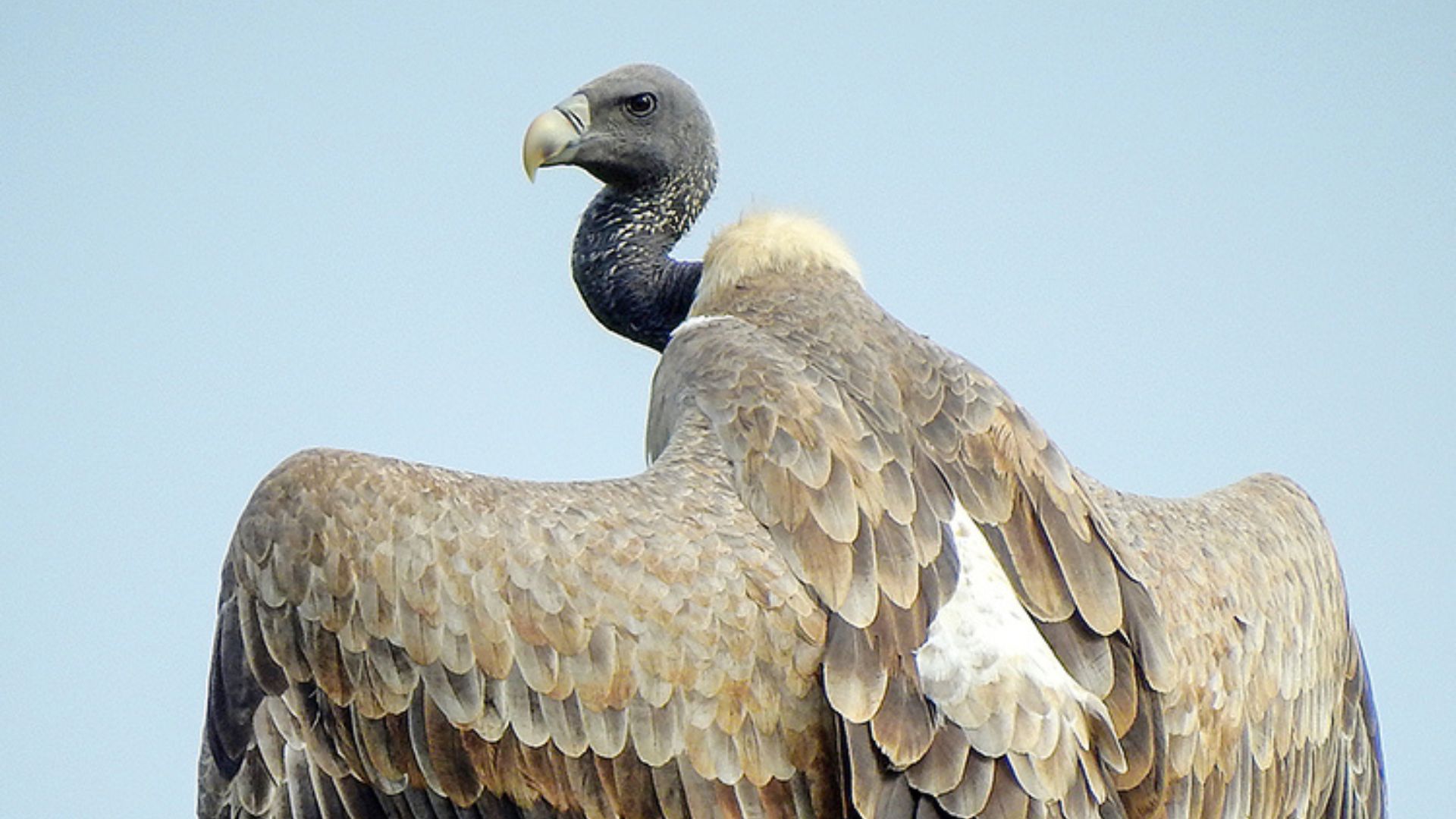
Return of Vultures to India Reveals Direct Impact of a Regulatory Decision Made in 2006, After Population Collapse Linked to Veterinary Drug, with Monitored Releases, Controlled Breeding, and Gradual Restoration of an Essential Ecological Function in the Subcontinent.
A new release of critically endangered vultures in a reserve in central India has brought scavengers back to the forefront of the country’s environmental agenda, almost two decades after a population collapse directly associated with the veterinary use of diclofenac in livestock.
In early January 2026, the Bombay Natural History Society (BNHS) began the gradual release of 15 Indian vultures in the Melghat Tiger Reserve, monitored by satellite trackers and supported by feeding points stocked with carcasses deemed free of toxic drugs.
This initiative is part of a national effort for captive breeding and vulture reintroduction, developed after India banned the veterinary use of diclofenac in 2006, a substance proven to be lethal to these birds when ingested through the carcasses of treated animals.
-
Oldest tree on the planet reappears after 130 years of searches: Wattieza, 385 million years old, was 10 meters tall and had no leaves or seeds; Gilboa fossils in New York solved the mystery in 2007.

-
A 48-square-meter house assembled in hours with 4,000 bricks made of recycled plastic that does not absorb moisture, has natural thermal insulation, and costs less than 90,000 reais in a complete kit.

-
Luciano Hang revealed that Havan’s air fleet has already accumulated more than 20,000 landings, 10,000 flight hours, and 6 million kilometers traveled, and he says that without the planes, the company would never have grown so quickly.

-
A historical discovery in the Andes Mountains reveals a gold deposit valued at 770 billion reais hidden over 4,000 meters above sea level on the border between Chile and Argentina, and the whole world is watching.


The Population Collapse Linked to Diclofenac
The link between the decline of populations and the drug is well documented in the scientific literature since the early 2000s.
During this period, species of the genus Gyps experienced abrupt declines across the Indian subcontinent, coinciding with the spread of the drug in the treatment of cattle and buffalo.
Vultures are specialized scavengers and feed almost exclusively on carcasses.
They play an essential role in the rapid removal of animal remains from the environment, reducing the persistence of exposed organic matter and limiting the proliferation of other opportunistic consumers.

This ecological service collapsed when populations plummeted on a continental scale, creating a functional void that was not compensated for by other species.
How The Drug Affected The Birds Directly
Diclofenac, a non-steroidal anti-inflammatory drug, remains active in the tissues of treated animals shortly before death.
Studies have shown that even low concentrations are sufficient to cause kidney failure and death in vultures that feed on these carcasses.
Modeling and field analyses confirmed that a minimum ratio of contaminated carcasses was sufficient to sustain the observed population collapse.
This data consistently established the causal relationship between the drug and bird mortality.
The Ban of 2006 and the Change of Trajectory
The ban on veterinary diclofenac in 2006 marked a clear inflection point in the species’ trajectory.
Subsequent studies recorded a significant reduction in the rate of population decline of vultures in India and Nepal.
These results supported the adoption of complementary strategies, based not only on legislation but also on active population reconstruction.
This reconstruction began to involve controlled breeding, genetic management, and monitored releases.

Breeding Centers and Preparation for Release
Specialized centers, such as the conservation complex of Pinjore, in Haryana state, have begun to play a central role in this process.
These facilities produce individuals suitable for reintroduction in areas considered environmentally safe.
The release phase is conducted through acclimation protocols known as soft release.
In this model, the birds go through a period in pre-release enclosures before gaining gradual access to the outside environment.
In the Melghat Tiger Reserve, this method was adopted to ensure that the vultures develop natural patterns of flight, feeding, and territory exploration.
Monitoring and Data on Environmental Adaptation
The use of trackers allows for monitoring movements, feeding areas, and survival rates.

This data provides objective information on the birds’ adaptation to the environment and their lack of exposure to toxic drugs.
Similar projects had already been implemented previously in other regions of India.
Releases conducted near Pinjore are considered milestones in the gradual return of the species to the wild.
Monitoring, Safe Carcasses, and Public Policies
Alongside this, public policies and enforcement actions have strengthened control over the use of dangerous veterinary drugs.
This set of measures has consolidated a safer scenario for the survival of vultures in the wild.
Another structural component of the programs is the management of available carcasses.
Local agreements ensure adequate food supply and reduce contamination risks, aligning traditional disposal practices with conservation requirements.
Ecological Effects and Reflections on Public Health
The return of vultures is also associated with documented effects beyond the strictly ecological field.
Public health studies analyzed the impact of the disappearance of these birds on the dynamics of other carrion-consuming animals.
Peer-reviewed research has linked the decline of vultures to the increase in the availability of animal remains for free-ranging dogs.
These changes have had direct consequences for the sanitary risk in densely populated areas.
In this context, the recovery of vulture populations has come to be seen as restoration of an essential environmental function, with direct reflections on ecosystems and human health.
With new releases under permanent monitoring and structured environments to prevent re-exposure to toxic substances, the reintroduction of vultures advances as one of the most documented examples of ecological collapse reversal linked to a regulatory decision.
As these “natural cleaners” reclaim their space in the skies of India, what concrete effects might this return produce on the landscape, public health, and the balance among species that rely on carcass disposal?








-

-

3 pessoas reagiram a isso.