





 Portuguese
  English
  Spanish
  6 min of reading
  0 comments


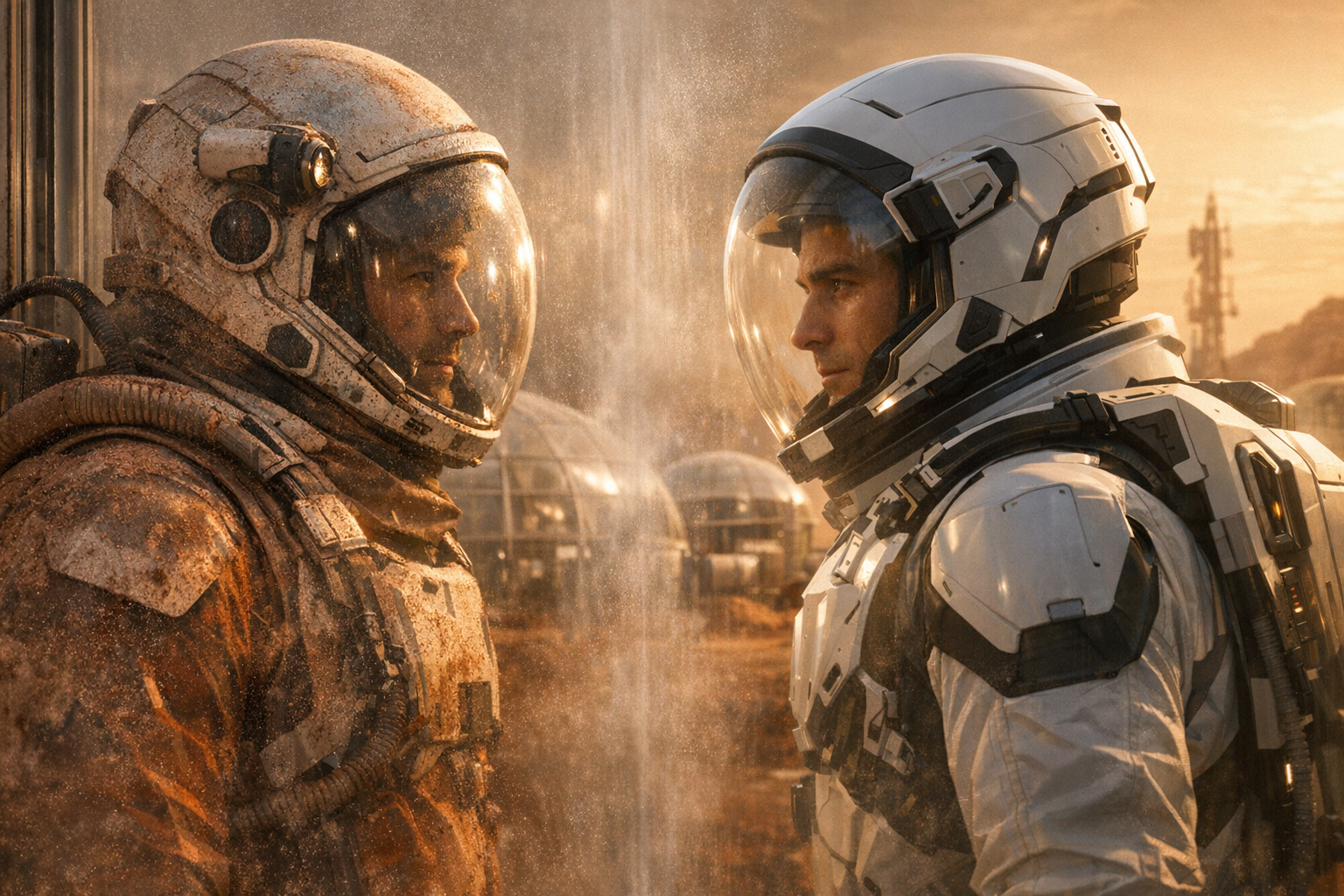
Studies indicate that humans born on Mars may have different immunity and face risks when contacting Earth microorganisms.
Recent analyses published by Scott Solomon in the MIT Press Reader and in Space Babies and Martian Bones have brought attention to a scenario as the idea of colonizing Mars shifts from mere fiction to more concrete plans for human expansion into space. The central point of these analyses is straightforward: humans born on Mars may develop immune systems different from those of Earth inhabitants, creating unprecedented infection risks when there is contact between the two populations. The hypothesis is based on a well-established principle in human biology: the immune system is not born ready, but is continuously shaped by exposure to bacteria, viruses, and other microorganisms throughout life.
According to Solomon, children born on Mars would grow up exposed to only a very small fraction of the microbial diversity present on Earth, because the Martian environment would rely almost entirely on microbes brought by the colonists themselves and biological systems transported to the planet.
In a completely different environment, this interaction would change radically. The most concerning consequence is that microorganisms considered common and relatively harmless on Earth could pose a serious threat to people born on Mars, while microbes adapted to the Martian environment could also create risks in the opposite direction. Therefore, the debate has shifted from mere curiosity in astrobiology to being treated as a potential real health and biosafety issue in a future of permanent human presence outside Earth.
-
Dubai places robots on the front line of firefighting with jets of 2,400 liters per minute and a range of up to 60 meters; these machines take on extreme risk zones and mark the arrival of artificial intelligence in the most dangerous physical work in the world.

-
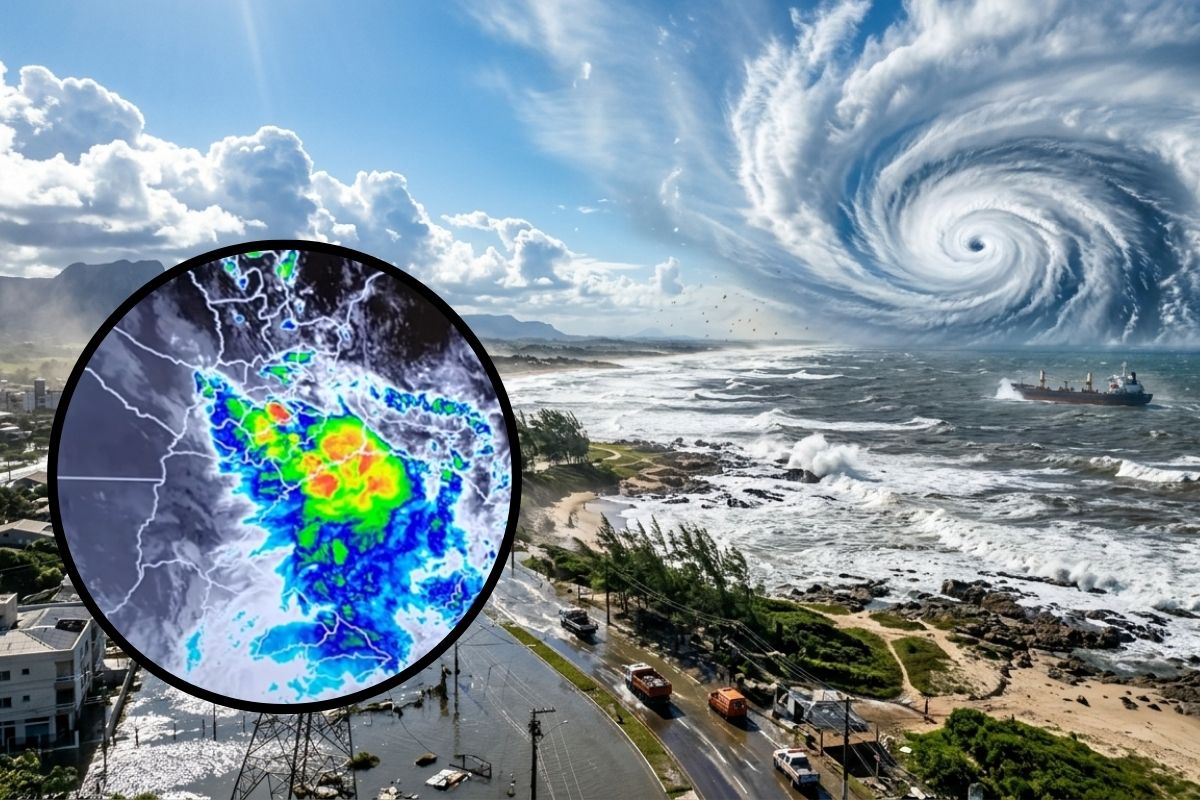
The rain has already exceeded the limit in Rio Grande do Sul, and now the worst is coming: an extratropical cyclone and gusts of 80 to 100 km/h, with a risk of flooding, power outages, and high waves on the coast of Rio Grande do Sul tomorrow.
-
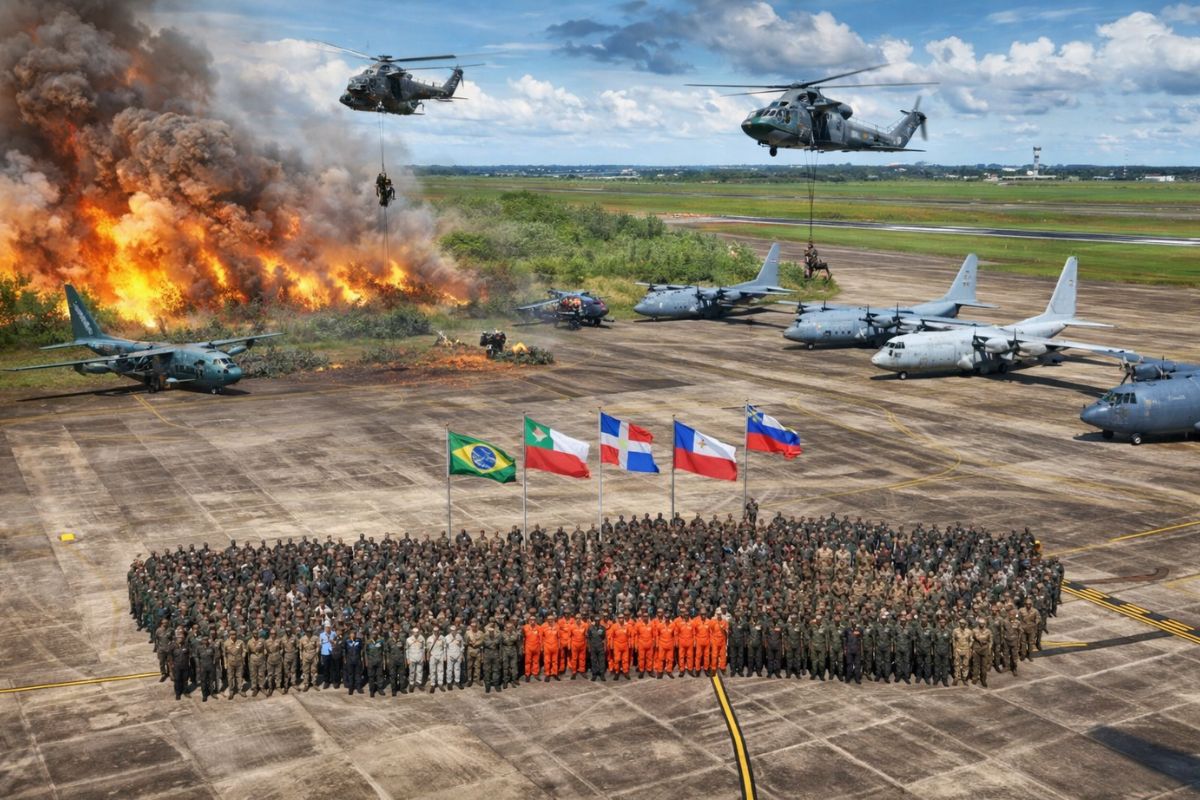
The Brazilian Air Force brings together 13 countries and over 1,200 military personnel in Campo Grande for the largest multinational natural disaster response exercise ever held in Brazil, featuring simulations of forest fires and high-complexity aerial rescues.
-
Sony is preparing the best video game in history with the PS6 expected in 2027, a native handheld running current games, a PlayGo system similar to Smart Delivery, savings of up to 70% in storage, and a new architecture based on the unified SDK 13.

The human immune system depends on constant exposure to bacteria and viruses
On Earth, the human body is in constant contact with a vast diversity of microorganisms. Bacteria, viruses, and fungi are part of the natural environment and play a fundamental role in the development of the immune system.

This process begins at birth and continues throughout life. Constant exposure to different agents helps the body learn to recognize threats and respond efficiently. Studies in immunology show that excessively sterile environments can hinder this learning, leading to dysregulated responses.
This concept, known as the hygiene hypothesis, indicates that lack of contact with microorganisms can profoundly alter how the body responds to infections, something that becomes even more relevant when considering an environment like Mars.
Mars would have a completely different microbiological environment than Earth
Unlike Earth, Mars does not have a known ecosystem with a diversity of natural microorganisms. Any human colony on the planet would depend on controlled, highly sterilized environments isolated from the outside.
This means that colonists would live in closed systems, with strict contamination control. The microbiota present in these environments would be limited, primarily composed of microorganisms brought from Earth and kept under control.
This absence of microbial diversity may reduce the stimuli necessary for the complete development of the immune system, especially over generations.
Over time, this could lead to physiological differences between humans born on Mars and those living on Earth.
Studies with astronauts already show immunological changes outside Earth
Although there are currently no humans living on Mars, research conducted with astronauts on space missions provides important clues about how the body reacts outside the terrestrial environment.
Data collected by NASA and universities show that the immune system undergoes changes in microgravity. Among the observed effects are changes in inflammatory response and reactivation of latent viruses in the body.

Additionally, the human microbiome — the collection of bacteria living in the body — also undergoes changes during space missions. These changes indicate that biological balance directly depends on environmental conditions.
These pieces of evidence reinforce the idea that the human body may react differently in extraterrestrial environments, opening the door to hypotheses about what could happen in a permanent colonization.
Colonists born on Mars could develop different immunity over generations
The hypothesis discussed by scientists goes beyond individual changes and considers the impact over generations. In an isolated environment, with lower microbial diversity, children born on Mars would grow up with a different set of immunological stimuli.
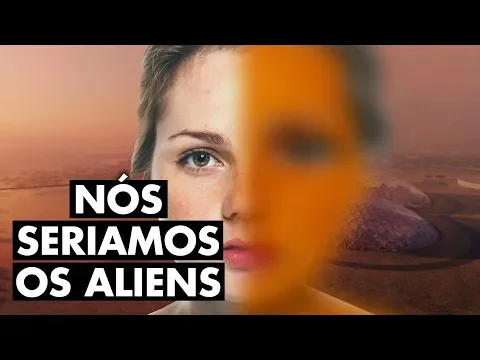
This could lead to an immune system adapted to local conditions, but less prepared to deal with agents present on Earth. At the same time, microorganisms brought by terrestrial visitors could pose unprecedented challenges for this population.
This difference does not necessarily mean a weaker system, but rather a system adapted to another environment, which may generate biological incompatibilities in contacts between the two populations.
Contact between humans from Earth and Mars could require rigorous protocols
In light of this scenario, experts point out that any interaction between Martian colonists and visitors from Earth would require strict sanitary control. Measures such as quarantine, biological monitoring, and the use of isolated environments would be essential to reduce risks.
This type of protocol is already used in space missions, where there is concern about contamination of both astronauts and extraterrestrial environments. In a permanent colony, these precautions would become even more important.
The risk is not only of transmitting known diseases but also of unpredictable reactions of the body to unknown microorganisms, which increases the complexity of the interaction.
Biological isolation may influence long-term human evolution
Some scientists explore the possibility that isolated populations on Mars may, over very long periods, develop distinct biological characteristics. This type of process is known as divergent evolution.
However, this scenario is highly theoretical and depends on multiple factors, including time, complete isolation, and absence of gene flow between populations.
Although the hypothesis exists in the field of evolutionary biology, there is no evidence that this would occur in the short or medium term, especially considering medical and technological advances that may reduce this isolation.
Technology and medicine can reduce some of the risks identified
Despite the concerns raised, experts also highlight that advances in biotechnology may mitigate many of the risks associated with colonizing Mars.
Vaccines, genetic therapies, and advanced microbiome control can help maintain the immune balance of the colonists. Additionally, continuous monitoring systems can identify changes early.
The presence of advanced medical technology tends to reduce vulnerability, making the scenario more controllable than the more extreme hypotheses suggest.
Interest in this type of discussion has increased in recent years with the advancement of space exploration projects led by agencies like NASA and private companies. The possibility of establishing a permanent human presence on Mars has shifted from being merely theoretical to integrating long-term plans. This has led scientists to anticipate potential biological and medical challenges.
The study of these issues allows for the preparation of strategies before colonization occurs, reducing risks and increasing the viability of future missions.
Space colonization may reveal new limits of the human body
The discussion about immunity on Mars is part of a broader set of questions about how the human body reacts outside of Earth. Gravity, radiation, isolation, and microbiological environment are factors that can profoundly influence health.
These challenges show that space colonization involves not only engineering and technology but also biology and medicine at levels that are still little explored.
Understanding these limits will be essential to ensure the survival and well-being of future populations outside the planet, making scientific research a central component of this process.
And you, do you believe that humans could completely adapt to living outside of Earth?
Leave your opinion in the comments and tell us if the colonization of Mars could really create a new form of human life in the future.








Seja o primeiro a reagir!