





 English
  Francês
  Alemão
  Italiano
  Japonês
  Norueguês
  Portuguese
  Spanish
  6 min of reading
  0 comments


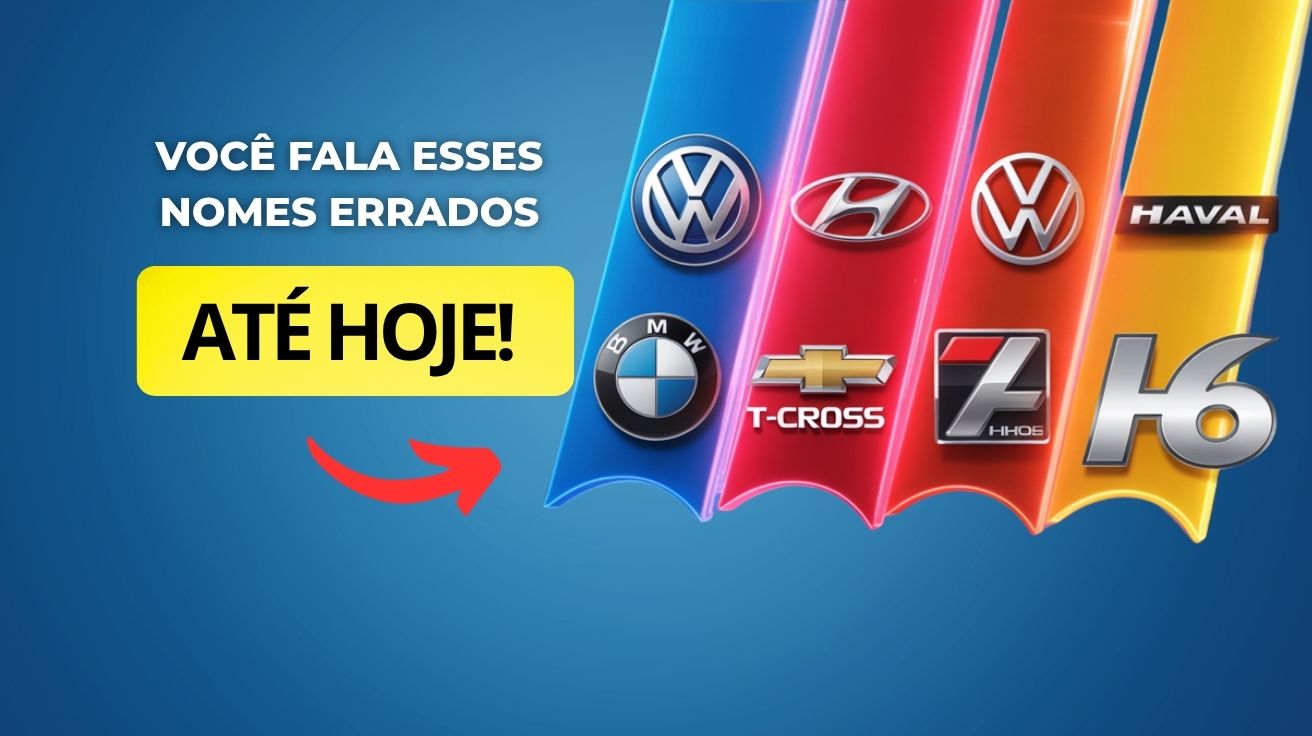
Discover The Correct Pronunciations Of Popular Car Brand Names In Brazil And Avoid Common Mistakes That Even Experts Make. Stay Informed.
Foreign brand and model names are increasingly present on Brazilian streets, especially in the ever-diversifying and constantly renewing automotive sector.
Among so many novelties, frequent doubts arise regarding the correct pronunciation of BYD, T-Cross, GWM Haval H6, Jaecoo, GAC, and many others, which causes confusion even among industry professionals.
The phenomenon is a result of the strong international influence on the automotive industry, along with the Brazilian creativity to adapt foreign words to everyday life.
-
Scientists open a 1-million-year-old capsule in New Zealand and find fossils of 16 species that reveal extinctions caused by volcanoes and climate changes before humans.

-
Explorers find Roman treasure trapped between rocks on the seabed for nearly 1,600 years and reveal a desperate attempt to hide 53 gold coins during the invasions of the Empire.

-
Archaeologists discover Roman vase buried for over 2,000 years with more than 175 intact gold and silver coins, revealing a desperate strategy to protect wealth during the collapse of the Empire.

-
With 241 meters, 48 thousand tons, and a structure designed to accompany aircraft carriers at sea, the Chinese ship that refuels fleets in motion was born to push Beijing away from the coast and has become the hidden gear of its naval projection.


With the arrival of new manufacturers and models mainly from Asia and Europe, it is common to hear unexpected and often incorrect variations in the names of these cars.
While some names are pronounced according to their spelling, others follow rules of the original language, usually English, German, or Mandarin.
This linguistic diversity fuels discussions not only among consumers but also in dealerships, workshops, and industry events.
GAC: How To Pronounce Chinese Brands In Brazil
The growing presence of Chinese brands in the national market has expanded the range of doubts.
A recent example is GAC, a manufacturer that entered Brazil bringing five different models, among electric and hybrid vehicles.
According to company representatives, the correct pronunciation is to say each letter separately: “G-A-C”, and not “Gac” as in Portuguese.
Among the vehicles offered are the Aion ES sedan and the Aion Y Plus, Hyptec HT, Hyptec V, and GS4 SUVs, the latter being a hybrid.
Some of these models feature innovations, such as gullwing-style doors, a characteristic of the Hyptec HT.
BYD: Correct Pronunciation And The Meaning Behind The Acronym
In the case of BYD, which has established itself in the country with options like the Dolphin Mini, uncertainties regarding the correct pronunciation also arise.
Many people still use “Bi Ai Di” or simply “BID,” but the correct form, according to the company’s standard, is “Bi Uai Di”, reflecting the sound of the expression in English “Build Your Dreams” (“Construa Seus Sonhos,” in free translation).
This acronym carries the concept of innovation and aspiration, a trademark of the manufacturer that has ranked among the leaders in electrified vehicles in Brazil since 2023.
T-Cross: English Influences The Pronunciation Of Compact SUVs
Among the most successful SUVs, the Volkswagen T-Cross stands out not only for its performance but also for the way its name is pronounced.
Although many insist on saying “Tê-Cross,” the appropriate way, following English pronunciation, is “Ti-Cross”.
The model, launched in 2019, quickly won over the Brazilian audience and is among the best-selling compact SUVs in the country.
In addition, the influence of other foreign names, such as Hyundai Creta, contributes to the variety of pronunciation or adaptation forms in the national market.
Haval H6 And Jaecoo: How To Properly Pronounce The Names Of New Brands
Another emblematic example is the GWM Haval H6, a hybrid SUV that is part of the new generation of electrified vehicles available to consumers.
The GWM brand, an acronym for Great Wall Motors, and its Haval line (whose name should be read as “Rával”) generate doubts not only among buyers but also among sellers and communication professionals.
Pronunciations such as “Ravál” or “Aval” become common, although they are incorrect according to the international standard adopted by the manufacturer.
The Jaecoo, a partner of Omoda and responsible for producing the Jaecoo 7 – a plug-in hybrid SUV – is often subject to varied interpretations regarding its name.
Despite the spelling suggesting a typical Portuguese reading, the correct pronunciation, according to English phonetics, is “Djeico”.
This trend of adapting foreign phonetics can be observed in various other brands present in Brazil.
Traditional Brands: Correct Pronunciation Of Established Names
In addition to names that have recently arrived in the Brazilian market, several traditional brands are also frequently questioned about how to correctly pronounce automotive names.
Check out examples that illustrate how even well-known names can generate confusion:
Porsche – The name of the German sports car manufacturer is often said as “Porsha” or simply “Porsh.”
The correct pronunciation, however, is to say it with two syllables: “Pors-che”, with the final “e” being audible, albeit subtle.
This detail distinguishes those who are truly familiar with the automotive world.
Hyundai – A very successful Korean brand in Brazil, Hyundai is called by many names, such as “Riondai,” “Rundai,” or “Hiondai.”
However, the pronunciation closest to Korean and officially adopted by the company is “Hyun-deh” (approaching “Chion-dê”).
Interestingly, Hyundai itself has run campaigns clarifying the correct way to say the name in the country.
Volkswagen – Despite being one of the best-selling brands in Brazil for decades, many people still struggle to pronounce Volkswagen.
In German, the “V” sounds like “F,” and the “W” sounds like “V,” resulting in “Folks-va-gen”.
However, here, it is more common to hear “Volksvaguen” or even “Volksvágão.”
BMW – Another prestigious German brand, BMW, is known by its initials.
In Brazil, it is often pronounced “Bê-Em-Dáblio” or “Bimêvé.”
In Germany, the correct pronunciation is “Bey-Em-Vey” (referring to Bayerische Motoren Werke, or “Bavarian Motor Works”).
Chevrolet – Despite being globally famous, the American manufacturer founded by Louis Chevrolet has a name of French origin.
The correct pronunciation would be “Shev-ro-lê”, with the final “t” being silent, unlike the Brazilian adaptation “Chev-ro-let.”
Audi – A traditional German brand, the correct way to say it is “Áudi”, with “au” as in “album.”
Expressions like “Óudi” or “Aúdi” are incorrect but common among consumers and even in local advertising campaigns.
Peugeot – Of French origin, the correct name is “Pê-jô”, with the typical nasal sound of French.
In Brazil, many say “Pei-giót” or “Pei-jot,” following the spelling, which does not correspond to the manufacturer’s official pronunciation.
Subaru – A Japanese brand that became popular in the 2000s, particularly with sports models, the correct pronunciation is “Su-ba-ru”, keeping the “u” at the end.
The most frequent mistake is saying “Subáru” or “Súbaru.”
Nissan – Another prominent Japanese manufacturer, Nissan should be pronounced as “Nissán”, with emphasis on the last syllable, and not “Níssan” as many say.
Škoda – A Czech brand that is gaining traction in Brazil, its name is correctly read as “Shko-da”, with the “Š” representing the “sh” sound.
The pronunciation “Skoda,” as it is spelled, is the most common among Brazilians, but it is not correct.
Other Notable Examples In Brazil
Many other names present in the national market also provoke debates and doubts.
Check out more brands and models with frequently adapted pronunciation:
Renault – The correct way is “Rê-nô”, with the final “t” being silent, as per French.
The pronunciation “Renolt” is common but incorrect.
Citroën – It is pronounced “Sitruén”, with the accent at the end, and not “Citrôen” or “Citrôn.”
Kia – The correct form is “Ki-a” and not “Kia” as it is read in Portuguese, with a short “i.”
Jaguar – Although the brand is English, many say “Jag-u-ar.”
The official form of the company is “Djáguar”, with the “J” as in “John” in English.
Land Rover – It is “Lend Rou-ver”, and not “Land Rôver” in literal Portuguese.
Why It Is Important To Know The Correct Pronunciation Of Automotive Names?
In the current scenario, where technological innovations and hybrid and electric models rapidly gain ground, knowing and using the correct pronunciation of BYD and other brands is not just a matter of etiquette.
This shows respect for the origin of the brand, facilitates international communication, and avoids embarrassment in negotiations, events, and live broadcasts.
Industry professionals, digital influencers, and attentive consumers value the proper use of names, contributing to the dissemination of reliable information aligned with global standards.
The constant transformation of the market requires frequent updates.
Data from June 2025 indicates that Brazil remains one of the main hubs for the expansion of electrified vehicles, reinforcing the arrival of new brands and, consequently, more foreign names with specific pronunciations.
According to the National Association of Motor Vehicle Manufacturers, the number of international brands in the country increased by over 20% in the last two years, bringing even more diversity of names and pronunciation styles.
Each year, the Brazilian automotive market reinvents itself, whether through the arrival of hybrid SUVs, compact electric vehicles, Chinese brands, or the renewal of European manufacturers.
In this context, mastering how to correctly pronounce automotive names is an increasingly valued skill – both for professionals and the general public.
Do you know other car names or brands that are often mispronounced in Brazil? Share in the comments and help enrich this list!








Seja o primeiro a reagir!