






 Portuguese
  Spanish


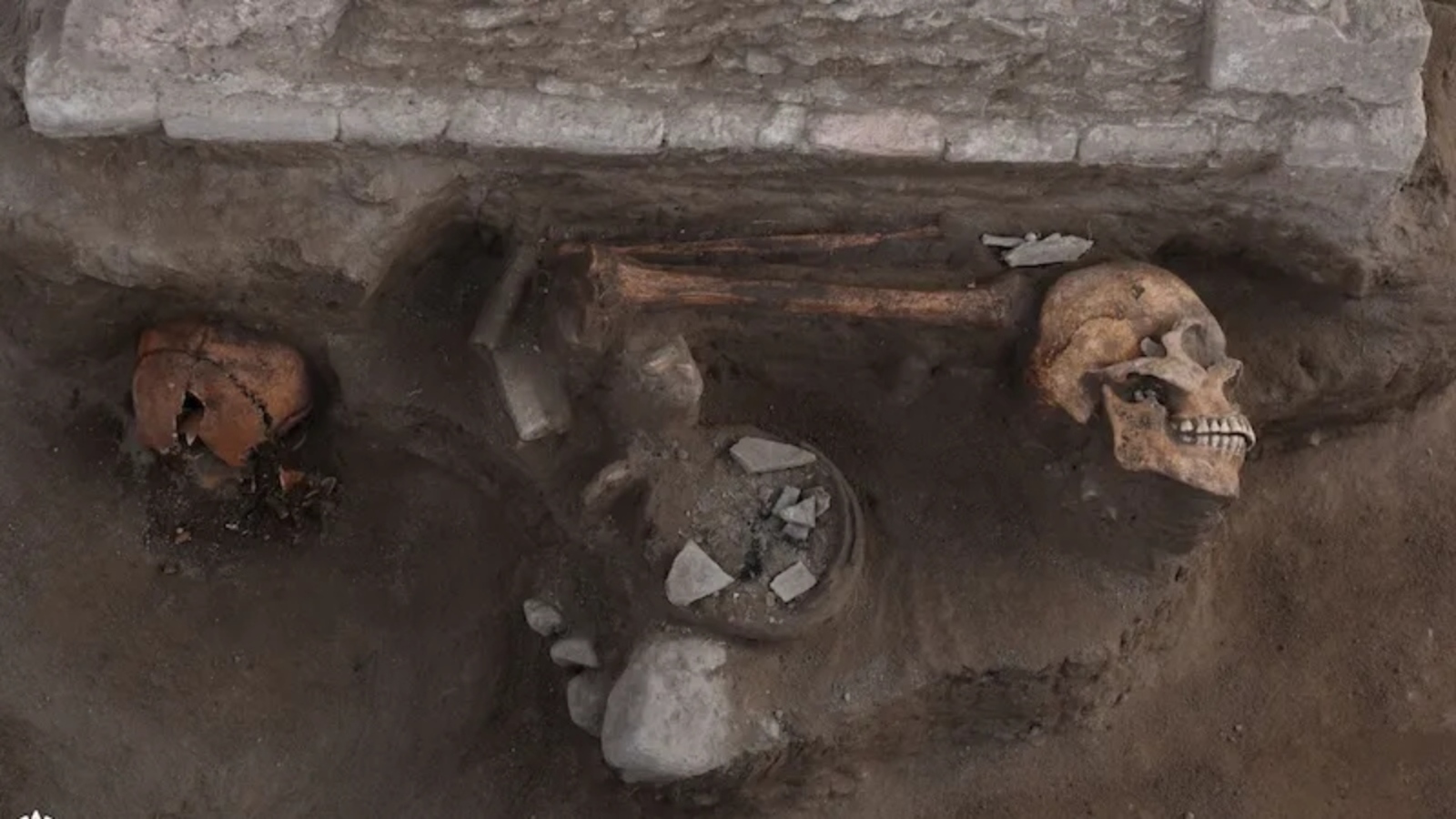
Discovery of Toltec altar in Tula, with human skulls, bones, and obsidian knives, reinforces evidence of sacrificial rituals and expands knowledge about Mesoamerican social organization
Archaeologists in Mexico identified a Toltec stone altar used in human sacrifice rituals over 1,000 years ago, during excavations related to a transportation project near Tula, 88 kilometers north of Mexico City, expanding knowledge about ritual practices and social organization of the ancient civilization.
Discovery near Tula
The discovery occurred near the archaeological site of Tula, the ancient capital of the Toltec Empire. The excavations were linked to a transportation project in the region.
In addition to the Toltec altar, researchers found human bones, obsidian knives, and ceramic vessels. The set indicates ritual use of the area.
-
Brazilians Earn Up to $120 an Hour Training AI Systems, Despite Lacking Programming Skills or Degrees

-
In Alaska’s -40°C Cold, a Scientist-Turned-Farmer Uses Vegetables’ Heat to Store Food Without Power
-
Oil Company Robots Discover 3,300-Year-Old Canaanite Shipwreck in the Mediterranean, Proving Ancient Mariners Navigated Open Seas Using Stars Long Before Historians Thought

-
Helicopter Drops 180 Tons of Sand and Gravel on Swedish River to Revive Ecosystem Damaged by Decades of Exploitation



The structure was described as a momoztli, a Nahuatl term for this type of altar. It is square-shaped, about one meter by one meter, and consists of three layers of stone.
Human bones and offerings
During the work, four human skulls and several leg bones were recovered. These remains were distributed on three sides of the altar.
According to Víctor Francisco Heredia Guillén, the remains likely belong to individuals sacrificed as part of offerings.
He stated that this is indicated by the location of the materials in specific sections of the structure.
Heredia also said that it is not possible to know if there are other underground remains that cannot be physically seen.
Indications about the complex
Remains of walls around the structure suggest that the altar was in a courtyard. Adjacent areas also indicate the existence of rooms that may have been part of a larger complex.
According to the presented interpretation, this set could correspond to a palace or a residence linked to the elite of Tula.
Tula played a central role in Mesoamerica between the fall of Teotihuacán, around 550 A.D., and the rise of Tenochtitlán in 1325. The city flourished as the Toltec capital between 950 and 1150.
Rituals at the Toltec peak
Researchers believe the altar dates from the peak of Toltec dominance, a period when the group was already known for its warrior tradition. There is evidence that human sacrifices occurred after military victories.
One of the skulls appears to be connected to part of the spinal column, suggesting ritual decapitation. Heredia explained that these acts were still performed with obsidian or flint knives.
Studies on the victims
Despite the evidence, there are still open questions about the identity of the victims.
Anthropological studies should indicate the sex of the individuals, while chemical analyses may reveal whether they came from the region or other areas.
For Claudia Curiel de Icaza, each discovery like this expands knowledge about one of the great civilizations of Mesoamerica.
The findings also reinforce the importance of Tula and offer clues about its rituals.
With information from Aventuras na História.









Be the first to react!