





 Portuguese
  English
  Spanish
  5 min of reading
  25 comments


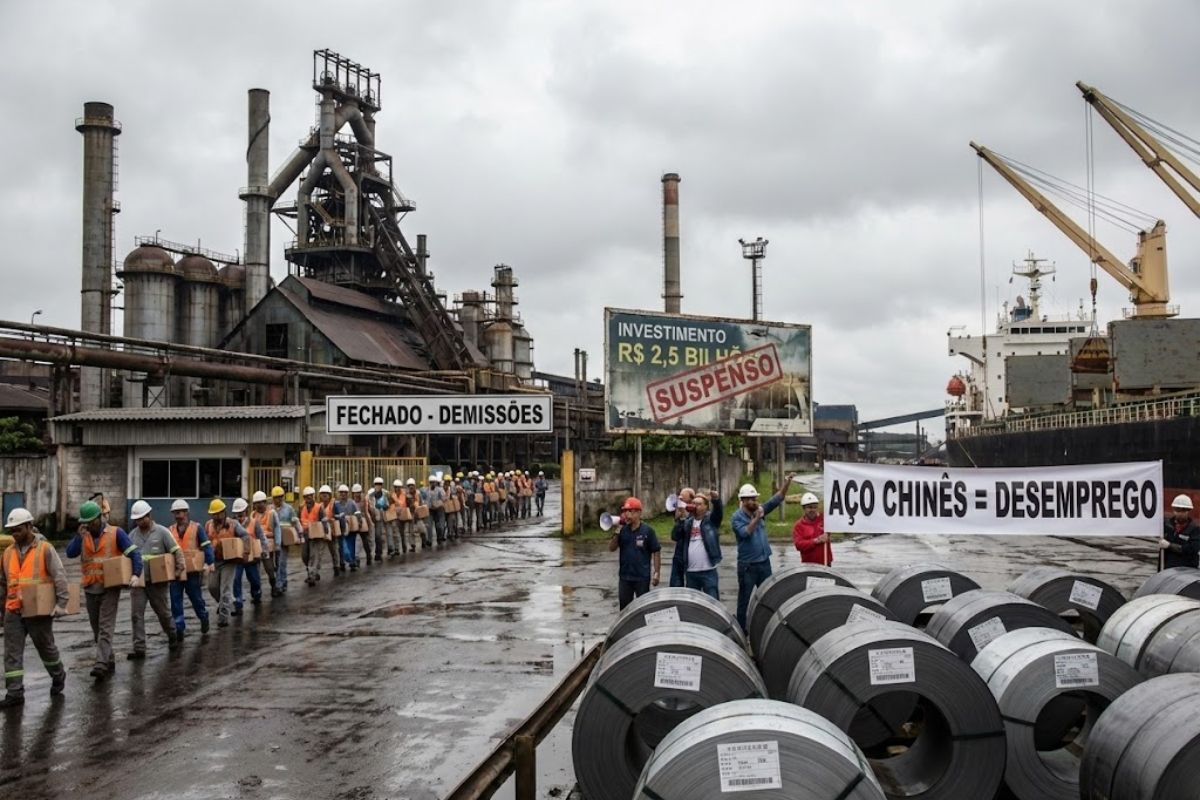


Pressed by Influx of Chinese Steel, the Brazilian Steel Industry Has Already Shut Down Blast Furnaces, Laid Off 5,100 Workers, and Frozen R$ 2.5 Billion in Investments, While Trying to Increase Import Tariffs and Reopen with Trump Access to the US Market Without Surcharge on Each Ton of Exported Steel in the Future.
The advance of cheap Chinese steel on the Brazilian market has already shut down blast furnaces, cut jobs, and frozen investments. Data from the Brazilian Steel Institute released this Tuesday (16) shows that, until November of this year, steelmakers in the country reduced 5,100 jobs and suspended R$ 2.5 billion in projects.
Between January 2024 and November 2025, the price of Chinese steel coils plummeted in international quotes, exacerbating the crisis. As imports grow and domestic production shrinks in 2025, the sector is pressuring Brasília for higher tariffs and is seeking with Donald Trump the end of the 50% tariff in the United States and the resumption of the quota system from 2018.
Blast Furnaces Shut Down and 5,100 Jobs Lost
According to the Brazilian Steel Institute, steel companies in the country have shut down, until November, four blast furnaces, one steel mill, and five minimills, semi-integrated plants that melt scrap in electric furnaces.
-
Elderly individuals aged 65 or older who have never contributed to the INSS can receive R$ 1,621 per month in 2026 without having paid any contributions in their lifetime: learn how the benefit works that already supports nearly 7 million Brazilians.

-
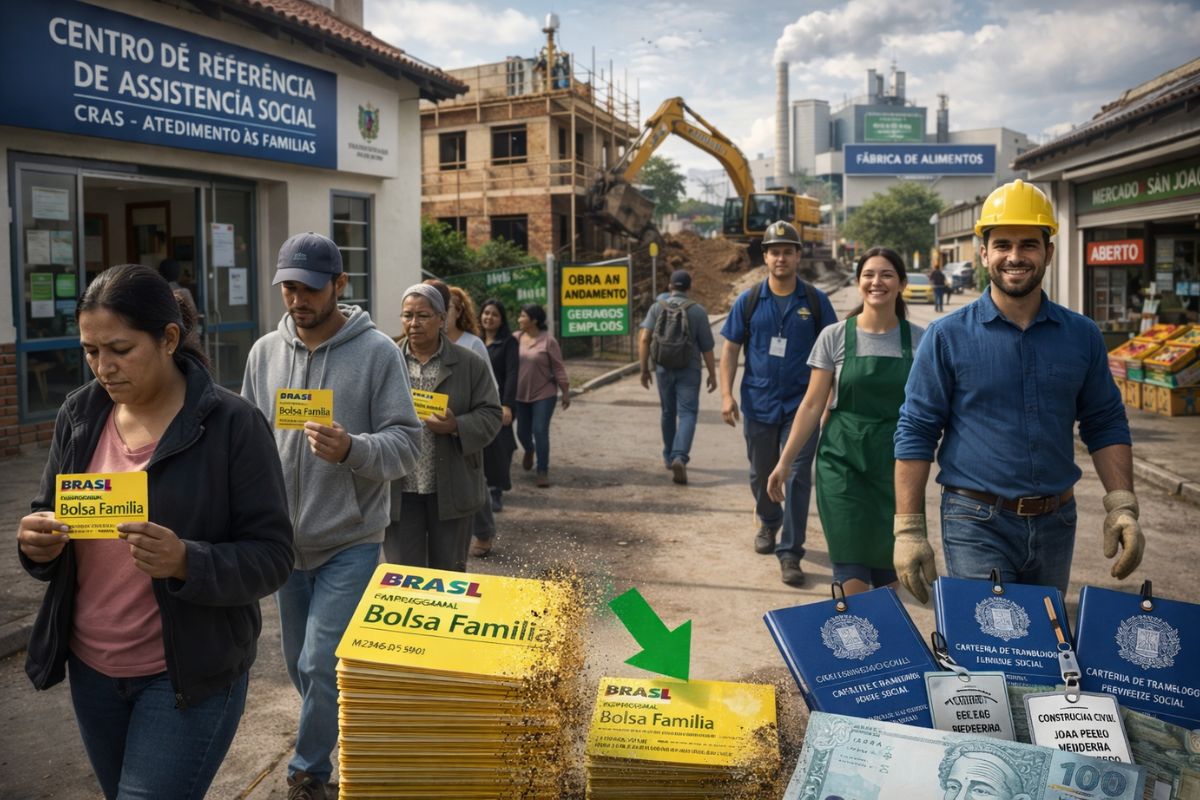
The gaucho city reduced the number of Bolsa Família beneficiaries by almost 40% in just a year and a half with active outreach that connects each registered person directly to job vacancies in Bento Gonçalves in Rio Grande do Sul.
-
The bluest city in Brazil has just gained a new floating bridge for the free crossing between the island and the mainland, connecting residents and visitors to the historic center of São Francisco do Sul every day of the week.

-
In a silent race, Shopee signs a mega contract in Guarulhos and accelerates the e-commerce war with faster deliveries, pressured shipping, and a new threat to rivals in Brazil.


The drop in demand for domestically produced steel in 2025, compared to last year, made it unfeasible to keep these units operating at full capacity.
In addition to the shutdown of heavy equipment, the steel sector has already eliminated 5,100 direct jobs this year and frozen R$ 2.5 billion in planned investments, in an environment that steelmakers themselves classify as one of asymmetric competition with imported steel, especially from China.
The immediate effect of the Chinese steel offensive is a combination of unemployment, idle capacity, and postponement of new industrial projects in Brazil.
Steel Imports Surge and Change Market Balance
Strangled by cheaper foreign steel, the local industry sees imports continuing to rise. The Brazilian Steel Institute projects that by the end of 2025, imports of crude steel will grow 7.5% compared to 2024, while rolled steels are expected to increase by 20.5%.
By November, Brazil had already imported 5.4 million tons of rolled steel, against an annual average of 2.2 million tons between 2000 and 2019.
Of the total brought in 2025, 64% of the tons came from China, further concentrating dependence on the Asian country.
Additionally, another 6.2 million tons of steel reached the Brazilian market indirectly, embedded in end products such as appliances, automobiles, and machinery, which increases pressure on national mills even when the product does not enter through the traditional customs classification of steel.
Fall in Price of Chinese Steel Fuels Dumping Suspicions
The Chinese offensive relies, according to the Brazilian Steel Institute, on strategies deemed illegal for support from the Chinese government to its steel chain.
Numbers from Platts, a global pricing monitoring platform, show that the price of Chinese hot-rolled coils fell from $560 in January 2024 to $454 in November 2025.
This drop occurs during the same period when the margins of Chinese mills are shrinking, which, for the institute, is a sign of dumping: when companies start selling steel abroad below cost or at prices below those practiced in the domestic market to weaken competitors.
In the view of Brazilian industrialists, the steel arriving from China today would be sold at prices incompatible with fair competition.
Steel Production in 2025 Shrinks and Projections Are Revised
The scenario of strong imports led the Brazilian Steel Institute to downwardly revise the production estimates once again.
The initial expectation of a 0.8% decrease in crude steel production in 2025 has been replaced by a drop of 2.2%.
The new projection indicates 33.1 million tons produced in the year, with 21.1 million intended for the domestic market and 10.2 million for exports, the latter with an increase of 6.9% in projection compared to the previous scenario.
In practice, the sector sees weaker domestic steel consumption, partially replaced by imported products, while increasing export efforts.
For industrialists, Brazil is losing ground in its own steel market right at the moment when it has heavily invested to expand installed capacity.
Steel Companies’ Profits Plunge and Sector Demands Higher Tariffs
In the third quarter of 2025, the EBITDA of steel companies with facilities in Brazil totaled R$ 2.8 billion, almost half of what was recorded in the same period of the previous year.
The EBITDA margin fell from 12.9% to 7.7%, reflecting the drop in internal steel prices and greater competition from imported products.
To try to curb the advance of foreign steel, the government renewed in May the quotas for the entry of 16 types of steel into the country, a measure welcomed by companies.
About 76% of the products covered by this quota regime originate from China, but the initiative is still considered insufficient by steelmakers.
Today, steel import tariffs range from 9% to 16% on products covered by the measure, with an additional 25% rate applied to volumes that exceed defined quotas.
Even so, the Brazilian Steel Institute has started to openly advocate for an increase in these tariffs to rebalance internal prices and preserve jobs in the steel chain.
50% Tariff in the US and the Bet on a New Agreement with Trump
In parallel to the domestic dispute, Brazilian steelmakers are facing the impact of the 50% tariff that the United States has begun to apply to any type of steel, regardless of the country of origin.
The measure directly affects semi-finished steel exported by Brazil, one of the main destinations for national production.
According to the executive president of the Brazilian Steel Institute, Marco Polo de Mello Lopes, the strategy now is to convince the government of Donald Trump to remove this surcharge on Brazilian steel and revive the quota system created in 2018.
Under that model, companies in the country could send up to 3.5 million tons of semi-finished steel per year to the United States without paying tariffs.
The executive recalls that Trump had already adopted a similar move in 2018 and assesses that if the ongoing negotiation is successful, Brazil would resume operating under a quota exemption, while the 50% tariff would remain applied to other sales outside this limit.
In your opinion, should Brazil prioritize higher tariffs to contain Chinese steel and protect jobs in steel mills or bet on trade agreements and productivity to compete on price?








Nem a Arcelor consegue competir com a china e outras alternativas são viáveis já que o minério está com menor demanda nacional q vende mais caro devido aos impostos altos .
É triste o meu comentário: Olha só o descaso deste atual governo para com o povo brasileiro entregando de bandeja nossos **** para China. Cadê o tal “sindicato dos metalúrgicos”?
Faz o L **** eleitoral. Depois do leite derramado, não adianta mais chorar.
Sei muito bem o que passam os nordestinos nas mãos dessa **** comunista. A cada dois anos (eleições municipais, estaduais e federais) vendem os seus votos a troco de migalhas e depois ficam rastejando atrás daqueles que nem ficam presentes nos seus devidos currais eleitorais.
Essa **** de políticos **** são cruéis com todos que realmente trabalham em prol da nação.