





 Portuguese
  English
  Spanish
  4 min of reading
  0 comments


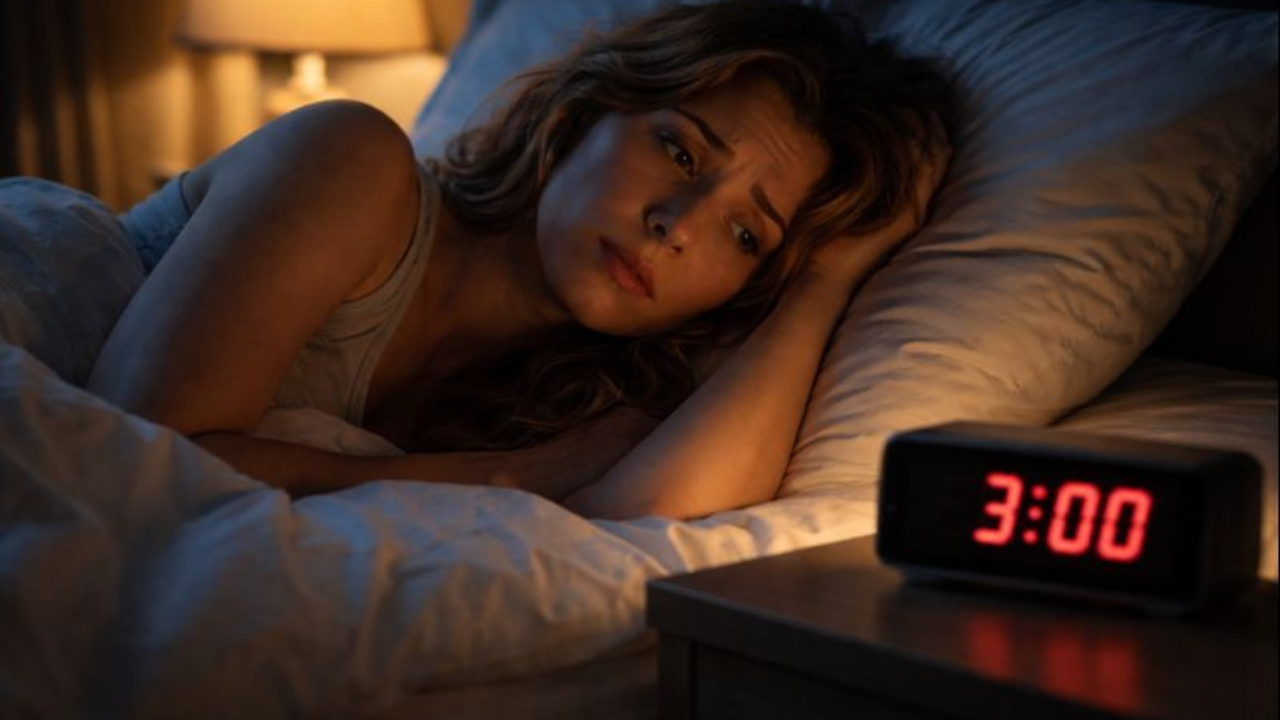
Segmented Sleep Explains Why Waking Up at Night Is Natural and How the Circadian Rhythm Changed with Modernity.
Waking up in the middle of the night, often around 3 a.m., is not necessarily a sign of nighttime insomnia or a health problem.
Historical and scientific studies show that segmented sleep, a common practice throughout much of human sleep history, divided nighttime rest into two periods: the so-called first sleep and second sleep.
This pattern has only been abandoned in recent centuries, mainly due to social and technological changes and artificial lighting, which altered the circadian rhythm.
-
He started running at 66 years old, broke records at 82, and is now a subject of study for having a metabolic age comparable to that of a 20-year-old, in a case that is intriguing scientists and inspiring the world.

-
Oldest tree on the planet reappears after 130 years of searches: Wattieza, 385 million years old, was 10 meters tall and had no leaves or seeds; Gilboa fossils in New York solved the mystery in 2007.

-
A 48-square-meter house assembled in hours with 4,000 bricks made of recycled plastic that does not absorb moisture, has natural thermal insulation, and costs less than 90,000 reais in a complete kit.

-
Luciano Hang revealed that Havan’s air fleet has already accumulated more than 20,000 landings, 10,000 flight hours, and 6 million kilometers traveled, and he says that without the planes, the company would never have grown so quickly.


What Is Segmented Sleep and Why Was It Natural
For thousands of years, sleeping eight hours straight was not the dominant pattern.
Segmented sleep consisted of two blocks of nighttime rest, separated by a waking interval that could last an hour or more.
This interval was not seen as a problem, but as a natural part of the night.
Historical records from Europe, Africa, and Asia indicate that people would lie down shortly after sunset, sleep for a few hours, wake in the middle of the night, and return to sleep until dawn.
This pattern profoundly shaped the history of human sleep.
Second Sleep as a Moment of Conscious Activity
The period between the first and second sleep was not considered lost time. On the contrary, it was a calm and conscious moment.
Many people would get up for simple tasks, such as feeding animals or rekindling the fire, while others remained in bed.
Letters and diaries from the pre-industrial era recount activities such as reading, writing, praying, and quiet conversations between family members or neighbors.
Moreover, many couples used this interval for intimate relations, something widely mentioned in documents of the time.
Historical Records Confirm the Practice
Classical literature also reinforces the existence of segmented sleep.
Works by authors like Homer and Virgil mention “the hour that ends the first sleep,” indicating that the division of night into two periods was something common and culturally recognized.
These accounts help to understand that nighttime awakening was part of human life, not a sleep disorder.
How Modernity Eliminated Second Sleep
The disappearance of second sleep occurred gradually.
The introduction of artificial lighting, initially with oil lamps and later with electric light, transformed the night into a productive period. People began to sleep later, reducing the total time of darkness.
Additionally, the Industrial Revolution imposed rigid work schedules, favoring a single block of rest.
By the early 20th century, the model of eight uninterrupted hours of sleep had already replaced the historical pattern.
Circadian Rhythm and the Impact of Artificial Light
From a biological standpoint, exposure to light at night directly interferes with the circadian rhythm, the internal clock that regulates sleep and wakefulness.
Household light before bedtime delays the production of melatonin, a hormone essential for inducing sleep.
This delay reduces the natural tendency to wake up at night and hampers adaptation to the ancestral pattern of segmented sleep.
Modern Studies Confirm the Ancient Pattern
Contemporary research reinforces this understanding.
In studies that simulate long winter nights, without clocks or artificial light, participants tend to spontaneously adopt two sleep periods.
Furthermore, a study conducted in 2017 with an agricultural community in Madagascar, with no access to electricity, showed that most people still sleep in a segmented manner, naturally waking around midnight.
Winter, Perception of Time, and Nighttime Insomnia
Light also influences the perception of time. In winter, the lower intensity of morning light makes it difficult to synchronize the circadian rhythm.
The blue light of morning, essential for suppressing melatonin and stimulating cortisol, becomes scarcer.
Moreover, research in time-isolated environments shows that, without light references, people easily lose track of time, which helps explain why nighttime insomnia seems more distressing on long, quiet nights.
A New Way to Understand Nighttime Awakenings
Sleep experts assert that brief awakenings are normal, especially during transitions between sleep phases, such as REM sleep.
The problem is not waking up but the reaction to that awakening.
Without the ancient interval of segmented sleep, waking in the middle of the night can generate anxiety, making time feel slower and complicating the return to rest.
Strategies Recommended by Experts
Cognitive-behavioral therapy for insomnia (CBT-I) advises that, after about 20 minutes awake, a person should get up and engage in a quiet activity with low light, such as reading, returning to bed only when sleep returns.
Thus, experts also recommend covering the clock and avoiding counting time. Calmly accepting wakefulness can be an effective strategy to reduce anxiety and facilitate the return to sleep.









-

2 pessoas reagiram a isso.