





 Portuguese
  English
  Spanish
  7 min of reading
  10 comments


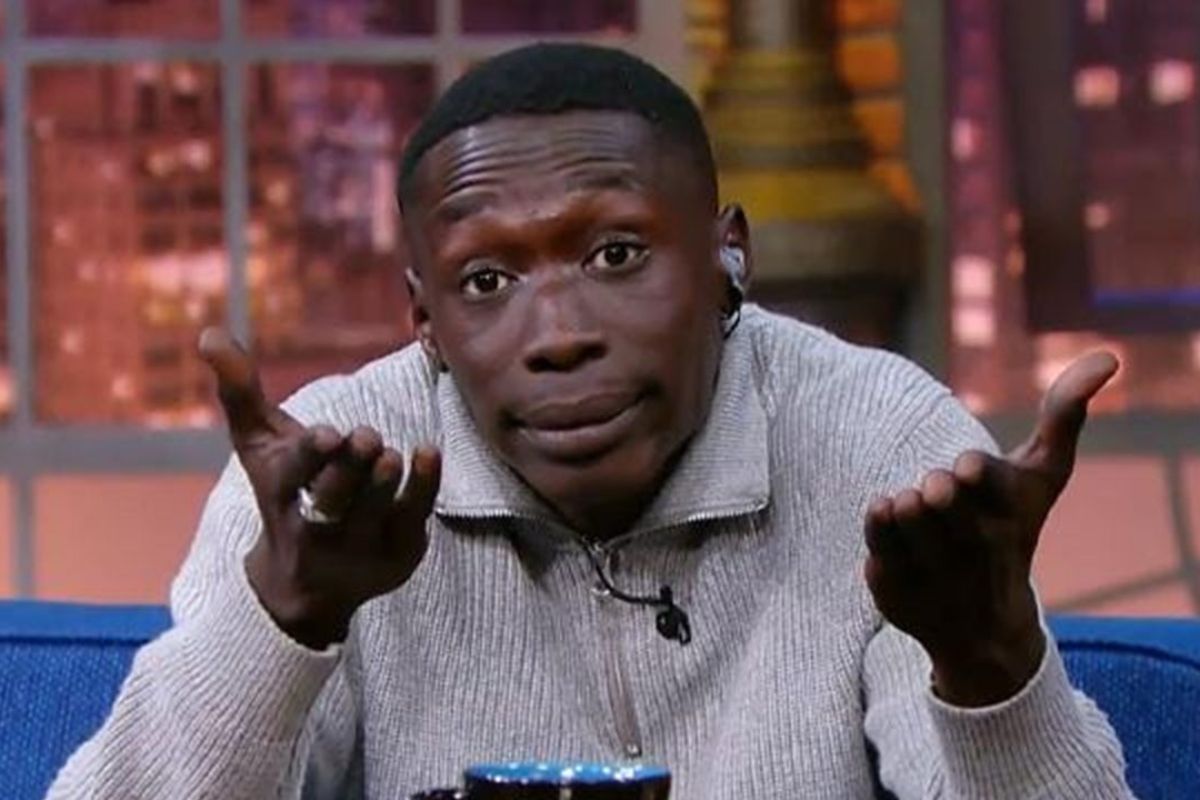


Most-Followed Influencer On The Planet Signed An Agreement Between US$ 900 Million And US$ 975 Million, With Payment In Exchange For Shares, And Opened Image Licensing For Use Of Digital Twin By Artificial Intelligence, While A Dubai Company Tries To Industrialize Content, Contracts And Sales In Multiple Global Markets Today.
The agreement that can reach around R$ 5 billion repositions the most-followed influencer on the planet, Khaby Lame, as a corporate asset, with governance, goals, and an expectation of scale. The transaction is described as a business acquisition, but the difference lies in the package of rights, especially the image licensing and the authorization for a digital twin to operate in production routines.
At the center of the discussion, the most-followed influencer on the planet, an Italian-Senegalese creator known for silent videos and iconic gestures, ceases to be merely a human presence in short videos and begins to integrate into a structure that promises to multiply deliveries in different languages and time zones. The leap is economic but also philosophical: when artificial intelligence assumes the “body” of a person, what still depends on the real human?
What Was Bought And Why Share Exchange Changes Power
The operation involves the sale of the company Step Distinctive Limited for an estimated value between US$ 900 million and US$ 975 million.
-
Seen from space, a colossal volcano nearly 5,000 meters high in Russia has released 1,600 km of smoke over the Pacific, forming “devil’s horns” of lava and revealing the brutal force of the Ring of Fire.
-
Expedition 501: Scientists drill into the ocean floor and discover a giant reserve of fresh water hidden beneath the sea, extracting nearly 50,000 liters and revealing an invisible system that could reshape the map of water scarcity.

-
Archaeologists find an intact tomb over 2,500 years old, with more than 100 preserved objects, weapons, jewelry, and human remains never touched.

-
Volcanic lava transforms into threads as fine as human hair that travel over 30 kilometers by wind and fall like cutting rain on roofs and backyards in Hawaii and Iceland.


The buyer is Rich Sparkle Holdings, based in Dubai and publicly traded in the United States, and the central format was payment without cash, in exchange for shares, which turns the creator into a significant shareholder of the group that will control him.
In practice, the share exchange reorganizes incentives.
Instead of ending the relationship after payment, the structure ties the future of the most-followed influencer on the planet to the performance of the conglomerate, creating a platform logic.
The share exchange connects reputation, operation, and financial results.
The asset is not just audience; it is the set of contracts, processes, and intellectual property that supports the audience.
The acquired control includes the business structure linked to the personal brand, with management of contracts with major brands, image licensing, e-commerce operations, international logistics, and advertising strategies.
The shift is layered: the point negotiation of campaigns gives way to a model of continuous operation, with goals and planned expansion.
This design helps explain why the public discussion is not limited to “how much it cost.”
By placing image licensing at the center of the agreement, the company begins to manage the boundary between person and product, especially when the “delivery” can be made by a digital twin without physical presence.
Digital Twin And Artificial Intelligence As A Scaling Engine Without Recording
The most sensitive point of the agreement is the authorization for the use of a digital twin by artificial intelligence, reproducing the creator’s face, voice, gestures, and behavior.
Operationally, this allows for the production of variations of content for different languages and cultural contexts, without the need for in-person recordings for each publication.
What seems efficient also alters public perception.
If the most-followed influencer on the planet appears in a video in another time zone while, at the same time, their physical schedule is elsewhere, the delivery ceases to be evidence of presence.
The digital twin becomes a tool to separate “image” from “human time.”
There is a direct effect on the production chain: scripting, translation, cultural adaptation, and distribution can occur in a faster cycle.
In this scenario, artificial intelligence does not only replace one stage; it integrates with several: planning, execution, linguistic variation, and performance testing.
For the market, this makes image licensing more valuable because it reduces scheduling bottlenecks.
The practical consequence is that the creator begins to operate as a brand with “shifts” of delivery.
And, at the limit, the digital twin can be activated for simultaneous campaigns, adjusted by region, without the audience being able to distinguish what is filmed and what is synthesized unless there is explicit transparency.
From TikTok To The Industry: Contracts, E-Commerce And The Attempt To Platform
The buying company describes a strategy based on four pillars: massive global audience, operational control of monetization, integrated logistics chain, and automated production by artificial intelligence.
The most-followed influencer on the planet enters as the face and creative direction but is embedded in a corporate arrangement aimed at industrial scale.
This point is crucial to understand why the share exchange was chosen. If the goal is to convert attention into sales, the group needs continuity, predictability, and governance.
The digital twin becomes a tool to maintain cadence, but the larger mechanism is in the commercial funnel: advertising, image licensing, products, and logistics to serve multiple markets. Without a sales and logistics chain, audience does not turn into recurring revenue.
In the plan description, the ecosystem linked to the brand can seek more than US$ 4 billion in annual sales in the medium term, according to information released by Forbes and industry analysts.
The projection depends on an arrangement where content and commerce walk hand in hand, including e-commerce operations like TikTok Shop, along with own brands and co-branded products.
The initial priority was indicated in three regions: United States, Middle East, and Southeast Asia.
The design anticipates prices and operations tailored to local realities, which, in theory, reduces regulatory friction and improves efficiency.
It is also here that image licensing becomes a technical component, not just legal: the same persona can be “versioned” by artificial intelligence to fit different norms and sensitivities.
Identity, Authorship And The Limits Of Image Licensing When The Person Becomes A Product
Transforming a person into an artificial intelligence project exposes a basic dilemma: who is the author when a digital twin acts?
If creation arises from human decisions, but execution is automated, authorship becomes a mosaic between creative direction, engineering, data, and usage policies.
In this context, image licensing ceases to be merely permission to use a face in advertising.
It begins to authorize a “digital behavior” that can be executed repeatedly. The difference between representing and substituting is what fuels the debate about human identity.
There is also reputational risk and risk of confusion. If the audience does not know when they are seeing a digital twin, trust can shift to a different level.
The discussion is not only ethical; it is market-oriented. The brand can gain scale but may lose authenticity, depending on how artificial intelligence is presented and audited.
Another point is the asymmetry of power. In an agreement involving share exchange and control of a commercial structure, defining the limits of the digital twin goes through contracts.
The most-followed influencer on the planet becomes a shareholder, but the controlling group holds operation, logistics, and cadence. This reinforces the importance of clauses on review, veto, and transparency in image licensing.
What This Model Signals For The Creator Market And The Audience
The case amplifies the dispute for “scalable intellectual property” in the creator universe.
Instead of paying per post, companies try to buy the continuous capacity to generate attention and convert it into sales.
When the digital twin enters the package, the product is no longer the video, it is the persona as a marketing API.
For other creators, the signal is clear: those who control image licensing control monetization, and those who control artificial intelligence can reduce production costs and increase presence.
But this can also pressure the market to a standard where human presence becomes an exception, not a rule, especially in massive campaigns.
For the audience, the impact lies in the perception of reality. Content can be realistic and still not be recorded.
The debate about human identity becomes routine: to what extent can a person be replicated without changing the social relationship that underpins influence?
On the economic front, the share exchange and the expectation of scale show how a most-followed influencer on the planet can be treated as infrastructure.
On the cultural front, image licensing and the digital twin raise a question that is likely to grow: if the persona can be executed by artificial intelligence, which part of the human remains irreplaceable?
The agreement that can reach R$ 5 billion is not just a number.
It combines share exchange, image licensing, digital twin, and artificial intelligence to transform presence into a permanent product, with potential for scale and also with risk of confusion over authorship, consent, and human identity. Transparency about what is human and what is synthesis is likely to become a differential.
If you were the most-followed influencer on the planet, would you accept image licensing to create a digital twin operated by artificial intelligence, or would you set a clear limit? What limit, in practice, would you require in the contract?








Não é legal ter um gêmeo humano artificial, não concordo
São tantos anúncios na página que é impossível ler a matéria.
A reportagem fez a proeza de citar o nome do Khaby Lame uma única vez e intitulá-lo “o influenciador mais seguido do planeta” DOZE vezes. Qual é a ideia? Quem escreveu o texto não sabia o nome do Khaby e adicionou por último? Ou o intento é reduzir o homem à sua função/utilidade na transação descrita?
Exatamente, Tomás. A ideia do artigo é evidenciar a “supremacia” do algoritmo. Evidente deficiência de percepção. Como se o mundo fosse ou vá se tornar algum dia, uma fantasia 01001000100001. De fato uma pobreza cognitiva.