





 Portuguese
  English
  Spanish
  3 min of reading
  0 comments


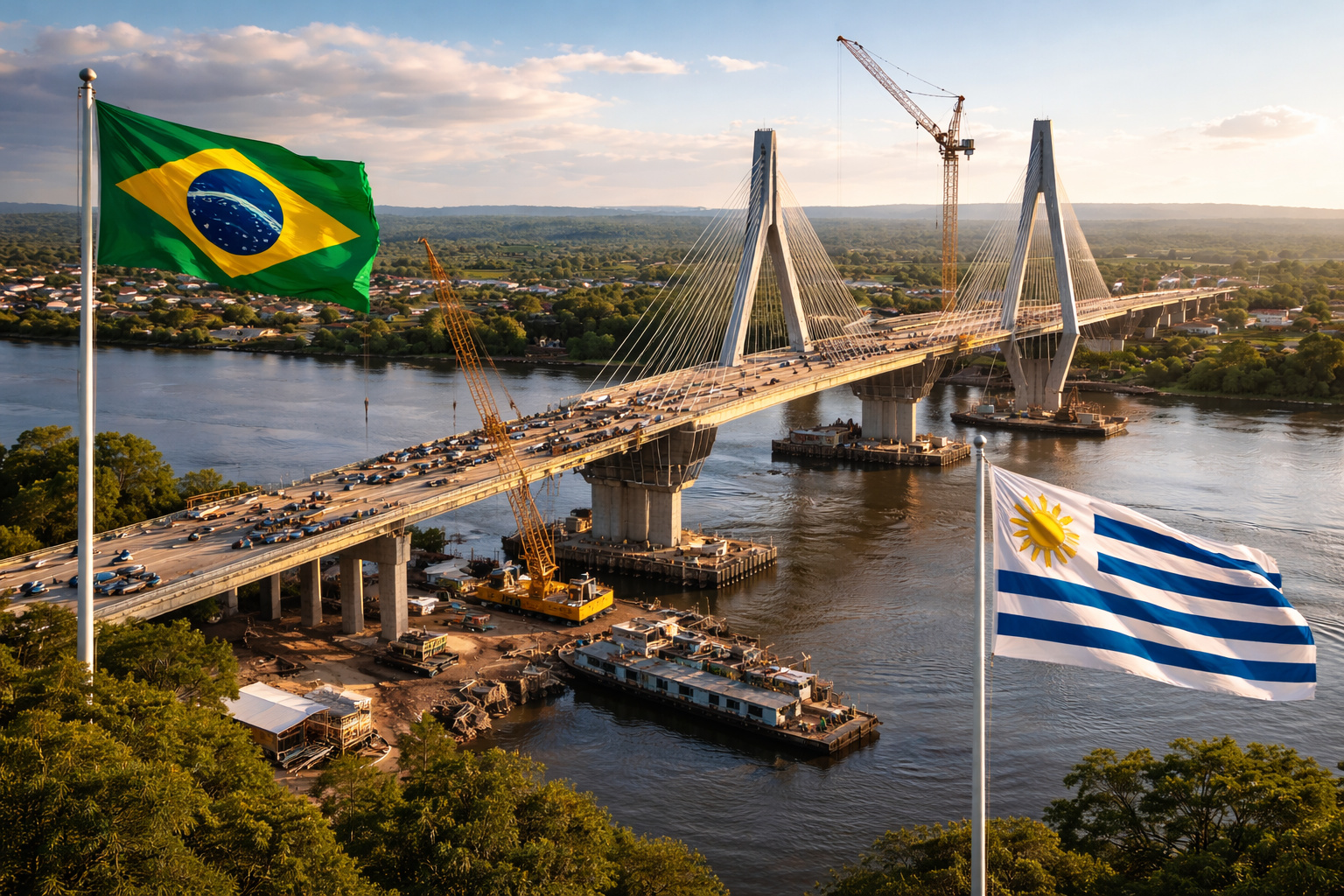
Negotiation Between the Presidents of Brazil and Uruguay Advances, Includes Preliminary Schedule and Reinforces Logistical and Economic Integration at the Border
A significant political articulation recently advanced between Brazil and Uruguay. President Luiz Inácio Lula da Silva and Uruguayan President Yamandú Orsi intensified negotiations for the construction of the second bridge between the two countries, deemed strategic for regional integration.
During a meeting held on Saturday, the 20th, the two leaders confirmed that the project has progressed technically. Thus, the official expectation has shifted to the start of construction in early 2026. The new bridge is expected to connect Brazil and Uruguay over the Jaguarão River, enhancing the physical connection between the countries.
Currently, the existing link concentrates a large portion of cross-border traffic. Therefore, the new structure was planned to complement the already operational bridge. This way, a reduction of logistical bottlenecks, as well as greater fluidity in the transportation of people and goods, is expected.
-
Famous sertanejo singer and the automaker BYD appear together on the federal government’s dirty list after instances of work analogous to slavery in Goiás and Bahia.

-
Correios lose more than 3,000 employees in mass layoffs and still aim to reach 10,000 dismissals in an attempt to save a state-owned company that has accumulated losses of R$ 6 billion and a negative net worth of R$ 10 billion.

-
Latin America is stagnant, and Brazil is part of the problem, says the World Bank in a report that highlights Argentina as the main positive exception in the region thanks to fiscal adjustment and Milei’s reforms.

-
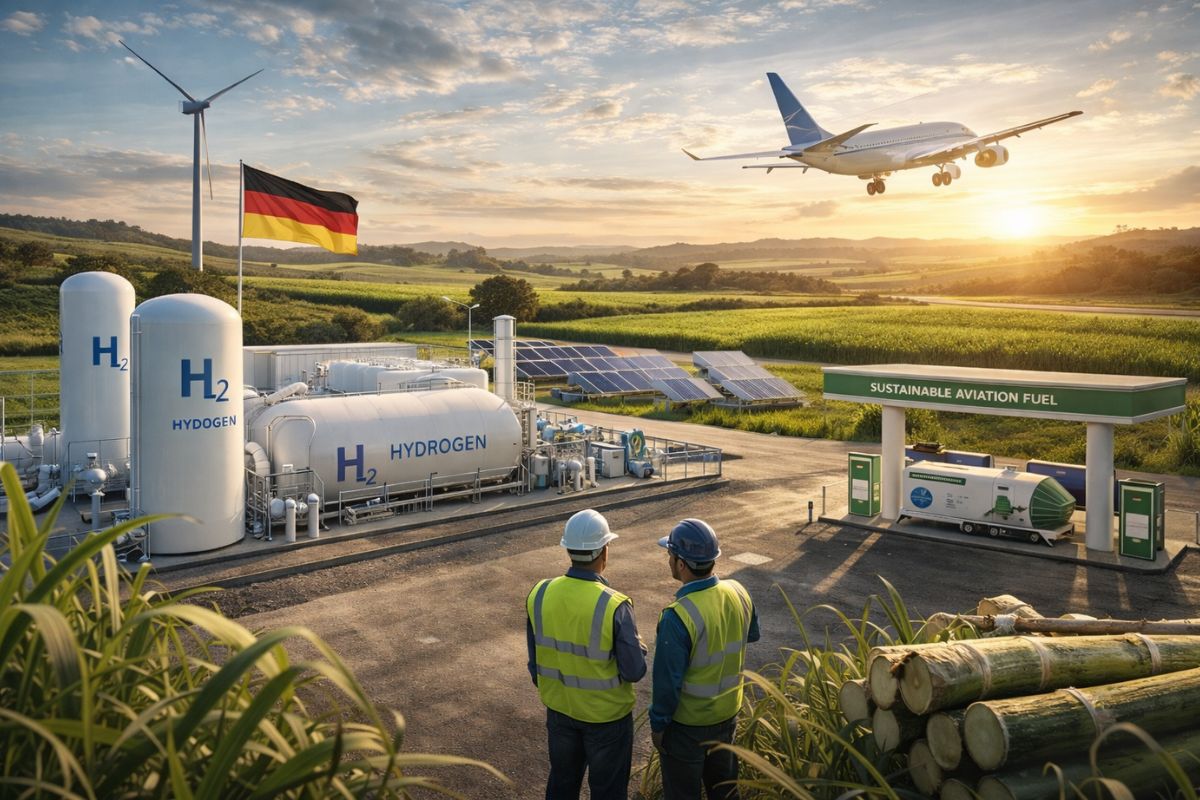
Germany is investing in the interior of São Paulo to test the production of green hydrogen and aviation fuel made from sugarcane in a partnership with Cocal and Siemens that could change the Brazilian energy sector.
As a result, the construction has come to be viewed as a direct vector for regional development. Thus, cities located on both sides of the border tend to experience positive impacts on trade, mobility, and local economic activity.
Infrastructure Gains Priority on the Bilateral Agenda
In addition to the bridge, the presidents also progressed in discussions about improvements to the Uruguay-Brazil waterway. According to information from the Palácio do Planalto, there is an expectation that the bidding for dredging services will be launched in the coming days.
These works, however, had been postponed throughout 2024. The reason was the severe flooding that hit Rio Grande do Sul, impacting the public investment schedule. Now, with the gradual normalization of the situation, the Brazilian government signals the resumption of projects.
Thus, the combination of the roadway bridge and the waterway reinforces an integrated logistics strategy. In this way, Brazil and Uruguay seek to enhance cargo flow and regional circulation.
Mercosur Summit Strengthens Political Articulation
The meeting between Lula and Orsi occurred on the sidelines of the 67th Mercosur Summit, held in Foz do Iguaçu. The event gathered leaders from Mercosur to discuss economic and political cooperation.
In this context, the negotiation for the second bridge gained institutional weight. Thus, the project has come to symbolize the commitment of both countries to South American integration, based on infrastructure and connectivity.
At the same time, authorities believe that the projects can generate logistical, commercial, and social gains, strengthening the bilateral relationship.
In light of this scenario, the new bridge is likely to go beyond mobility and may solidify as a structural landmark of the border between Brazil and Uruguay in the coming years.





Seja o primeiro a reagir!